News
A R400 Billion Backlog: The Staggering Price Tag to Fix South Africa’s Failing Water Systems
The cost to rescue South Africa’s crumbling water and sanitation infrastructure is astronomically higher than the country is currently spending. Water and Sanitation Minister Pemmy Majodina revealed in Parliament that the nationwide maintenance backlog will require approximately R400 billion to rectify. This colossal figure stands in stark contrast to the R26 billion total expenditure budgeted for the sector in the 2025/26 financial year.
The heart of the crisis lies with municipalities. They are legally responsible for maintaining drinking water infrastructure using revenue from water sales, but this system is failing catastrophically. Majodina attributed the decline in services directly to municipalities “not prioritising funding for operations and maintenance.”
A Cascade of Failures: Leaks, Debt, and “Non-Revenue Water”
A major drain on municipal coffers is “non-revenue water”water that enters the system but earns no income. This is caused by massive leaks from ageing and broken pipes, billing inefficiencies, and the free basic water supplied to indigent households. Essentially, municipalities are trying to fund repairs with income lost to the very problems they need to fix.
The Official Report Card: 73% of Water Authorities Are Failing
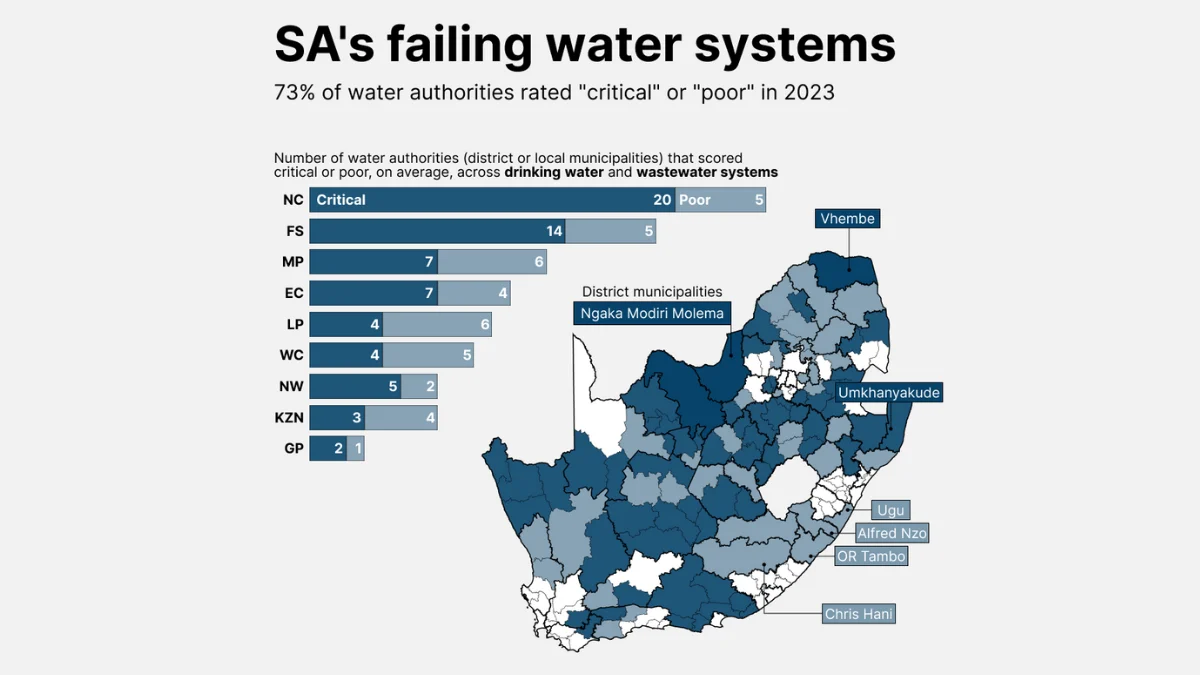
The Department of Water and Sanitation’s own 2023 Green and Blue Drop assessments paint a dire picture of systemic collapse. These reports evaluate the condition, capacity, and maintenance of water infrastructure across South Africa’s 144 water services authorities.
The findings are alarming:
-
66 municipalities were rated in a “critical” state.
-
38 municipalities were rated “poor”.
-
In total, 73% of South Africa’s water authorities are in a poor or critical condition.
This means the majority of local systems providing drinking water and sanitation are on the brink of failure, directly impacting public health, economic activity, and daily life for millions.
The R400 billion price tag is not for expansion or luxury upgrades; it is the bare minimum required to stop the regression and prevent a national public health disaster. With the budgeted amount covering less than 7% of the estimated need, the math reveals a dangerous chasm between the scale of the crisis and the political and financial will to address it. For now, the taps keep dripping, the pipes keep bursting, and the backlogand the billkeeps growing.
{Source: Newsday}
Follow Joburg ETC on Facebook, Twitter , TikTok and Instagram
For more News in Johannesburg, visit joburgetc.com