News
Mantashe’s specialised illegal mining unit plan draws mixed expert reaction
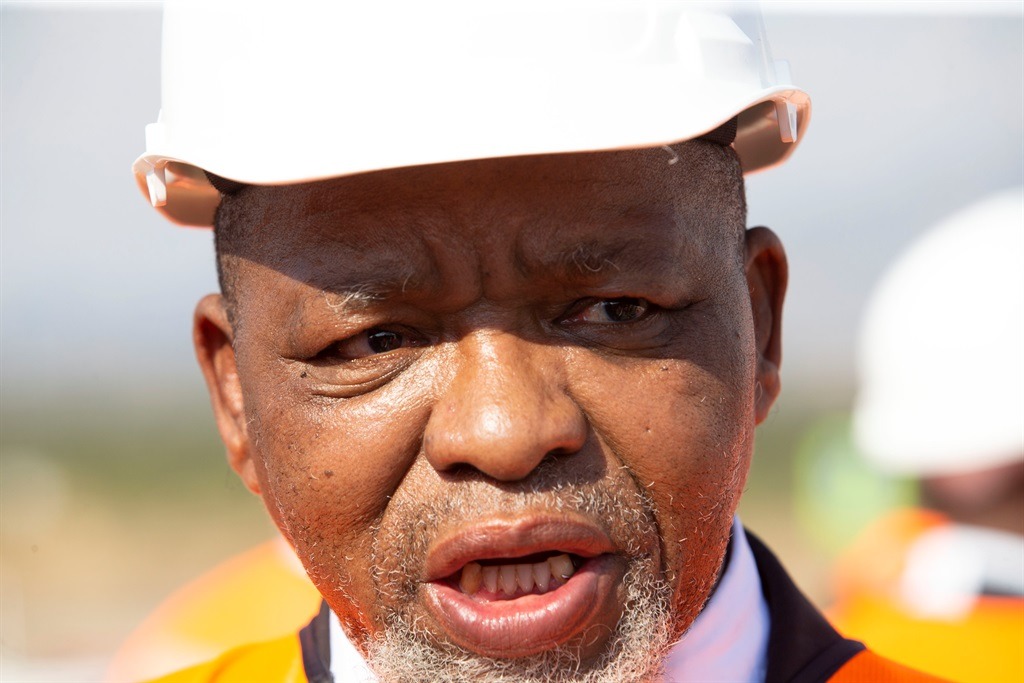
The debate around illegal mining in South Africa has taken a new turn after Mineral and Petroleum Resources Minister Gwede Mantashe suggested creating a specialised police unit to tackle the problem. The proposal, raised during the South African Human Rights Commission’s national inquiry into policy around artisanal mining, has not landed with universal support.
Instead, it has opened a broader conversation about whether the country is trying to police its way out of what many believe is, at its core, an economic crisis.
Government pushes for tougher action
Mantashe argued that stronger law enforcement and tighter legislation are needed to deal decisively with illegal mining. He noted that many offenders are released because of weaknesses in the current legal framework, which undermines efforts to curb the activity.
From the government’s perspective, a dedicated unit could sharpen the response and close the gaps that allow organised syndicates to keep operating.
Illegal mining continues to drain resources and revenue from the formal mining sector, which already faces pressure from fluctuating commodity markets and ageing infrastructure. For policymakers, the issue is not only about crime but also about protecting an industry that still plays a major role in the national economy.
Experts say the roots run deeper
Not everyone agrees that another specialised task team is the answer.
Mining researcher David van Wyk believes the problem stems from years of inadequate planning for communities transitioning away from large-scale mining. According to him, illegal mining is as much a business and economic issue as it is a policing one.
He argues that without a clear, properly legislated policy for medium, small, and artisanal mining, enforcement alone will not solve the crisis. In many former mining towns, abandoned shafts and limited job opportunities have created the conditions where informal mining becomes a survival strategy.
That reality is familiar across parts of Gauteng, the Free State, and North West, where residents often speak openly about how economic desperation feeds the growth of zama zama networks.
Concerns about creating more task teams
Crime and policing specialist David Bruce has also urged caution. He warns against the tendency to respond to every complex crime challenge by forming a new task team.
In his view, the priority should be strengthening the overall capacity of the South African Police Service, especially in tackling organised crime and corruption within law enforcement structures. He also highlights the need for better regional cooperation to investigate cross-border criminal networks linked to illegal mining.
Illegal mining is rarely a localised operation. Syndicates often stretch across provinces and neighbouring countries, making coordination and intelligence sharing essential.
Bruce also suggests that alternative ways of engaging with informal mining should be explored, recognising that for many participants it is part of the informal economy rather than purely a criminal enterprise.
Some say the groundwork already exists
There is also the argument that a specialised unit effectively already exists in practice.
Criminology expert Witness Maluleke points out that certain SAPS teams are already performing many of the functions that such a unit would carry out. In his view, formalising and naming the structure might help, but the operational work has already begun under difficult conditions.
He emphasises that the scale and organisation of illegal mining networks are too large to place the burden solely on local police. A multidisciplinary response, involving economic, social, and security strategies, is likely to be more effective.
Support for stronger, better-trained policing
Not all responses have been sceptical. Investigator Mike Bolhuis has backed the minister’s proposal, saying specialised units can work if institutions across the safety and security cluster function properly.
However, he stresses that success depends on professionalism, training, and willingness from authorities. Without capable and well-prepared officers, even the best-designed unit would struggle.
Bolhuis believes South Africa needs highly skilled teams across several crime categories, including serious economic crime, violent crime, and cybercrime. For him, credibility and competence within policing structures are key to restoring both fear of the law and public trust.
A debate that reflects a bigger national challenge
Public reaction has been predictably split. Some South Africans support tougher enforcement, frustrated by stories of dangerous underground operations and links to violent crime. Others argue that unless unemployment and abandoned mine rehabilitation are addressed, the cycle will continue.
The discussion around a specialised illegal mining unit has therefore become about more than policing. It has exposed the long-standing tension between enforcement, economic survival, and the legacy of South Africa’s mining history.
What happens next will likely depend on whether policymakers treat illegal mining purely as a crime problem or as a complex mix of economics, governance, and social reality.
Follow Joburg ETC on Facebook, Twitter, TikT
For more News in Johannesburg, visit joburgetc.com
Source: The Citizen
Featured Image: News24