News
Matric success is soaring but the system is under pressure
When the matric results landed this year, South Africa celebrated. And rightly so. More than 650,000 pupils passed, a milestone that would have been unthinkable just a few years ago. Proud parents flooded social media with certificates and messages of hope, while timelines filled with congratulations and dreams of university life.
But beneath the applause, a quieter anxiety has been growing. Where do all these successful pupils actually go next?
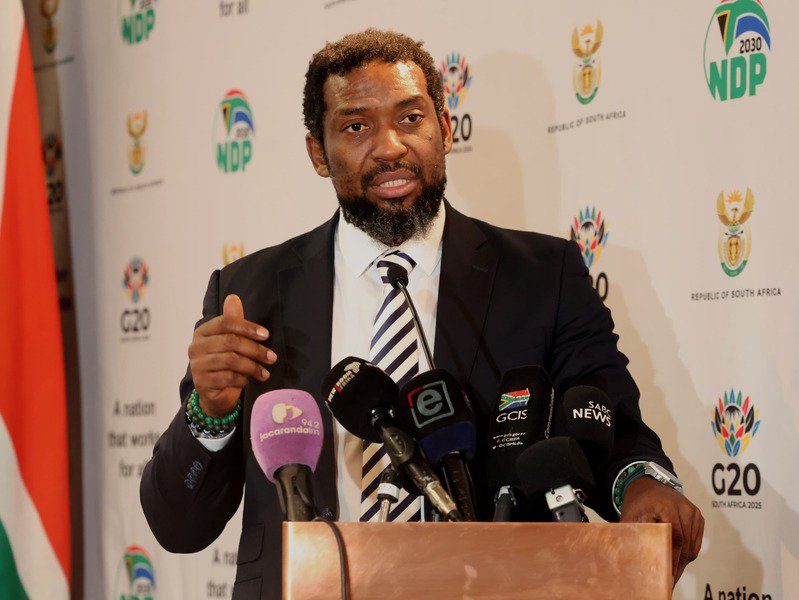
According to Higher Education and Training Minister Buti Manamela, the country is not facing an education crisis, but it is facing a serious strain. And that distinction matters.
Success that arrived faster than the system
Manamela described the moment as pivotal. In just three years, the number of matric passes has surged from around 150,000 to more than 350,000 and now to 650,000. That growth, while positive, has landed hard on a post-school system that simply did not expand at the same pace.
Across universities, TVET colleges, community colleges, skills programmes and workplace learning, South Africa currently has space for about 535,000 funded and planned students. The shortfall is not new, but the scale is now impossible to ignore.
In simple terms, school success has raced ahead, while post-school capacity has been playing catch-up.
The bachelor’s pass myth
One of the biggest pressure points sits with expectations. Nearly half of this year’s candidates achieved a bachelor’s pass, a label that many families understandably associate with guaranteed university access.
Manamela was blunt. A bachelor’s pass does not secure a university seat, nor entry into a specific degree. Competition remains fierce, especially for popular programmes like medicine, engineering, and commerce.
He also raised concerns about how results are framed, suggesting that the language around bachelor’s passes may be creating false hope rather than informed choices. It is a debate that has already sparked discussion online, with many parents asking why pupils who “did everything right” still struggle to place.
STEM subjects remain the weak link
While the number of passes has climbed, subject choices tell a more worrying story. Growing numbers of learners are opting for mathematical literacy instead of pure mathematics, while performance in maths, accounting, and physical sciences continues to lag.
This has knock-on effects. Many high-demand degrees are closed off not because universities lack places, but because pupils do not meet subject requirements. The issue starts long before applications are submitted.
Government departments are now working on improving subject guidance earlier in the school journey, particularly for learners who could succeed in science, technology, engineering, and mathematics if given the right support.
Universities are not the only route
Perhaps the most uncomfortable truth is this. University was never meant to be the default path for every matriculant.
South Africa’s post-school system was deliberately designed to offer multiple routes, with TVET and community colleges playing a central role. Yet these options are still treated as second-best by many families.
Manamela pushed back hard against that idea, emphasising short courses, occupational programmes and modular qualifications that can get young people into the job market faster. This year also marks a major expansion of apprenticeships, learnerships, and internships, areas often overlooked in favour of traditional degrees.
Funding nearly a million students
Finances remain one of the biggest fears for families navigating post-school options. The National Student Financial Aid Scheme is expected to fund close to one million students in 2026.
That includes hundreds of thousands of first-time applicants and continuing students who meet academic progression rules. At an average cost of about R120 000 per student, it represents one of the state’s largest investments in young people.
Importantly, around 74 percent of funded students are passing, pushing back against claims that free education funding is being wasted.
A warning about fake colleges
Alongside the scramble for places, another risk has emerged. Unregistered private colleges preying on desperate families.
Manamela urged parents and pupils to check accreditation carefully. If a college cannot show official registration, walk away and report it. Authorities continue to shut down illegal institutions, some of which reopen under new names.
Pressure, not collapse
The takeaway is nuanced. South Africa’s education system is under real pressure, but it is not broken. The challenge now is helping families understand that multiple pathways are not a downgrade but a strength.
As the celebrations fade and applications open, the next chapter for the class of 2025 will depend less on a single certificate and more on informed choices across a system that is still learning how to carry its own success.
Follow Joburg ETC on Facebook, Twitter, TikT
For more News in Johannesburg, visit joburgetc.com
Source: The Citizen
Featured Image: Jacaranda FM