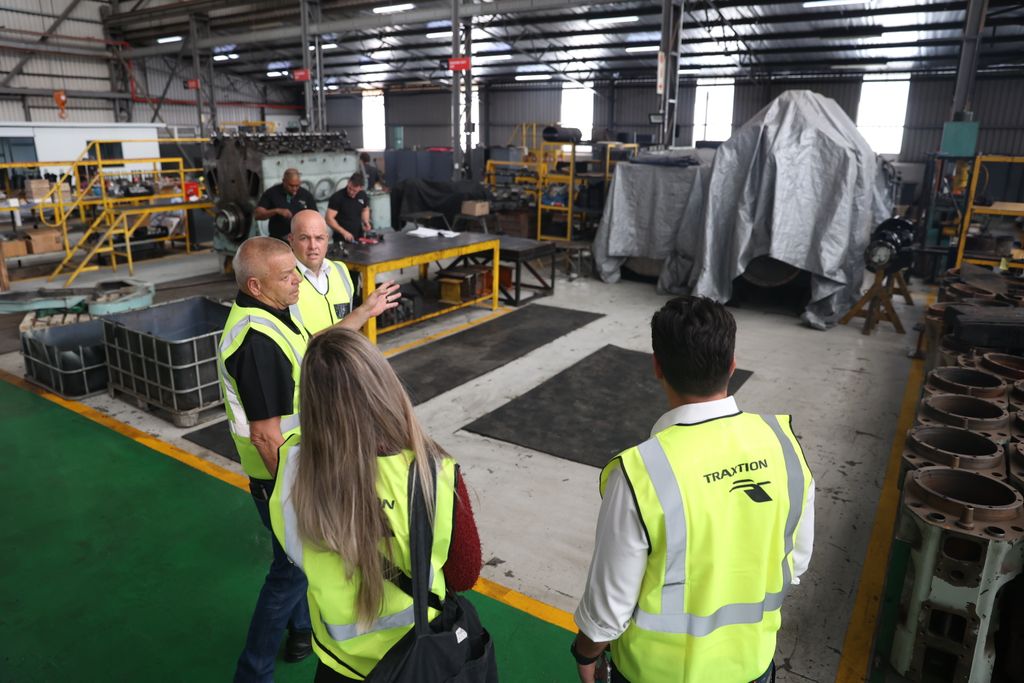
For years, the story of South Africa’s railways has been one of decline: crumbling infrastructure, lost capacity, and a suffocating bottleneck on the entire economy. This week, a powerful counter-narrative began to roll out, not with a political speech, but with a hard financial commitment. Traxtion, a major private rail operator, has confirmed it is finalising a R3.4 billion investment in new rolling stocka move it calls the largest private freight rail investment in the country’s history.
This isn’t just a corporate expansion; it’s being framed as a direct, tangible response to government’s long-promised rail reform agenda. It represents a significant chunk of the R5 billion private-sector commitment signalled back at the launch of the National Rail Policy in 2022. In essence, it’s the private sector putting its money where the policy is.
The Numbers Behind the Noise
The breakdown tells a story of strategic intent:
-
R1.8 billion for locomotives: Sourcing 46 modern units from Wabtec and 42 refurbished models from New Zealand’s KiwiRail.
-
R1.6 billion for wagons: All expected to be manufactured domestically, supporting local industry.
-
60% minimum local content requirement: A crucial stipulation for job creation and skills transfer.
-
662 direct jobs: To be created during the construction and deployment phase.
-
5% of the national freight rail shortfall: The capacity gap this investment aims to help close.
Traxtion CEO James Holley emphasised that this is a vote of confidence. “Private capital flows when government policies create confidence,” he stated, directly linking the investment to perceived reform momentum. The locomotives will be modernised at Traxtion’s Rail Services Hub in Rosslyn, with the first refurbished units expected on the mainline by the third quarter of 2026.
More Than Metal: The Ripple Effect
The implications stretch far beyond the rail corridor. Sipho Makhubela, CEO of investment partner Harith General Partners, called it a “pivotal moment,” highlighting the potential to “unlock immense economic value.”
The real win, analysts suggest, is in the multiplier effect. Efficient rail movement lowers logistics costs for miners, farmers, and manufacturers. It takes heavy trucks off our battered roads, reduces carbon emissions, and creates upstream jobs in steel, engineering, and manufacturing. As Holley put it, “When trains move efficiently, the whole economy moves.”
The Catch: Bankable Reforms Must Follow
Yet, within the optimism lies a pointed condition. Holley noted that to unlock further significant investment, the next iteration of the Rail Access Agreement needs to be “fully bankable.” This means clear service-level guarantees, balanced legal protections, and recognition of lender rights. It’s a polite but firm message to policymakers: we’ve shown our hand, now you must solidify the playing field.
On social media and in business circles, the reaction has been cautiously optimistic. Many see it as the first concrete proof that private investment can step into the void left by state incapacity. Others caution that this is just one step in a marathon recovery for a crippled network.
What’s clear is that a new chapter is being written. A private company is staking billions on the belief that South Africa’s railways can be revived. They’re not just buying locomotives; they’re buying into a future where the trains, and perhaps the economy, can run on time again. The pressure is now on to ensure the reforms keep pace with the investment.