News
Ramaphosa’s support for Khampepe commission review draws criticism from TRC victims’ families
Families of TRC victims criticise Ramaphosa over Khampepe commission legal challenge
Families of victims linked to unresolved Truth and Reconciliation Commission (TRC) cases have voiced deep concern over President Cyril Ramaphosa’s involvement in legal proceedings that could undermine the commission tasked with investigating why apartheid-era crimes were never prosecuted.
The Sisi Khampepe-headed commission, formally known as the Judicial Commission of Inquiry into Allegations Regarding Efforts to Stop the Investigation or Prosecution of TRC Cases, was established in May 2025 to probe potential political interference in past prosecutions. Public hearings began later that year, offering families a long-awaited avenue to confront painful histories.
Legal storm: Mbeki and Zuma challenge Khampepe
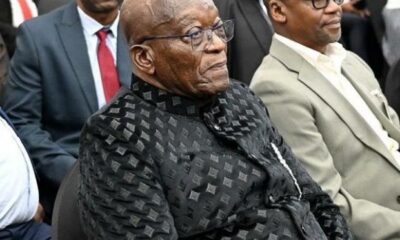
The controversy erupted after former presidents Thabo Mbeki and Jacob Zuma called on Khampepe to recuse herself, citing her previous roles as a TRC commissioner and deputy national director at the National Prosecuting Authority. While Khampepe dismissed these objections in January 2026, the matter moved into ongoing court proceedings.
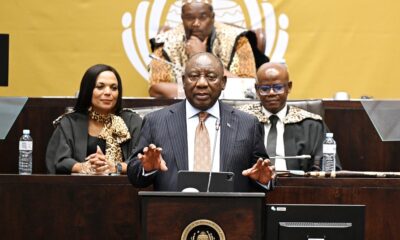
President Ramaphosa filed his own affidavit and heads of argument in the review application, stating he would comply with any court order requiring her removal. But families and advocacy groups say his submissions go further, appearing to support the former presidents’ efforts.
Families fear emotional and procedural setbacks
Speaking to the media on Sunday, Thembi Simelane read a statement on behalf of the families, warning that nullifying the commission would force survivors to relive decades-old trauma.
“By the time the litigation is concluded, the cost will probably exceed R100 million,” Simelane said. “For people like Lukhanyo Calata and me, who have testified, and for other survivors, this process is deeply personal. Recounting painful memories publicly is an immense emotional burden.”
The families argue that Ramaphosa’s involvement, combined with the review sought by Mbeki and Zuma, risks derailing a commission that has already spent nine months investigating and conducted weeks of public hearings.
Political optics and accountability
Simelane suggested the president’s stance may reflect political calculations rather than legal necessity. “Why would the president be so willing to go down such a wasteful and reckless path? In my respectful view, the likely explanation is that it was a political decision aimed at damage control,” she said.
The commission’s mandate touches on sensitive issues: unresolved TRC cases, unprosecuted apartheid crimes, and allegations of state interference in justice. Families say delaying or collapsing the commission undermines South Africa’s broader commitment to truth, reconciliation, and accountability promises central to the country’s democratic transition.
Broader concerns
Human rights advocates have highlighted that the Khampepe commission represents one of the few remaining mechanisms for victims to seek clarity on unresolved crimes from the apartheid era. Its potential nullification raises questions not only about political interference but also about the government’s willingness to prioritize justice over expediency.
Simelane emphasised the high stakes: “This is about whether the state is genuinely committed to truth and accountability, or whether political expedience takes precedence over decades of suffering. For families who have waited decades for justice, the stakes could not be higher.”
The commission continues to operate amid the legal uncertainty, with the outcome likely to influence public confidence in South Africa’s institutions and the handling of unresolved TRC cases.