News
Why Trump is likely to lash out at South Africa’s China tariff deal and why experts say he caused it
A deal that rattles Washington before the ink is dry
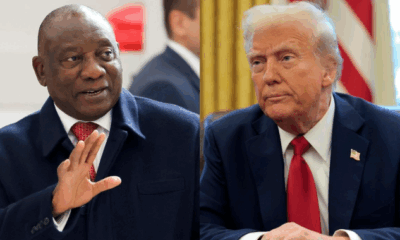
South Africa’s decision to secure full tariff-free access to the Chinese market has barely settled when warnings are already coming in: Donald Trump is unlikely to take this quietly.
According to international relations experts, the renewed US president is expected to respond aggressively to the agreement, potentially with threats, tariffs or diplomatic pressure. But in a twist that speaks to the changing global order, analysts say Washington has no one to blame but itself.
Trump, tariffs and a fragile relationship
Relations between South Africa and the United States have remained tense since Donald Trump returned to the White House. His foreign policy approach, confrontational, transactional and often unpredictable has unsettled allies and rivals alike.
Now, with China offering South Africa 100% duty-free access to its massive market, experts believe Pretoria should brace for another public rebuke from Washington.
North West University international relations expert Dr Jan Venter says Trump has consistently reacted badly when countries deepen ties with Beijing and South Africa will be no exception.
His view is blunt: Trump doesn’t tolerate economic independence from US influence, especially when it involves China.
“Trump pushed the world towards China”
Venter argues that Trump’s own actions have accelerated the global pivot towards Beijing, particularly across Africa.
From threatening Canada to scolding the UK for engaging China, Trump’s approach has created a climate of hostility that leaves countries searching for alternative partners.
In Africa’s case, China has stepped in with open markets, infrastructure funding and fewer political lectures a combination many governments find appealing.
Venter believes this pattern explains why South Africa’s move toward China isn’t rebellion, but survival.
What the China-Africa deal actually means
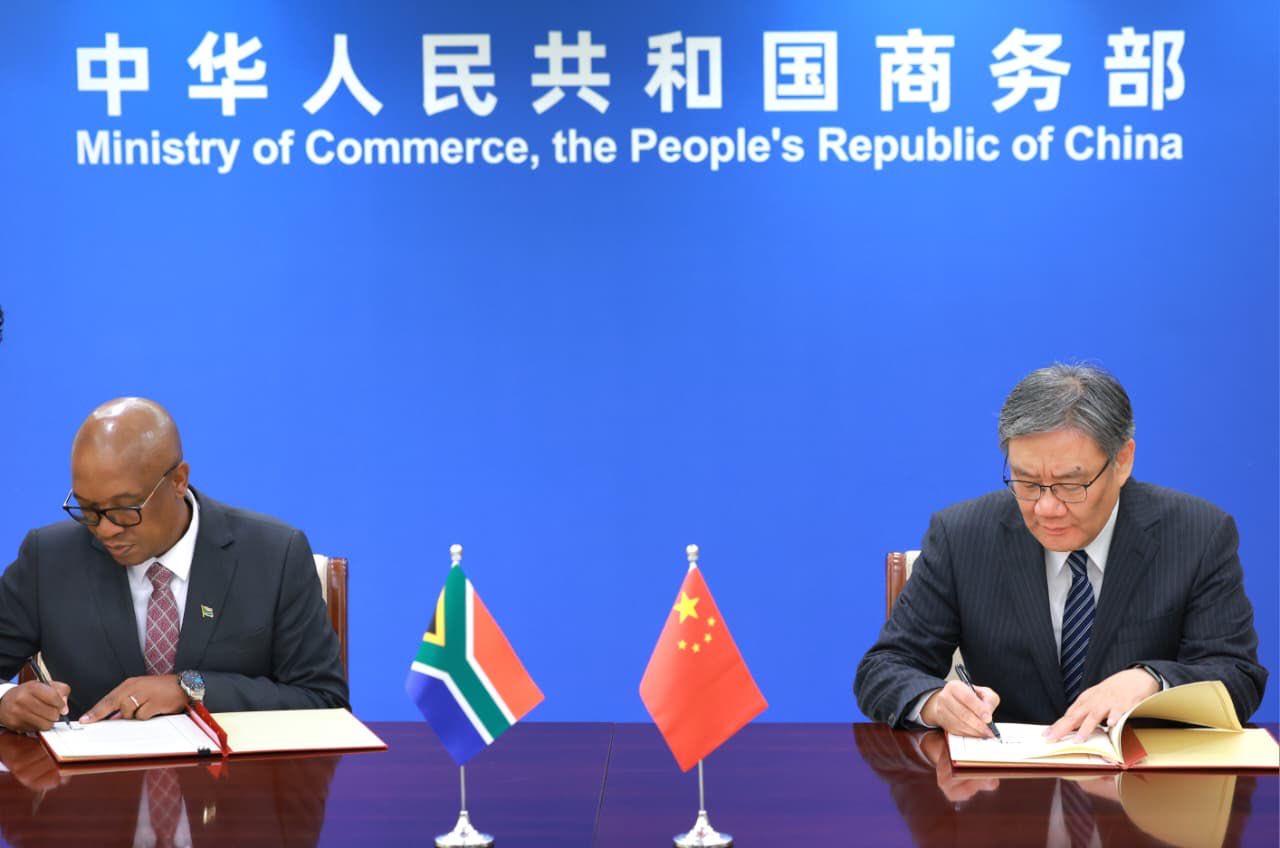
The agreement, signed in Beijing by Trade, Industry and Competition Minister Parks Tau and Chinese Commerce Minister Wang Wentao, falls under the China-Africa Economic Partnership Agreement (CAEPA).
It allows South African exports to enter China with zero tariffs a major boost for producers trying to break into one of the world’s largest consumer markets.
The deal delivers on a promise made by Chinese President Xi Jinping, who pledged tariff-free access to 53 of Africa’s 54 countries. South Africa is among the first to benefit.
Tau has stressed that the framework is not a free-for-all. Safeguards will be negotiated to protect local industries, while focusing on areas where the two economies complement each other.
Why Pretoria sees opportunity, not risk
From government’s perspective, the deal is about growth, not geopolitics.
Tau has pointed to rising interest from Chinese investors, particularly in automotive manufacturing, mining, renewable energy and technology. South Africa already exports citrus, rooibos tea and other agricultural goods to China and officials believe that list can expand significantly.
China has also invited South Africa to showcase local products at the China International Import Expo in Shanghai in 2026, and to participate in a steel investment forum aimed at revitalising the sector.
For a country battling unemployment and weak growth, these openings matter.
Another expert backs the move
Political analyst Goodenough Mashego agrees that the agreement could unlock meaningful economic gains.
He believes increased trade volumes and investment flows could give South Africa a much-needed boost and describes the deal as a strategic decision rather than an ideological one.
In his view, Pretoria is simply diversifying its economic partnerships in an increasingly divided global system.
The irony of AGOA and Trump’s unpredictability
Adding to the complexity is the fact that South Africa remains included in the renewed African Growth and Opportunity Act (AGOA), a US trade programme, under the Trump administration.
Despite speculation that South Africa would be excluded, access was granted. Observers say this contradiction highlights Trump’s erratic approach: confrontational rhetoric paired with selective cooperation.
It also leaves South Africa walking a diplomatic tightrope between its two largest trading partners.
A long relationship with Beijing
China has been South Africa’s largest trading partner for more than 15 years, overtaking the European Union. Relations were upgraded to an “all-round strategic cooperative partnership” during President Cyril Ramaphosa’s state visit to Beijing in September 2024.
Chinese automotive firms already operate locally, creating jobs and strengthening industrial capacity a tangible outcome that resonates strongly with policymakers and the public.
Public reaction: pragmatism over politics
Online reaction has been mixed but largely pragmatic. Many South Africans see the deal as common sense in a tough economic climate, while others worry about dependency on China.
Still, a recurring sentiment dominates: countries must act in their own interests, especially when global powers play hardball.
The bigger picture
As global trade fractures into competing blocs, South Africa’s China deal reflects a broader shift underway across Africa, one shaped as much by opportunity as by frustration with traditional partners.
If Trump lashes out, experts say it will only reinforce the very trend he’s been fighting.
And that, they argue, is the real irony.
{Source: The Citizen}
Follow Joburg ETC on Facebook, Twitter , TikTok and Instagram
For more News in Johannesburg, visit joburgetc.com