Tshwane’s water crisis sparks ‘mafia’ claims as millions flow to tankers
In many parts of South Africa, turning on a tap has become an act of hope rather than certainty. In Tshwane, that uncertainty is now tangled in something even more troubling, allegations that the city’s water crisis is being quietly exploited for profit.
This week, the spotlight fell sharply on the metro after claims that political decisions and ballooning tanker contracts may be feeding what activists are calling a “water mafia.”
Tankers over taps: Where is the money going?
At the centre of the controversy is a staggering jump in spending.
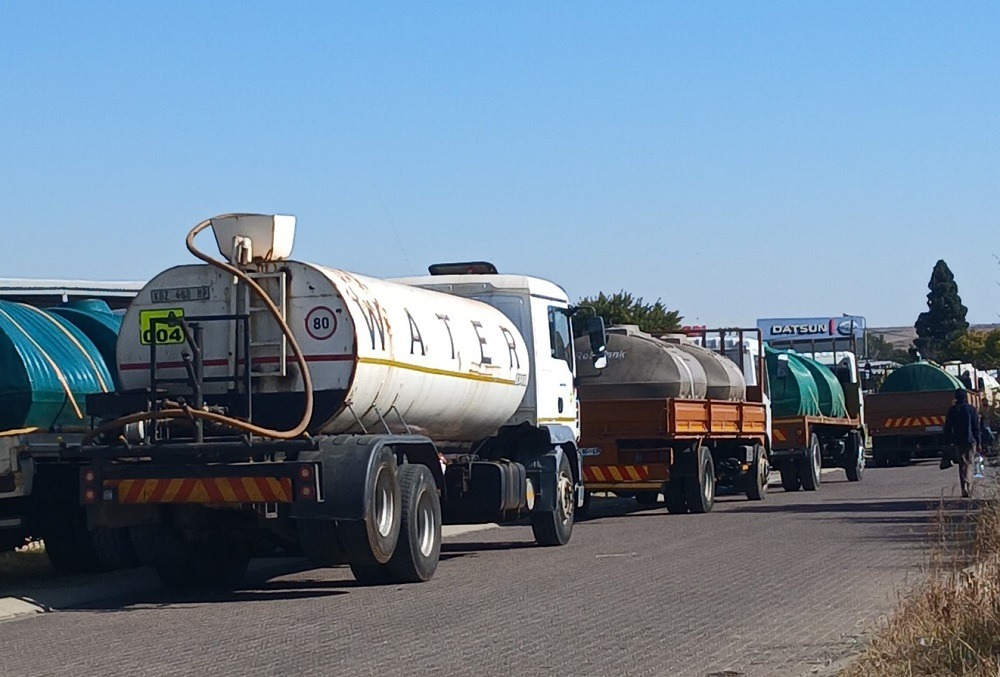
According to Cilliers Brink, the Democratic Alliance’s mayoral candidate, Tshwane’s expenditure on water tankers surged from R140 million to R777 million within a year under the current coalition leadership.
That’s not just a budget increase it’s a shift in how the city responds to water shortages.
Instead of fixing infrastructure, Brink argues, the city is increasingly relying on trucking water into communities a costly and temporary solution.
And in a country where municipalities are already under financial strain, that raises uncomfortable questions.
Political fault lines deepen
Brink didn’t mince his words. He accused current mayor Nasiphi Moya of enabling a system that benefits politically connected individuals.
His claims suggest that behind the scenes, power dynamics within coalition politics are influencing how resources are allocated particularly in critical sectors like water.
The allegations go further:
- Links between senior political figures and tanker contracts
- Claims of individuals benefiting financially from municipal tenders
- Reports of companies receiving millions despite lacking proper infrastructure
One widely discussed case involves a company allegedly awarded a R95 million tender without owning water tankers, a detail that has fuelled outrage online.
‘Vultures circling’: Civil society speaks out
For activists, the issue goes beyond politics it’s about a system that may be profiting from dysfunction.
Ferrial Adam from WaterCAN delivered one of the strongest warnings yet, describing the situation as a feeding frenzy.
She argues that failing infrastructure from leaking pipes to neglected reservoirs is creating opportunities for emergency procurement, where oversight is often weaker and profits higher.
Her concern is blunt:
The longer the system fails, the more money flows into short-term fixes.
A crisis years in the making
To understand how Tshwane got here, you have to look back.
Communities like Hammanskraal have long struggled with water quality and supply issues. Promises of long-term solutions have come and gone, often replaced by temporary interventions like tankers.
While these trucks provide immediate relief, they’ve also become symbols of a deeper problem:
- Ageing infrastructure
- Delayed maintenance
- Weak project execution
And now, possibly if allegations hold a network of interests benefiting from keeping things exactly as they are.
SIU steps in as pressure builds
The growing noise hasn’t gone unnoticed.
The Special Investigating Unit (SIU) has been authorised to probe allegations of corruption and irregularities linked to water tanker contracts in Tshwane.
This follows mounting evidence and public concern about:
- Conflicts of interest
- Political interference
- Rapid enrichment linked to municipal payments
Calls are also growing for lifestyle audits and stricter accountability measures for officials involved.
Mayor’s plan vs public perception
In response to the ongoing crisis, Moya recently announced plans to expand the city’s municipal tanker fleet, aiming to reduce reliance on private contractors.
The goal? Build up to 100 city-owned tankers.
On paper, it sounds like a step toward independence. But critics argue it doesn’t address the core issue fixing the pipes and restoring stable supply.
On social media, reactions have been mixed:
- Some welcome any effort to improve access
- Others see it as doubling down on a flawed system
The bigger picture: A warning for South Africa
What’s happening in Tshwane isn’t isolated.
Across the country, water infrastructure is under pressure. And where systems weaken, opportunities for misuse can grow.
This moment could become a turning point either:
- A chance to rebuild trust through transparency and reform
- Or another chapter in South Africa’s ongoing struggle with service delivery and governance
When water becomes power
Water is more than a basic service it’s dignity, health, and economic survival.
When access to it becomes entangled in politics and profit, the consequences ripple far beyond dry taps.
For Tshwane residents, the question now isn’t just when the water will flow reliably again
it’s who benefits while it doesn’t.