Unisa pulls plug on struggling enterprise after financial red flags
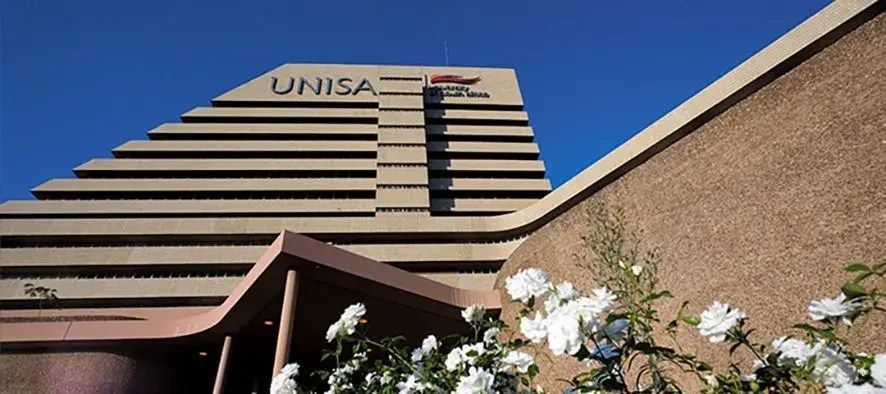
For years, University of South Africa has been known as the country’s distance learning giant, a lifeline for students balancing work, family, and education.
But behind the scenes, one of its business arms has been quietly unravelling.
Now, the university appears ready to shut it down.
A slow decline that reached breaking point
Unisa Enterprise (UE), the institution’s commercial arm, was meant to generate income through projects and partnerships. Instead, a recent internal risk report paints a picture of an entity running out of road.
Revenue has dropped sharply from R5.4 million in early 2024 to just R4 million in the same period this year. That decline, while seemingly incremental, signals something deeper: an overreliance on once-off projects that never translated into stable, long-term income.
When those projects dried up, so did the cash flow.
To make matters worse, an approved R15 million injection never materialised, leaving the entity struggling to cover basic operational costs.
A list of risks too big to ignore
The report, presented to Unisa’s risk management committee, outlines five major risks facing UE three of them classified as “very high.”
Among the most concerning:
- A lack of capacity to implement any meaningful turnaround strategy
- Ongoing exposure to fraud and corruption
- Operational instability across key divisions
Even more worrying is the lack of progress. Plans that were meant to stabilise the business including setting up a dedicated turnaround committee appear to have stalled for months.
In simple terms, the problems were identified, but not fixed.
Inside the cracks: staff, security, and morale
Beyond the balance sheet, the cracks are showing internally.
Staff shortages remain unresolved, morale is reportedly low, and proposed solutions like incentives or filling vacancies have yet to make a real difference.
There are also lingering security concerns, with a biometric access system still not in place, and ongoing labour instability in the catering division threatening day-to-day operations.
It’s the kind of slow-burning dysfunction that doesn’t always make headlines until it does.
Corruption risk remains a shadow
In South Africa’s public sector, any mention of fraud and corruption raises immediate alarm.
The report flags this risk as persistent within UE, despite the introduction of disciplinary measures and whistleblowing channels.
For many observers, it’s a familiar story: systems are introduced, but enforcement lags.
On social media, reactions to the news have been mixed. Some see the closure as necessary a way to stop financial bleeding. Others worry about what it says about governance in institutions meant to model accountability.
A critical moment for Unisa
The report describes Unisa Enterprise as being at a “critical juncture” a phrase often used just before major decisions are made.
And it seems that decision has now been taken: cut losses and close.
While the move may protect the university from further financial strain, it also raises broader questions about how public institutions manage commercial ventures.
The bigger picture: when side ventures fail
Universities across South Africa have increasingly explored commercial arms as a way to supplement funding in a constrained economy.
But not all of them succeed.
UE’s struggles highlight the risks of stepping into the business world without the systems, leadership, and consistency needed to sustain it.
For Unisa students many of whom rely on the institution as an affordable path to a better future the hope will be that the closure strengthens, rather than weakens, the core mission.
Because at the end of the day, the real business of Unisa isn’t profit.
It’s education.
{Source: The Citizen}
Follow Joburg ETC on Facebook, Twitter , TikTok and Instagram
For more News in Johannesburg, visit joburgetc.com