News
US Sets Out Five Key Demands To South Africa Over BEE, Expropriation And Farm Safety
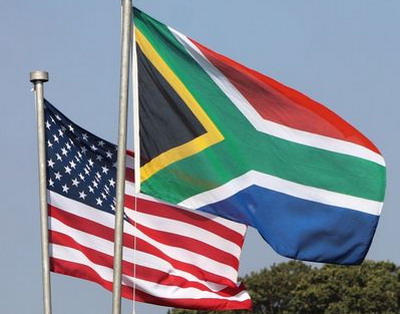
Relations between South Africa and the United States are facing renewed scrutiny after Washington confirmed it had presented Pretoria with a list of five key demands more than a year ago, with little movement since.
The remarks came from United States Ambassador to South Africa Leo Brent Bozell III, who said Washington’s patience is wearing thin as the issues remain unresolved.
Speaking at the BizNews Conference in Hermanus, the ambassador revealed that the United States had formally raised the concerns with South African officials and expected progress by now.
“We put together five asks. We put them forward to the South African government,” Bozell said. “We’ve been waiting for almost a year for a response and we are running out of patience.”
His comments have added another layer of tension to an already complex relationship between the two countries, particularly at a time when global trade alliances and geopolitical loyalties are increasingly under the spotlight.
The Five Issues Washington Wants Addressed
According to Bozell, the requests focus largely on investor confidence, public safety and the broader political climate affecting business in South Africa.
The five points raised by Washington include:
-
Improved protection for rural communities, particularly around farm attacks which have received global attention.
-
A clear condemnation of rhetoric that promotes violence, referencing the controversial “Kill the Boer” chant.
-
Fair compensation standards in expropriation policies, amid concerns about legislation allowing land to be taken with nil compensation.
-
Reconsideration of ownership requirements linked to BEE policies, which the US says can discourage foreign investors.
-
Expanded cooperation on digital technologies and critical minerals, aimed at strengthening economic ties between the two countries.
Bozell described these demands as “achievable and practical”, arguing that they would benefit both South Africa and the United States if addressed.
Concerns Around Business And Investor Confidence
Much of Washington’s concern appears tied to the investment climate in South Africa.
The ambassador said that while the goals behind Broad-Based Black Economic Empowerment (BEE) are widely recognised, some aspects of its implementation raise concerns among foreign investors.
BEE was introduced after the end of apartheid to help address historic inequality and open economic opportunities for black South Africans. However, critics both locally and internationally argue that strict compliance rules and ownership requirements can complicate investment decisions.
Bozell warned that uncertainty around ownership rights and complex regulatory frameworks could lead companies to reconsider investing in South Africa.
“When businesses believe their property rights may be uncertain or policies create unpredictability instead of clarity, it becomes harder to sustain common ground,” he said.
Expropriation And Land Reform Remain Sensitive Issues
Another major sticking point is South Africa’s evolving land reform policy, particularly legislation that allows expropriation with nil compensation under certain conditions.
Land reform remains one of the country’s most politically sensitive debates. Supporters argue it is necessary to correct historic injustices created by apartheid-era land ownership patterns. Critics warn that poorly implemented policies could undermine property rights and investor confidence.
The United States has called for clear and fair compensation standards as part of any expropriation framework.
Political Tensions And Global Alignment
Beyond economic concerns, Bozell also pointed to broader political dynamics shaping the relationship between Washington and Pretoria.
He suggested that the United States is uneasy about South Africa’s growing engagement with countries that it considers geopolitical rivals.
The ambassador also referenced what he described as increasing friction between Washington and the African National Congress (ANC), which has governed South Africa since 1994.
According to Bozell, diplomatic relationships rely heavily on trust and shared values.
“These issues shape investor confidence, strategic trust and the trajectory of our bilateral relationship,” he said.
A Relationship At A Crossroads
South Africa and the United States have long maintained strong economic ties, with trade agreements such as the African Growth and Opportunity Act playing a key role in exports and investment.
However, recent debates around foreign policy alignment, economic reform and domestic legislation have placed that relationship under closer scrutiny.
Bozell’s remarks suggest that Washington expects more direct engagement from Pretoria on the issues it has raised.
For now, the five demands remain on the table, and how South Africa responds could shape the future of one of its most important international partnerships.
{Source:Business Tech}
Follow Joburg ETC on Facebook, Twitter , TikTok and Instagram
For more News in Johannesburg, visit joburgetc.com