News
G20 Standoff: South Africa Reacts to US Using Mandela’s Name to Justify Exclusion
G20 Showdown: Did the US Cross the Line by Invoking Mandela’s Name?
South Africans bristle as Washington links Mandela to G20 exclusion talks
Tension between Pretoria and Washington has flared up once again, this time over something deeply personal to South Africa’s identity: the legacy of Nelson Mandela.
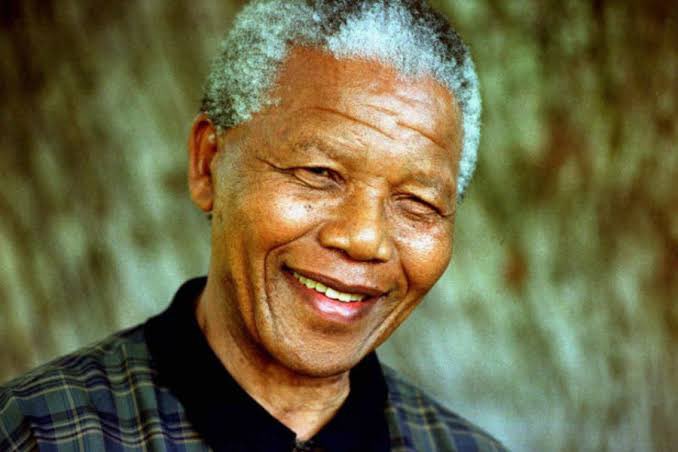
A statement by US Secretary of State Marco Rubio has landed like a stone in local political waters. Rubio announced that the United States is backing a proposal for a “New G20” one that would invite Poland in and remove South Africa from the table at the 2026 summit. But it wasn’t the geopolitical reshuffling alone that raised tempers, it was Rubio invoking Mandela to justify it.
The US official praised Mandela as someone who championed reconciliation and economic liberalisation, then sharply contrasted him with today’s ANC leadership. In Rubio’s telling, Mandela’s successors have swapped reconciliation for “redistributionist policies” that dragged South Africa into economic stagnation. For many South Africans, hearing Mandela’s name used this way, especially by a foreign power, felt like salt rubbed into a wound.
And just like that, Mandela, a symbol of unity, is once again at the centre of global politics.
Mandela’s name, our story, but who gets to tell it?
Political analyst Professor Sipho Seepe didn’t mince words. He called Rubio’s comments a misrepresentation, saying the US is appropriating Mandela’s name to push its own agenda something many South Africans feel happens far too often.
“Interest groups have sought to misrepresent and appropriate Mandela to advance their own interests. The US administration is no different,” Seepe said.
And he’s right, Mandela has long been a battleground for narrative and memory. To the West, he is often remembered as a reconciler. To South Africans, he was also a revolutionary a leader who challenged power, inequality and imperial influence. That nuance often gets lost when foreign governments retell our history.
So the question becomes: Who owns Mandela’s legacy?
And even more pointedly, who gets to use his name?
Why Poland, why now?
Rubio argues Poland deserves a seat because it transformed itself from a Cold War economy to one of the global top 20 while South Africa, weighed down by regulation and corruption, has allegedly fallen behind. According to him, South Africa is no longer fit to sit among the world’s leading economies.
Then he took it further claiming the ANC government is racially divisive, friendly with Iran, tolerant of Hamas sympathisers, and cozying up to America’s adversaries. He also alleged violence against Afrikaner citizens and land seizures language that echoes right-wing US political rhetoric seen online for years.
Political analyst Zakhele Ndlovu suggests the move looks less like economics and more like punishment possibly tied to South Africa’s case against Israel at the International Court of Justice and its vocal anti-US stance in global forums.
In other words, this may be less about GDP and more about geopolitics.
Government responds, calm for now, but under pressure
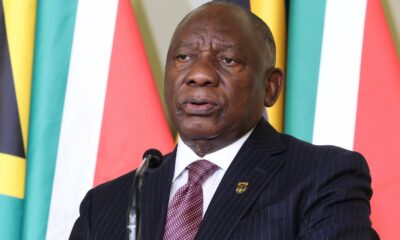
President Cyril Ramaphosa, speaking at a Cosatu charity golf fundraiser, kept his cool. South Africa remains a full G20 member, he said, and deserves to be treated as a sovereign equal. There’s been no official notice of exclusion at least not yet.
But analysts warn this could be a test of Pretoria’s diplomatic backbone. Not long ago government leaders declared proudly that South Africa “would not be bullied”. Now, as Seepe put it:
“The time for SA’s grandstanding seems to be coming to a halt.”
If the US is pressing ahead with a “New G20”, South Africa may soon face a foreign policy crossroads, defiance, negotiation, or realignment.
What South Africans are saying
While there’s no official poll yet, online comments paint a mixed picture:
Some feel insulted calling the remarks patronising and a misuse of Mandela’s name.
Others quietly agree citing corruption, load shedding, crime and state decay.
And many ask why Mandela’s legacy is a global political football.
South Africans love Mandela, but we also argue fiercely about how he should be remembered. If nothing else, this incident has reopened an old wound about identity, leadership and whether the nation has stayed true to its founding ideals.
Mbalula Hits Back at US After G20 Exclusion, Is South Africa Ready to Pivot Away from Washington?
{Source: IOL}
Follow Joburg ETC on Facebook, Twitter , TikTok and Instagram
For more News in Johannesburg, visit joburgetc.com