Shockwaves Beyond Caracas
The world didn’t ease into 2026, it lurched into it.
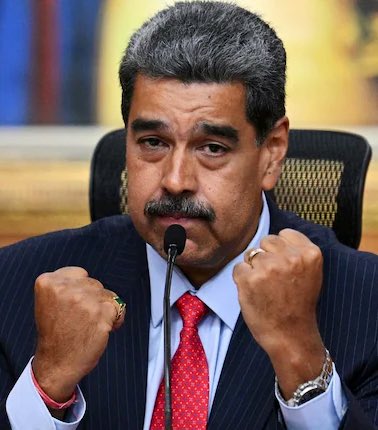
In a move that stunned diplomats, analysts and ordinary citizens alike, the United States launched a full-scale military operation in Venezuela, capturing President Nicolás Maduro and his wife, Cilia Flores, and removing them from the country in what Venezuela’s leadership has described as a kidnapping.
It followed months of escalating tension: airspace closures in late November 2025, US travel warnings in December, and a string of American military strikes in and around Venezuelan territory. But few expected it to culminate in an invasion that would test the very foundations of international law.
How the Operation Unfolded
According to media reports, more than 150 US military aircraft bombed infrastructure across northern Venezuela, clearing the way for an apprehension force that landed in Caracas. Maduro and Flores were captured and taken out of the country without any judicial process an act critics describe as extrajudicial rendition.
Venezuelan Vice President Delcy Rodríguez was blunt in her response, calling the operation a violation of sovereignty and an illegal abduction of a sitting head of state.
The World Responds, Carefully, Then Firmly
Initial international reactions were cautious. Paraguay said it was monitoring developments, while Canada urged restraint and respect for international law, stressing the Venezuelan people’s right to peace and democracy.
But as details emerged, criticism sharpened.
European leaders such as France’s Emmanuel Macron and Germany’s Friedrich Merz called for adherence to international law and warned against setting dangerous precedents. UK Prime Minister Keir Starmer distanced Britain from the operation and said he would consult allies, including US President Donald Trump.
Multilateral institutions were more alarmed. The United Nations warned that the operation appeared to breach the UN Charter, while South Africa formally called for an urgent UN Security Council meeting a notable stance given Pretoria’s consistent emphasis on sovereignty and non-intervention.
A joint statement from Brazil, Chile, Colombia, Mexico, Spain and Uruguay went further, rejecting the US action outright and warning it endangered civilians and regional peace.
Global Lines Are Drawn
Some leaders didn’t mince words. Brazil’s President Luiz Inácio Lula da Silva called the bombings and capture of Maduro an unacceptable assault on sovereignty. Mexico cited a clear violation of Article 2 of the UN Charter.
Russia labelled the invasion an act of armed aggression. China said it was “shocked” by the use of force against a sovereign state.
Israel stood alone on the other side of the divide, with Prime Minister Benjamin Netanyahu congratulating Trump on what he described as “bold and historic leadership.”
Why Venezuela? The Deeper Motives
Officially, Washington frames its actions as part of a crackdown on drug trafficking and human smuggling, pointing to repeated US naval strikes on suspected “drug boats” since September 2025.
But critics argue this explanation doesn’t hold up. Data shows the deadly fentanyl crisis in the US is overwhelmingly driven by Mexican cartels and land routes, not Caribbean maritime channels.
Analysts instead point to Venezuela’s vast oil reserves, the largest proven crude reserves on earth and the US desire to reassert dominance in the Western Hemisphere. There is also a clear geopolitical dimension: preventing Caracas from aligning too closely with China, Russia or Iran.
For Trump’s administration, forcing Maduro out had long been a strategic goal. What once seemed politically risky has now been executed through military force.
A Dangerous Precedent
Beyond Venezuela, the implications are profound. Legal scholars warn that capturing a sitting president without international authorisation undermines the rules-based global order established after World War II.
In Washington itself, critics are raising constitutional concerns, arguing that the strikes and renditions amount to extrajudicial killings and violations of both US and international law.
For countries like South Africa, long advocates of multilateralism, the fear is simple: if sovereignty can be overridden so easily, no nation is truly safe.
What Happens Next?
Venezuela’s political future is now deeply uncertain. But the bigger question may be global: has the world crossed a line where military power once again trumps international law?
As candles are lit in Caracas and debates rage in capitals worldwide, 2026 has already made one thing clear, the rules that govern the world are under unprecedented strain.
{Source: IOL}
Follow Joburg ETC on Facebook, Twitter , TikTok and Instagram
For more News in Johannesburg, visit joburgetc.com