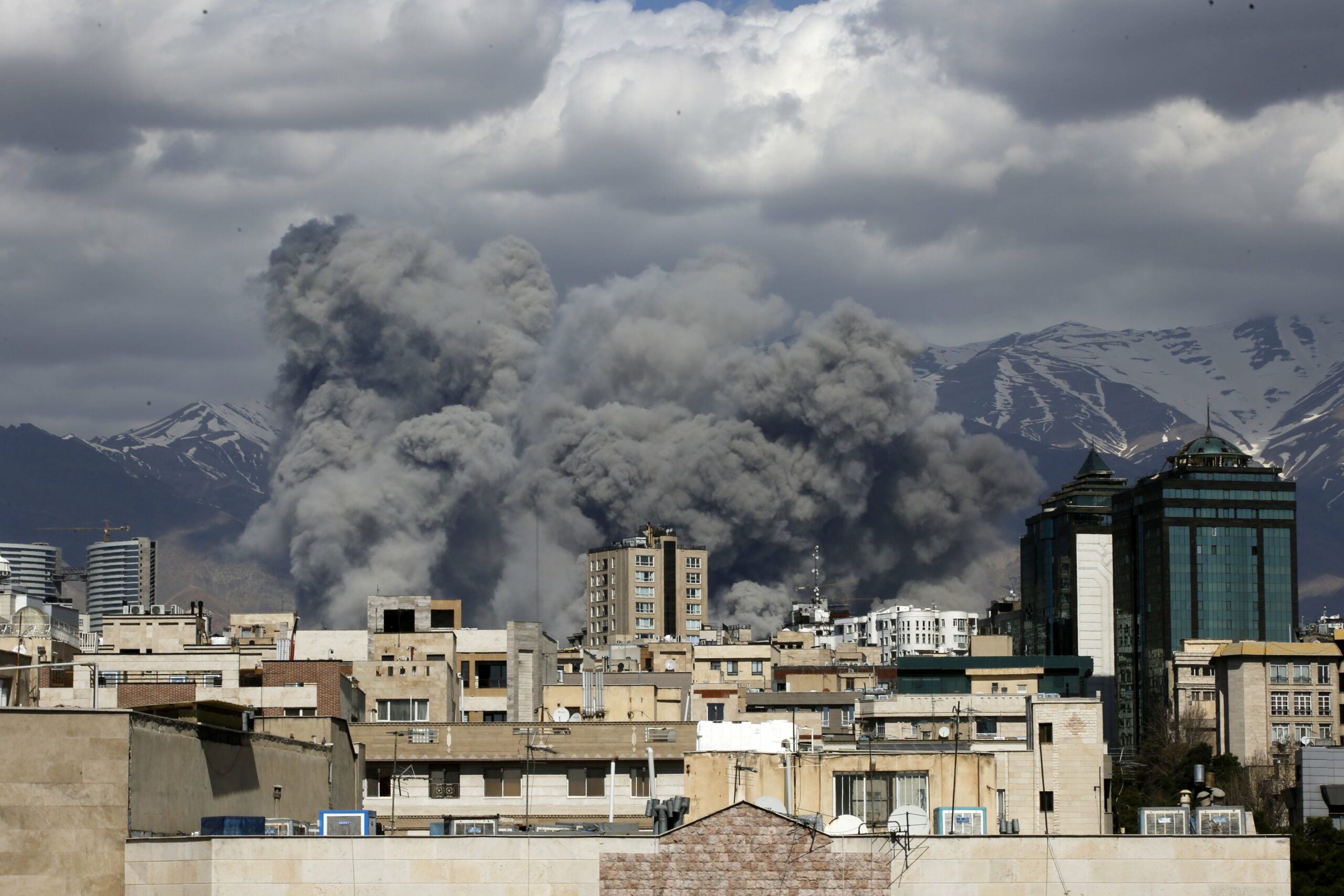
First week of US military campaign against Iran already cost over $11 billion
War has always carried a heavy human cost, but the financial price tag can be staggering too.
According to officials from the Pentagon, the first six days of the United States’ military campaign against Iran have already cost more than $11.3 billion (roughly R186.9 billion).
The estimate was shared with lawmakers during a closed-door briefing with members of the United States Congress, according to reporting by The New York Times.
And officials say the real figure is likely to climb much higher.
A preliminary estimate, with more costs still coming
The $11.3 billion figure is considered the most comprehensive early estimate provided to Congress so far.
But it only tells part of the story.
According to people familiar with the briefing, the calculation does not include several major categories of spending, including the cost of deploying military personnel and equipment before the first strikes began.
As a result, both Republican and Democratic lawmakers reportedly expect the total to increase significantly as the Pentagon completes its accounting of the operation.
In large-scale military campaigns, the early operational costs often represent just the beginning of a much longer financial commitment.
Billions spent on weapons in just two days
The scale of the spending became clear almost immediately after the conflict began.
Previous reports by The Washington Post and The New York Times revealed that about $5.6 billion in munitions were used in the first two days alone.
Those initial strikes were carried out jointly by the United States and Israel on 28 February.
Among the weapons used were AGM-154 precision-guided glide bombs, advanced munitions designed to strike targets from long distances with high accuracy.
Each of these weapons costs between $578,000 and $836,000, depending on the configuration.
The United States Navy reportedly purchased around 3,000 of these bombs roughly two decades ago.
The real price of modern warfare
Military analysts say the figures highlight just how expensive modern warfare has become.
Precision weapons, surveillance technology and long-range strike capabilities allow armed forces to conduct highly targeted operations.
But that technological edge comes at a steep price.
In recent years, defence spending has been one of the largest components of the US federal budget.
The United States already operates the world’s largest military budget and conflicts like the current Middle East escalation can quickly add billions more to the cost.
Political pressure building in Washington
Back in Washington, the growing cost of the conflict is likely to intensify debate on Capitol Hill.
Members of Congress from both major parties are expected to demand more detailed updates from the Pentagon as the operation continues.
Some lawmakers want clearer projections about how long the campaign might last and what it could ultimately cost.
Others are focused on oversight, ensuring that military spending is justified and properly accounted for.
Global reaction and public debate
News of the multi-billion-dollar price tag has already sparked debate online.
On social media, some users have questioned how governments can mobilise such vast sums for military operations while domestic programmes often face funding battles.
Others argue that the cost reflects the complexity of modern warfare and the need for advanced technology to minimise civilian casualties.
The debate echoes similar conversations that emerged during previous conflicts in the Middle East, where long-running military engagements ultimately cost trillions of dollars over time.
A conflict whose costs are still unfolding
For now, the $11.3 billion figure represents only the first snapshot of the financial burden.
Military campaigns often reveal their full cost months or even years after the fighting begins.
With operations still unfolding and new expenses likely to emerge, analysts expect the price tag for the current Middle East conflict to grow significantly.
In the meantime, the early estimate offers a stark reminder: in modern geopolitics, the cost of war can rise almost as quickly as the conflict itself.