News
Verulam Collapse Sparks Tough Questions About How Buildings Slip Through the Cracks in eThekwini
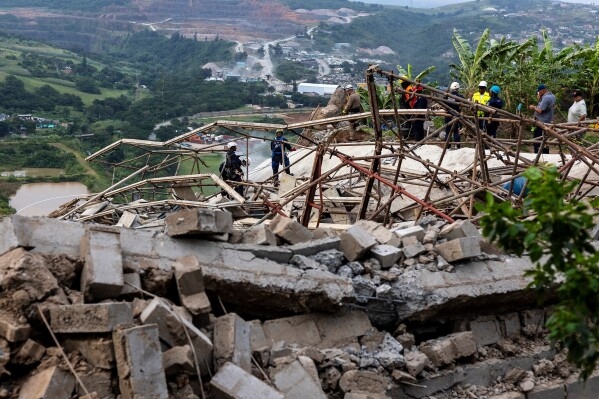
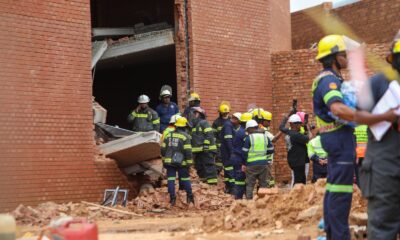
When a four storey building came crashing down in Redcliffe, Verulam, earlier this month, it was not just concrete and steel that failed. Five lives were lost. Families were shattered. And now, uncomfortable questions are being asked about how such a structure was allowed to exist in the first place.
This week, those questions moved beyond the rubble.
The Council of the Built Environment has released a preliminary report that points to something deeper than a single illegal construction. It suggests that repeated building collapses in eThekwini over the past decade may be symptoms of broader governance failures that demand urgent attention.
A Building That Should Never Have Existed
According to the council’s early findings, the Verulam building was erected without any approval from the eThekwini Metropolitan Municipality. No plans were signed off. No permits were granted. And crucially, without those approvals, inspectors had little chance of intervening before disaster struck.
That lack of oversight proved fatal.
The collapse claimed the lives of five people, once again highlighting how illegal construction often flourishes quietly until tragedy forces it into the spotlight.
A Pattern That Can No Longer Be Ignored
What makes this case particularly troubling is that it is not an isolated incident.
The council’s report points to a disturbing pattern of similar collapses across eThekwini over the past ten years. From shopping centres to commercial buildings, structures have failed with alarming regularity, raising concerns about how consistently building regulations are enforced and who ultimately carries responsibility when warnings go unheeded.
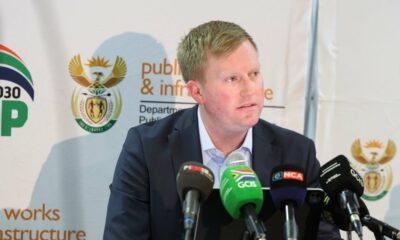
Public Works and Infrastructure Minister Dean Macpherson did not mince his words.
He said the situation reinforces the need to examine whether systemic governance failures are contributing to repeated loss of life. According to Macpherson, this is not a problem any single department can fix. It may require Cabinet level intervention, clearer lines of responsibility and possibly regulatory reform to ensure public safety comes first.
The City Pushes Back
At the same briefing, eThekwini city manager Musa Mbhele offered a strong defence of the municipality, arguing that illegal construction is extremely difficult to police in a city as large and complex as Durban.
Mbhele rejected the idea that every collapse over the past decade could be pinned on failures within the city’s systems. Drawing on his own experience, he said he was directly involved in cases like the Tongaat Mall collapse, where the city issued multiple notices but developers continued building regardless.
In his view, enforcement alone is not always enough when developers simply ignore the rules.
Public Anger And Growing Distrust
Online, the reaction has been swift and emotional.
Residents across Durban have taken to social media questioning how many warning signs are needed before stronger action is taken. Some have accused authorities of being reactive rather than preventative, while others have expressed fear about the safety of buildings they use every day.
There is also growing frustration that consequences for illegal developers often come too late, long after lives have been lost.
What Happens Next
The preliminary report is only the beginning. A full investigation is expected to dig deeper into whether governance gaps, weak coordination or outdated regulations are enabling unsafe construction to continue unchecked.
For communities like Verulam, the hope is that this tragedy becomes a turning point rather than another statistic.
Because behind every collapsed building are people who trusted that the walls around them were safe.
{Source:EWN}
Follow Joburg ETC on Facebook, Twitter , TikTok and Instagram
For more News in Johannesburg, visit joburgetc.com