News
The Real Power Beneath the Ground: Who Actually Controls the World’s Oil?
Why oil suddenly matters to everyone again
For years, lists ranking the world’s biggest oil reserves felt like niche reading useful for economists, energy analysts and policy wonks, but far removed from everyday life. That changed overnight.
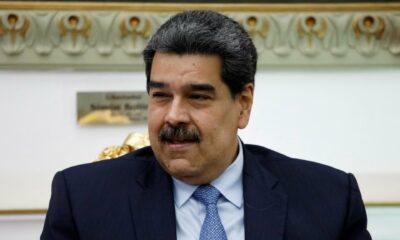
Recent US military action in Venezuela, including the capture of President Nicolás Maduro and the seizure of oil-linked assets, has dragged the world’s attention back to a blunt reality: oil still shapes power, conflict and global stability. In a world already strained by wars, sanctions and fragile supply chains, knowing who actually controls the remaining oil is no longer academic, it’s strategic.
This is not just about barrels in the ground. It’s about access, cost, politics and who gets to decide how energy flows.
1. Venezuela, The richest oil nation that can’t cash in
Estimated reserves: ±303 billion barrels
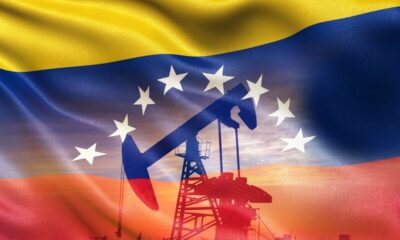
Venezuela sits on the largest proven oil reserves on Earth, yet remains one of the poorest oil-producing nations in practice. Its crude is heavy, deep and expensive to extract, requiring advanced technology and investment that sanctions and political instability have made scarce.
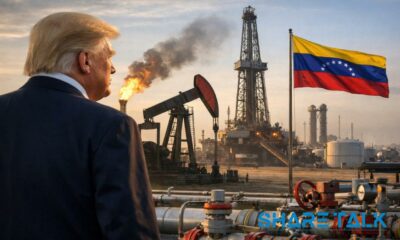
Recent US intervention has thrust Venezuela’s oil back into the global spotlight. For many analysts, this isn’t coincidental. Control over Venezuelan oil would reshape energy leverage in the Western Hemisphere. Locally, the situation has sparked heated debate across social media, with many in the Global South viewing the crisis as a familiar story of resource-rich nations becoming geopolitical battlegrounds.
2. Saudi Arabia, Oil wealth done the easy way
Estimated reserves: ±267 billion barrels
Saudi Arabia ranks second but often feels like number one. Its oil is accessible, onshore and comparatively cheap to extract. This advantage has allowed the kingdom to build enormous wealth, global influence and dominance within OPEC.
Unlike Venezuela, Saudi Arabia’s oil flows steadily, making it a stabilising or destabilising force depending on how it chooses to wield production cuts or increases.
3. Iran, Energy power under sanctions
Estimated reserves: ±208–209 billion barrels
Iran rounds out the top three, holding a massive share of the world’s future energy. Like Venezuela, its reserves are constrained less by geology and more by geopolitics.
Western sanctions have limited Iran’s ability to export freely, tightening global supply expectations through at least 2026. Each flare-up in Middle Eastern tensions sends oil traders scrambling, showing just how sensitive markets remain to Iranian output.
4. Canada, A ranking that depends on definitions
Estimated reserves: ±163 billion barrels (including oil sands)
Canada’s position on this list depends entirely on what counts as “oil.” When oil sands are included, Canada ranks fourth globally. When excluded, its reserves shrink dramatically.
The oil sands are energy-intensive and environmentally controversial, but they give Canada long-term strategic weight especially as traditional reserves elsewhere decline.
5. Iraq, Oil despite everything
Estimated reserves: ±145 billion barrels
Decades of war and political instability haven’t erased Iraq’s oil wealth. It remains one of the world’s most important energy players, supplying global markets even amid ongoing domestic challenges.
Iraq’s oil story is a reminder that reserves alone don’t guarantee prosperity governance and stability matter just as much.
6. United Arab Emirates, Quietly powerful
Estimated reserves: ±113 billion barrels
The UAE often flies under the radar, but its reserves reinforce the Middle East’s dominance of global energy. Combined with diversification into renewables and logistics, oil has helped the UAE build outsized influence for a relatively small country.
7. Kuwait – Small country, massive reserves
Estimated reserves: ±101.5 billion barrels
Kuwait’s wealth is almost entirely built on oil. With over 100 billion barrels, it plays an outsized role in OPEC decisions and global supply management, despite its small population.
8. Russia, Oil’s quieter sibling to gas
Estimated reserves: ±80 billion barrels
Russia is better known for natural gas, but its oil reserves still place it among the global heavyweights. Alongside Canada, Russia is one of the few major non-OPEC players capable of influencing supply at scale.
Sanctions have reshaped where Russian oil goes, not how much of it exists.
9. United States – Producing more than it owns
Estimated reserves: ±45–74.4 billion barrels
The US is the world’s largest oil producer, pumping roughly 13 million barrels a day, thanks to shale technology. But production dominance hides a long-term weakness: relatively modest reserves.
The US also consumes more oil than any other country. This imbalance explains its aggressive interest in external supply routes and resource-rich neighbours. From this angle, Venezuela’s oil doesn’t just look attractive it looks necessary.
10. Libya – Africa’s oil giant in waiting
Estimated reserves: ±48.4 billion barrels
Libya holds Africa’s largest oil reserves, but internal instability regularly disrupts output. When calm returns, Libyan oil has the potential to significantly influence Mediterranean and European energy markets.
Who really holds the power?
While technology has allowed countries like the US to dominate short-term production, the long game tells a different story. OPEC members control more than 60% of the world’s proven oil reserves roughly 1.7 trillion barrels.
That reality explains why geopolitical pressure keeps circling the same countries. In an era of energy transition talk, oil still dictates alliances, interventions and economic survival.
For now, the true “keys to the kingdom” remain buried underground, especially beneath Venezuela waiting for whoever can unlock them.
{Source: IOL}
Follow Joburg ETC on Facebook, Twitter , TikTok and Instagram
For more News in Johannesburg, visit joburgetc.com