Opinion
If you’re old enough to drive, you’re old enough to see what crashes really do
If you’re old enough to drive, you’re old enough to see what crashes really do
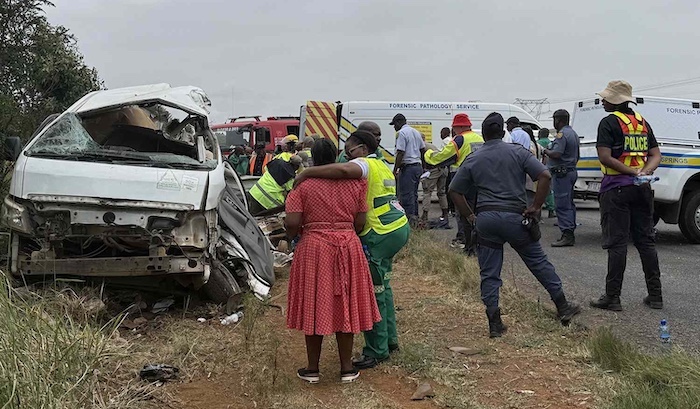
There are moments after a national tragedy when words feel inadequate. The Vaal Triangle crash that claimed the lives of 14 children is one of those moments. After hearing how families were forced to walk past body after body in a morgue, searching for a sign, any sign of their child, after learning that bystanders were left sobbing at the scene and emergency workers are still shaken days later, sympathy alone feels hollow.
And yet, sitting with the horror of it all, one uncomfortable thought refuses to go away: none of this is new.
We drive among danger every day
Anyone who has spent time on South African roads knows the feeling. You grip the steering wheel a little tighter. You watch the rear-view mirror more than the road ahead. You brace yourself at intersections.
People drive like they are untouchable. They weave through traffic as if metal, speed and physics don’t apply to them. They text. They drink. They overtake blindly. They drive angry, entitled, convinced that disaster is something that only happens to other people.
The issue isn’t just unroadworthy vehicles or unlicensed drivers, though those exist in worrying numbers. The deeper problem is attitude. Too many drivers behave as if crashing into another car at 60km/h is somehow different from driving straight into a wall at the same speed.
It isn’t.
Physics doesn’t negotiate
What many drivers seem to forget or choose to ignore, is that speed multiplies force. Collide with another vehicle travelling toward you at the same speed and the impact is catastrophic. Add a truck into that equation and the outcome is almost always fatal. Double the speed, and the force involved doesn’t just double it explodes.
This isn’t theory. It’s reality, written across crash sites, twisted metal and broken families.
And still, we overtake. Still, we push. Still, we convince ourselves we’ll be fine.
What emergency workers see and never forget
More than three decades ago, while covering road accidents as a reporter, I was shown something that permanently changed how I drive. A fire chief opened his photo albums the kind no one ever posts online.
The images were brutal. Bodies torn apart. People sitting upright in their seats, yet missing the top third of their heads. Scenes so violent they rewire your brain.
I have never overtaken casually since.
Emergency responders across the country carry those images with them every day. After the Vaal Triangle crash, many of them are reliving that trauma once again quietly, professionally, while the rest of us scroll past headlines.
Why shock tactics might actually save lives
Here’s the uncomfortable suggestion: those images should not be hidden away.
If you’re old enough to apply for a driving licence, you’re old enough to see the consequences of reckless driving. Graphic, honest, unfiltered consequences. Not sanitised videos or polite warnings the real cost of a bad decision at speed.
Countries that have used shock-based road safety campaigns have seen behaviour change. Fear, when grounded in reality, can be an effective teacher.
Because this isn’t just about the driver. It’s about the minibus full of children on their way to school. It’s about the families who now measure time as “before” and “after” a phone call. It’s about the paramedics and call centre operators who go home in tears.
A culture that must change
Public reaction online after the Vaal Triangle tragedy has been raw. Anger, grief and frustration have flooded social media feeds, with many asking why nothing ever seems to change despite South Africa’s staggering road death toll.
The truth is, we cannot enforce our way out of this crisis alone. Cameras, fines and checkpoints matter but mindset matters more.
Driving is not a right. It is a responsibility with irreversible consequences.
So buckle up. Slow down. Put the phone away. And if seeing the truth of what happens on our roads makes you uncomfortable good. That discomfort might be what saves a life.
{Source: The Citizen}
Follow Joburg ETC on Facebook, Twitter , TikTok and Instagram
For more News in Johannesburg, visit joburgetc.com