Sports
Ferrari’s Radical ‘Macarena Wing’ Set For Chinese GP Debut As F1 Drivers Debate 2026 Rules
Formula 1’s technology race never stands still, and this weekend’s Chinese Grand Prix could offer the latest glimpse of just how far teams are willing to push the limits.
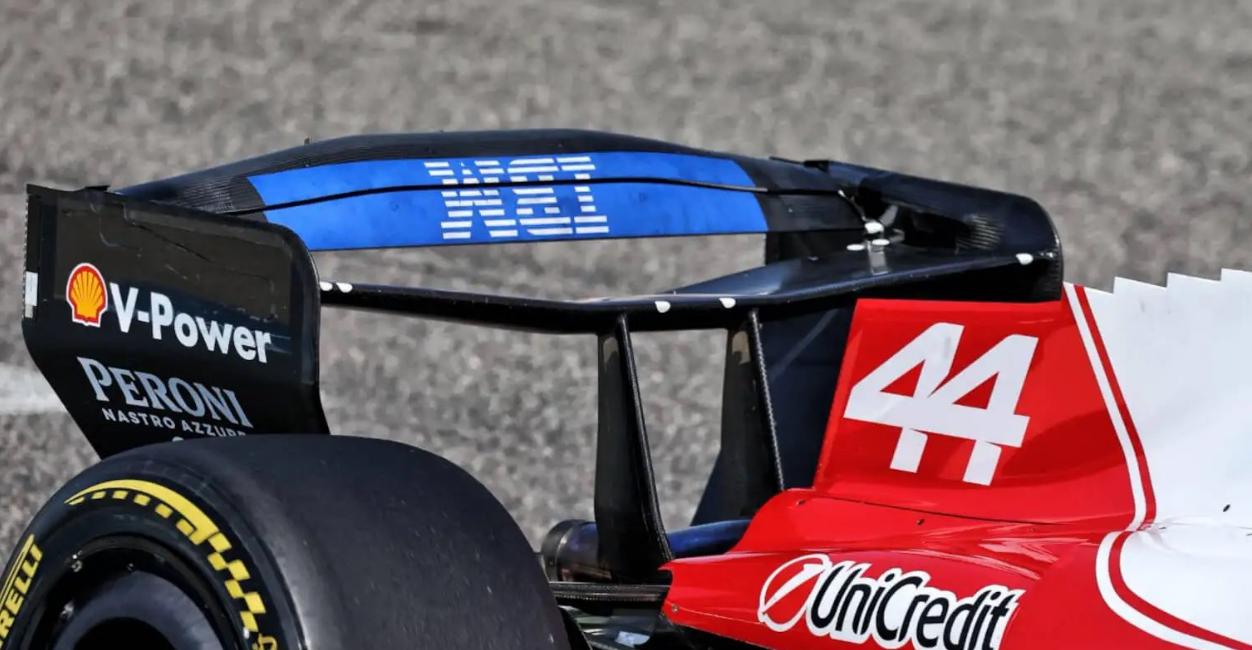
Ferrari is preparing to run its unusual rotating rear wing during Friday practice in Shanghai. The experimental design, which caught the attention of the paddock during pre season testing, has already earned a nickname among drivers and engineers. Many are calling it the “Macarena wing”.
Seven time world champion Lewis Hamilton confirmed the Scuderia plans to test the eye catching innovation as the Italian team looks to close the gap to Mercedes at the front of the field.
Ferrari’s Bold Experiment In Shanghai
The rear wing in question is far from conventional. Instead of simply flattening or adjusting angle like most Formula 1 drag reduction systems, Ferrari’s design rotates completely, flipping upside down.
The unusual movement stunned several drivers during testing in Bahrain. Haas rookie Ollie Bearman, who followed Hamilton’s Ferrari on track during the session, admitted he initially thought something had gone wrong with the car.
Hamilton himself said the device was not originally scheduled to appear this early in the season.
But with the competitive margins razor thin in 2026, Ferrari appears eager to accelerate development.
“It’s great to see that the team are fighting and pushing,” Hamilton said when discussing the upgrade. According to the Briton, engineers back at the factory have been working overtime to bring improvements to the car.
For Ferrari, innovation is essential if the team hopes to challenge Mercedes for race wins this season.
A Wing Designed For Speed
The Shanghai International Circuit is the perfect testing ground for aerodynamic experiments.
One of the track’s defining features is its long back straight, where Formula 1 cars can reach speeds above 340 kilometres per hour. That makes reducing aerodynamic drag a key advantage.
Experts believe Ferrari’s rotating wing could help in two ways. When flipped, the component may reduce drag and potentially generate uplift, changing the airflow in a way that improves straight line performance.
Hamilton said he did not personally feel a major difference when deploying the wing during testing in Bahrain. Still, the design has sparked curiosity across the paddock.
If the concept works, it could become one of the most talked about technical developments of the season.
Hamilton Enjoying A Fresh Start
The British driver enters the Chinese Grand Prix in a more optimistic frame of mind compared with last year.
Hamilton’s first season with Ferrari in 2025 produced only limited highlights. His victory in the Chinese Grand Prix Sprint Race stood out in an otherwise frustrating campaign as the team focused much of its energy on preparing for the sweeping 2026 rule changes.
With the new generation of cars now on track, Hamilton says he feels more comfortable behind the wheel.
According to him, the latest machines are far more enjoyable to drive than the ground effect era cars used between 2022 and 2025.
Drivers Split On Formula 1’s New Era
While teams continue to innovate with designs like Ferrari’s wing, the biggest talking point in the paddock remains Formula 1’s dramatic rule overhaul.
The 2026 regulations introduced major changes to both engines and chassis, shifting a larger share of power generation to electrical systems.
This shift has forced drivers to think differently about racing. Energy management has become a crucial part of strategy, with drivers sometimes lifting off the throttle on straights to preserve battery power.
Twice world champion Fernando Alonso believes the new approach has changed the nature of the sport.
In the past, he said, drivers attacked corners at the absolute limit of physics, relying heavily on bravery and instinct. Now, the challenge has become more tactical.
Ferrari’s Charles Leclerc echoed that view. The Monegasque driver explained that overtaking is no longer simply about braking later than a rival. Drivers must constantly think about how their energy use will affect the next straight or even several corners later.
Not Everyone Is Convinced
Some drivers are less enthusiastic about the direction Formula 1 has taken.
McLaren’s Oscar Piastri said pushing harder in qualifying did not necessarily translate into faster lap times. According to him, driving more aggressively sometimes made the car slower on the straights.
Williams driver Carlos Sainz went even further, suggesting the regulations may need revisiting.
Sainz criticised the need to lift and coast during a qualifying lap and questioned whether the new style of racing truly reflects traditional Formula 1 overtaking.
His comments highlight a wider debate within the sport. While engineers celebrate the technical challenge of the new rules, some drivers feel the balance between strategy and pure driving skill has shifted.
Innovation Still At The Heart Of F1
Despite the debate around the regulations, one thing remains certain. Formula 1 continues to thrive on innovation.
Ferrari’s rotating wing is a reminder that teams will always search for creative solutions to gain even the smallest performance advantage.
Whether the “Macarena wing” becomes a breakthrough or simply an experimental footnote, its appearance in Shanghai will be closely watched across the grid.
In a sport where milliseconds can decide championships, even the strangest ideas can sometimes become the next big advantage.
{Source:SuperSport}
Follow Joburg ETC on Facebook, Twitter , TikTok and Instagram
For more News in Johannesburg, visit joburgetc.com