News
Public Protector clears Dean Macpherson after EFF ethics complaint
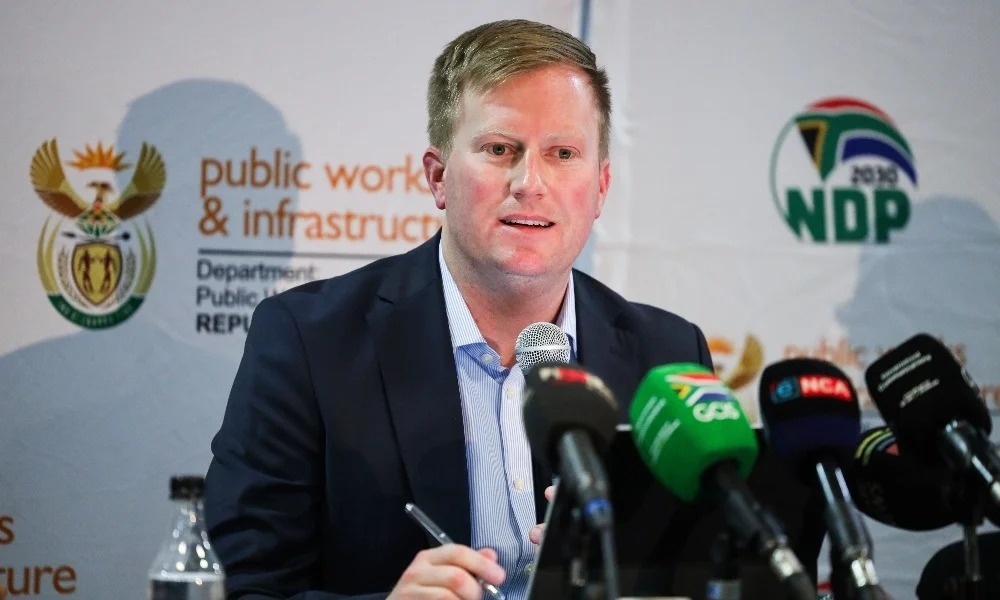
Public Protector clears Dean Macpherson in EFF ethics complaint
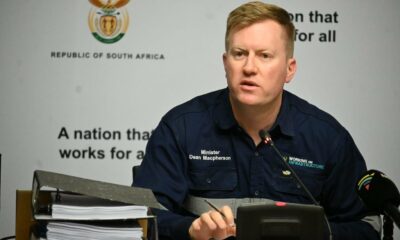
After a year of political tension and public speculation, the Public Protector has formally cleared Public Works Minister Dean Macpherson of any ethical wrongdoing. The ruling brings to a close a high-profile complaint lodged by the Economic Freedom Fighters, which accused the minister of abusing his office while dealing with the troubled Independent Development Trust.
The decision, confirmed in a report seen this week, finds that Macpherson neither overstepped his authority nor breached the Executive Ethics Code. For many observers, it is a moment that highlights how deeply political battles now intersect with South Africa’s ongoing governance crises.
What the complaint was really about
The EFF’s complaint, filed in January 2025, centred on Macpherson’s involvement with the Independent Development Trust, a state entity long associated with delayed payments and administrative breakdowns. The party argued that by questioning stalled payments to a service provider, the minister had improperly interfered in the entity’s operations.
At the heart of the issue were unpaid contractors, a familiar story for anyone who has dealt with government-linked projects. Delays of this kind have become a defining frustration across several state institutions, affecting infrastructure delivery and livelihoods in equal measure.
Findings from the Public Protector
Public Protector Kholeka Gcaleka concluded that Macpherson acted within the bounds of his role. The report states that his conduct aligned with cooperative governance and complied with National Treasury rules, including the requirement that service providers be paid within 30 days.
Crucially, the investigation found no evidence of bribery, favouritism, conflict of interest, abuse of power, or undue influence. Claims circulating in political spaces that journalists had been bribed were also dismissed after the complainant failed to provide proof.
The report further noted that the EFF did not respond after a draft version was shared with parties in October 2025, a silence that weakened the credibility of the allegations.
Political fallout and public reaction
Macpherson welcomed the findings, describing them as a vindication. He accused the EFF, supported at the time by ActionSA, of running a politically motivated campaign aimed at blocking reform efforts within the IDT. ActionSA had previously called for his suspension while the probe was underway.
On social media, reaction has been sharply divided. Supporters argue that the report exposes how ethics complaints can be weaponised to stall reform. Critics insist that scrutiny of ministers remains necessary given the country’s history of state capture and institutional collapse.
A wider trust problem
Beyond party politics, the case underscores a deeper national issue. The IDT has for years symbolised broader failures in governance, from mismanagement to waste. For communities waiting on schools, clinics, and other social infrastructure, delayed payments are not an abstract debate but a daily reality.
Macpherson has framed the ruling as support for tougher accountability across public entities, particularly those serving rural and neglected urban areas. He has also indicated that he is considering civil action against individuals or parties he believes knowingly spread false claims.
Whether that happens or not, the report closes one chapter while reopening a larger question. How does South Africa balance legitimate oversight with the urgent need to fix institutions that are already struggling to function?
Follow Joburg ETC on Facebook, Twitter, TikT
For more News in Johannesburg, visit joburgetc.com
Source: IOL
Featured Image: News24