News
Phahlane says his removal had nothing to do with corruption
“I was told to go home”
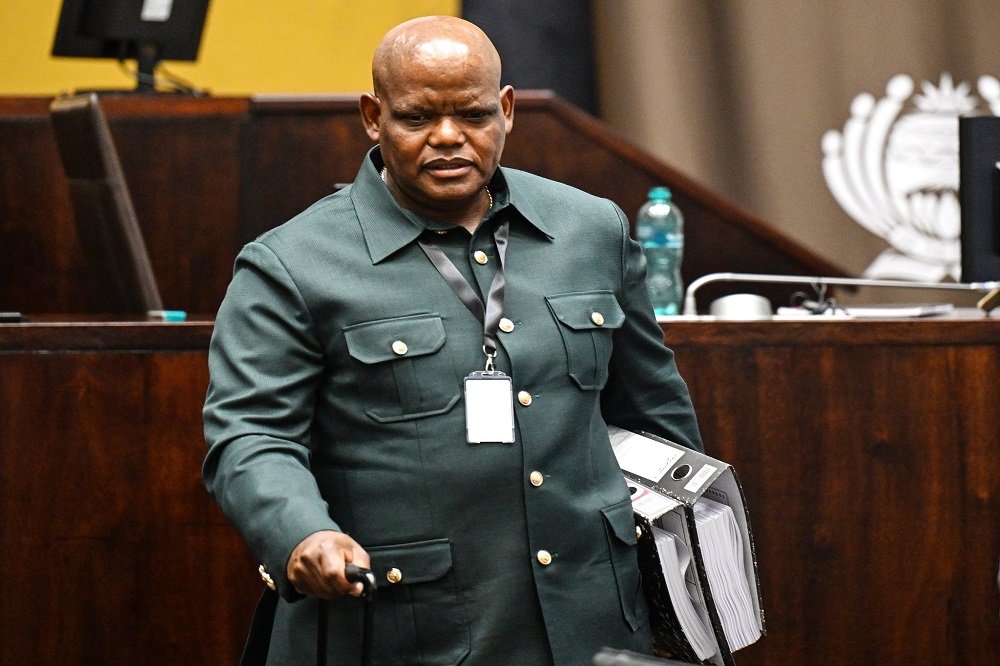
Former acting national police commissioner Khomotso Phahlane has pushed back hard against the long-standing belief that he was removed from office because of corruption, telling MPs that his exit from the top police job was both unlawful and deeply informal.
Appearing before Parliament’s ad hoc committee investigating police corruption in Cape Town, Phahlane described his 2017 suspension as a rushed political decision taken at the height of negative media coverage, not a lawful process grounded in evidence or due procedure.
According to him, the narrative that he was “fired for corruption” has stuck for years, despite never being properly tested or proven.
A five-minute meeting that changed everything
Phahlane told MPs that the sequence of events leading to his removal began with a sudden call from then-police minister Fikile Mbalula’s office, instructing him to travel to Cape Town.
No reasons were provided. No charges were outlined.
When he arrived, he waited more than three hours before being ushered into what he described as a meeting that lasted less than five minutes.
“There were no allegations put to me,” Phahlane said. Instead, Mbalula allegedly suggested that, given the “negativity in the media”, it might be better for him to step aside.
Phahlane agreed, saying he was never attached to the position, but he immediately questioned the legality of the request.
“Only the president can do that”
One of the central points of Phahlane’s testimony was constitutional authority.
He told the committee that, under the Constitution and the SAPS Act, only the president has the power to suspend or remove a national police commissioner.
“No instruction came from the president,” he said. “That made it illegal.”
He added that he received no written suspension letter, no formal explanation of what “stepping aside” meant, and no instructions on how authority should be handed over.
“I asked two questions,” he told MPs. “Who do I hand over to, and what does stepping aside mean?”
The answer, he said, was simply: “Go home.”
The allegations that followed
At the time, Phahlane was linked to investigations around a so-called “blue lights” tender and alleged procurement irregularities involving panoramic camera contracts.
Before Parliament, he denied wrongdoing and told MPs he never even procured the devices at the centre of the controversy.
The case, and the manner of his removal, have remained contentious for years particularly given that the suspension preceded any formal findings.
Phahlane later challenged the process at the Labour Appeal Court, arguing that his removal was procedurally unfair.
A “guinea pig” for step-aside politics?
In a striking moment during his testimony, Phahlane suggested that his case quietly laid the groundwork for what would later become the ANC’s formal “step-aside” policy.
“I was a guinea pig,” he said.
According to him, the decision to push him out happened long before clear rules existed on how public officials should step aside amid allegations, leaving him in legal and professional limbo.
“My removal cannot be found anywhere in the prescriptions of the law,” he told MPs.
Why this matters now
Phahlane’s testimony comes at a sensitive moment for policing in South Africa.
Earlier this month, KwaZulu-Natal police commissioner Lt-Gen Nhlanhla Mkhwanazi alleged deep infiltration within the police service and even the judiciary, claims that have intensified scrutiny of leadership decisions within SAPS.
On social media, Phahlane’s appearance has sparked renewed debate about political interference in policing, with some users questioning whether media pressure has too often substituted for due process in high-profile removals.
The parliamentary inquiry continues, with proceedings expected to run late into the evening.
For now, Phahlane’s account challenges a narrative many South Africans had accepted as settled and raises uncomfortable questions about power, perception and legality at the very top of the police service.
{Source: IOL}
Follow Joburg ETC on Facebook, Twitter , TikTok and Instagram
For more News in Johannesburg, visit joburgetc.com