News
Calls grow for Godongwana to step aside as economists slam growth forecasts
Calls grow for Godongwana to step aside as economists slam growth forecasts
South Africa has heard the phrase “we’ve turned the corner” more times than many care to count.
But on the ground, in townships, suburbs and industrial hubs, that corner still feels far away.
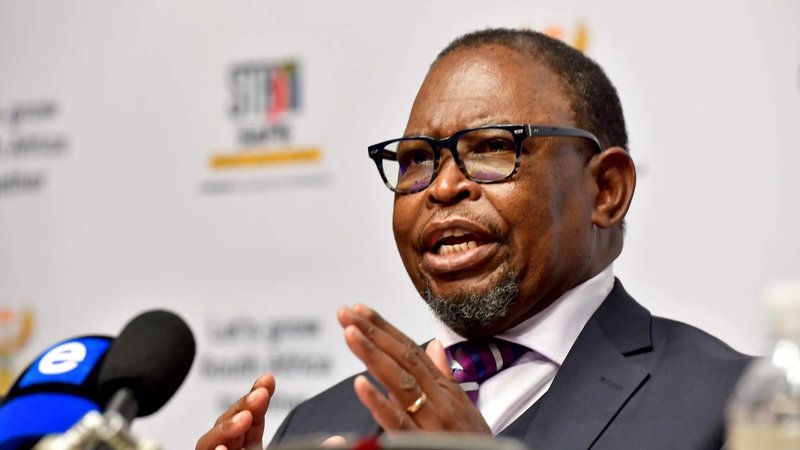
Now, economist Duma Gqubule says it’s time for accountability. His message is blunt: Finance Minister Enoch Godongwana should step aside.
“Over-optimistic for too long”
Gqubule argues that the country’s weak economic performance is not a sudden shock but the result of years of overly hopeful forecasting by the National Treasury.
Between 2009 and 2025, South Africa’s average GDP growth sat at just 1.2%. Over the same period, GDP per capita declined and unemployment entrenched itself as one of the highest in the world.
For Gqubule, those numbers tell a story of stagnation, not recovery.
He says Treasury has repeatedly overestimated growth, missing the mark year after year. When projected figures are consistently revised downward, he argues, it points to flawed fiscal assumptions rather than unpredictable shocks.
A budget without boldness?
Speaking during a post-budget webinar hosted by the North-West University Business School under its Pitso programme, Gqubule did not mince words.
He described the latest budget as lacking transformative substance “lots of details about nothing,” in his view.
Treasury’s suggestion that growth could reach 1.6% annually did not impress him. He pointed out that a previous forecast of 1.9% for last year had proven unrealistic in the current economic climate.
To ordinary South Africans grappling with high food prices, rising electricity tariffs and job insecurity, such growth figures often feel abstract. What matters more is whether there are jobs.
And on that front, Gqubule sees little progress.
The jobs question
One of his strongest criticisms relates to employment. He argues that the budget has not been used aggressively enough to stimulate job creation.
He cited the cancellation of the basic education employment initiative a large-scale teacher assistant programme that reportedly created around 1.3 million job opportunities as a missed opportunity.
At a time when youth unemployment remains painfully high, the scrapping of such programmes carries both economic and political consequences.
In communities where young people queue daily outside factories or scan job boards online with little success, the frustration is palpable. On social media, reactions to the budget have ranged from cautious optimism to outright anger, with many users questioning where tangible job growth will come from.
Investment still sliding
Government has often pointed to Operation Vulindlela launched in 2020 as a reform engine meant to unlock infrastructure bottlenecks and stimulate private investment.
But Gqubule highlighted two consecutive years of declining investment: 3.9% in 2024 and 2% the following year.
For him, that undermines claims that structural reforms are gaining meaningful traction.
If investment shrinks, growth struggles. If growth struggles, jobs disappear. The cycle continues.
Optimism versus realism
Not everyone on the webinar panel agreed entirely with Gqubule’s bleak assessment.
Economist Xhanti Payi suggested that while Treasury’s estimates may appear optimistic, they could be part of a broader strategic narrative aimed at restoring confidence.
Markets respond to signals. Investors listen closely to tone. Governments sometimes project optimism to shift sentiment.
The real question, however, is whether confidence can be sustained without visible change.
A crossroads moment
South Africa’s economic debate often swings between hope and hard reality.
On one side are policymakers arguing that fiscal prudence and gradual reform will yield results. On the other are critics who say incrementalism has delivered two decades of underperformance.
With growth averaging barely above 1% for years, unemployment entrenched, and living costs climbing, the pressure on Treasury is intensifying.
Gqubule’s call for Godongwana to step aside is not just about one budget speech. It reflects a deeper frustration about direction, pace and priorities.
Whether leadership changes or not, one thing is clear: South Africans are less interested in forecasts and more interested in outcomes.
The next few years will show whether optimism was misplaced or simply premature.
{Source: The Citizen}
Follow Joburg ETC on Facebook, Twitter , TikTok and Instagram
For more News in Johannesburg, visit joburgetc.com