News
Middle East war: Israel advances in Lebanon as drones hit Saudi and Oman
The Middle East woke up to more smoke, sirens, and urgent warnings this week as the conflict widened across borders. From southern Lebanon to Riyadh’s diplomatic quarter, the region’s fragile calm has given way to rapid military escalation.
Israel’s Defence Minister, Israel Katz, confirmed on Tuesday that Israeli forces had been instructed to take control of additional strategic positions in Lebanon. The move, he said, was authorised alongside Prime Minister Benjamin Netanyahu and aims to prevent further attacks on Israeli border communities.
The announcement followed renewed hostilities involving Hezbollah, the Iran-backed armed group that has stepped up its involvement after the outbreak of war between Israel, the United States, and Iran.
Israel pushes deeper into Lebanon
According to Israeli officials, the expansion into Lebanon is intended to secure buffer zones and neutralise threats from rocket and drone fire. The Israeli military has also issued fresh evacuation warnings to dozens of locations across southern Lebanon and parts of Beirut’s southern suburbs, including Ghobeiry, Haret Hreik, and Hadath.
Residents were told to move at least 300 metres away from specific buildings identified as Hezbollah-linked sites. These warnings came after Israel vowed to intensify operations following rocket and drone attacks launched towards Israeli territory.
Lebanon’s government has taken the rare step of banning Hezbollah’s military and security activity, a decision that reportedly drew sharp criticism from the group itself. The Lebanese government says Israeli strikes have killed at least 52 people and wounded 154.
For many across the region, this marks one of the most volatile chapters in the long-running Israel-Lebanon conflict. Southern Lebanon has repeatedly been a flashpoint, but the scale and speed of recent developments have raised fears of a broader regional war.
Drones hit Oman and Saudi Arabia
While Israel and Lebanon exchanged fire, the Gulf region faced its own wave of attacks.
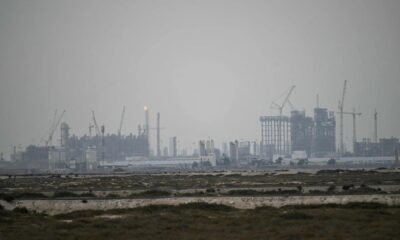
In Oman, drones targeted the commercial port of Duqm. The Oman News Agency reported that one drone struck a fuel tank at the port. Damage was contained, and no casualties were reported.
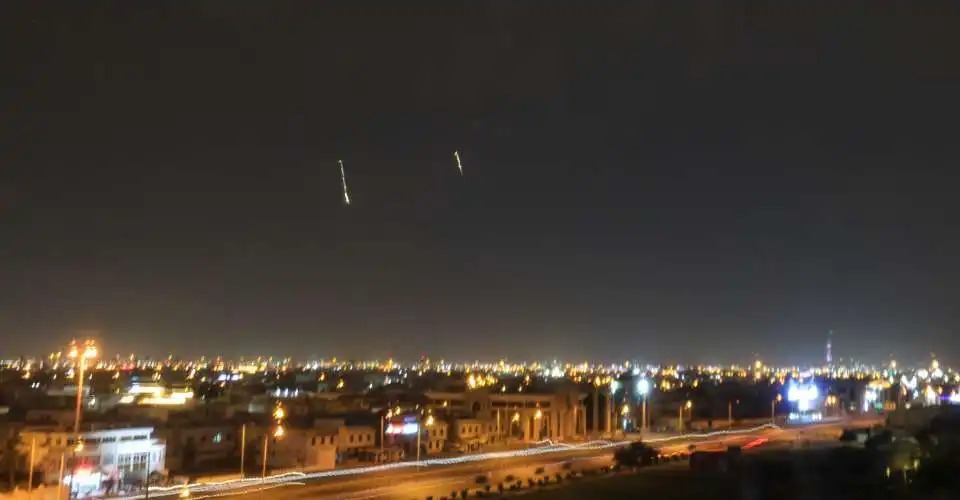
In Saudi Arabia, two drones attacked the US embassy in Riyadh, sparking a limited fire and causing minor structural damage. Fire engines were seen around the diplomatic compound, and Saudi authorities said air defences intercepted multiple drones aimed at the capital’s diplomatic quarter.
Later in the day, Saudi defence officials confirmed that eight drones had been intercepted and destroyed near Riyadh and Al Kharj.
The US embassy issued shelter-in-place notifications for Riyadh, Jeddah and Dhahran, and limited non-essential travel to military installations in the region.
Gulf states under pressure
The attacks were not isolated. The UAE reported that it was dealing with ballistic missiles launched from Iran, while Qatar confirmed it had intercepted two ballistic missiles early Tuesday morning.
Missiles and drones have reportedly struck ports, airports, residential buildings, and hotels across the Gulf. In Kuwait City, smoke was seen rising from the US embassy compound, and diplomats indicated that drones had damaged the building.
The growing conflict began over the weekend following joint US-Israeli strikes on Iran, which Tehran said resulted in dozens of civilian deaths, including its supreme leader.
Across social media, reactions have ranged from alarm to disbelief. Many in the Gulf states expressed concern about the vulnerability of diplomatic and civilian infrastructure, while others warned that the conflict is spilling beyond traditional front lines.
A region on edge
For countries that have invested heavily in projecting stability and economic strength, especially oil-rich Gulf states, the latest attacks strike at the heart of that image. Ports, embassies, and residential areas are symbols of international connectivity and security. Seeing them targeted sends a powerful message.
Back in South Africa, foreign policy analysts are closely watching developments. With thousands of South Africans living and working across the Gulf and the broader Middle East, questions are once again being raised about regional safety and diplomatic readiness.
What is clear is this: the Middle East war has moved beyond isolated clashes. It now stretches from Lebanon’s southern villages to the diplomatic quarters of Riyadh and the commercial ports of Oman. Each new strike increases the stakes, and the world is watching to see whether this escalation can be contained or whether it will pull even more players into the fray.
Follow Joburg ETC on Facebook, Twitter, TikT
For more News in Johannesburg, visit joburgetc.com
Source: The Citizen
Featured Image: ucanews.com