Malema and wife lead ‘Kill The Boer’ chant after dramatic court day
Courtroom drama spills into political theatre outside
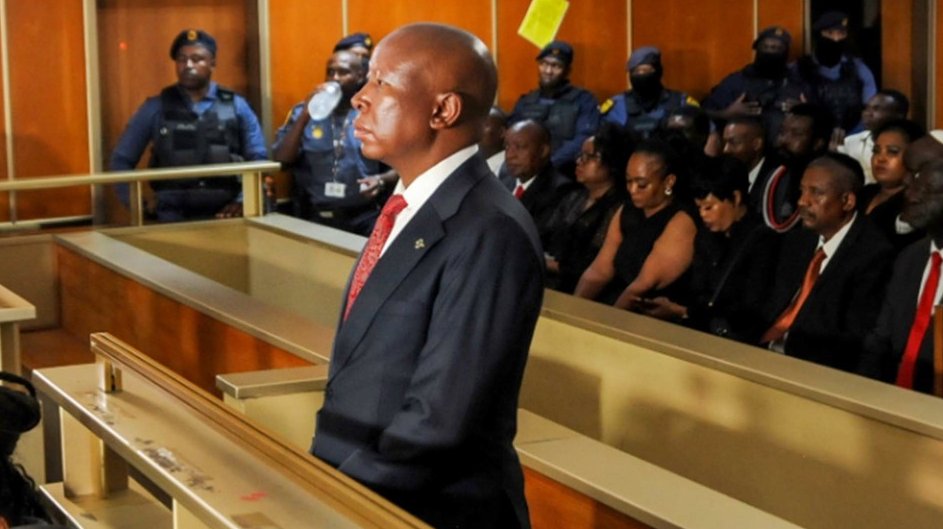
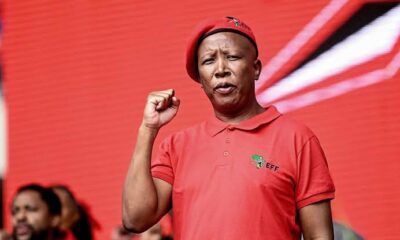
A tense legal battle quickly turned into a political spectacle when Julius Malema emerged from court and joined supporters in singing the controversial struggle song Kill The Boer.
Standing beside him was his wife, Mantoa Matlala, as senior Economic Freedom Fighters figures and supporters gathered outside court following one of the most dramatic days in the party leader’s political career.
The scene blended courtroom tension, protest energy and symbolism something South African politics often delivers in ways few other democracies do.
What happened after sentencing
Malema had been sentenced to five years’ direct imprisonment after his conviction for unlawfully discharging a firearm.
However, he was later released on warning after bail was granted while he appeals the sentence.
Once outside, Malema addressed supporters and sharply criticised the magistrate, describing the ruling in strongly political terms.
He also said the EFF had prepared contingency plans in case he was taken directly into custody.
The speech ended in familiar style: song, slogans and mobilisation.
Why the song remains so controversial
The anthem Kill The Boer, also known as Dubul’ ibhunu, remains one of South Africa’s most debated struggle songs.
To supporters, it is a historic liberation-era chant tied to resistance against apartheid oppression.
To critics, the lyrics are inflammatory and dangerous in modern South Africa, where race relations remain sensitive and farm attacks often dominate political debate.
The song has drawn criticism internationally too, including from high-profile figures such as Elon Musk and US President Donald Trump, who have linked it to claims of anti-white violence.
Malema’s long-standing defence
Malema has repeatedly defended singing the song, arguing it is part of South Africa’s liberation heritage rather than a literal call to violence.
He has said the chant predates him and belongs to the generation that fought apartheid.
His broader argument has been that historical songs should be understood in political context, not stripped of history and interpreted only through present-day language.
That stance continues to resonate with many EFF supporters, especially younger members who see the party as unapologetically radical.
Courts have already weighed in
South Africa’s courts have also played a role in the debate.
The Equality Court previously ruled that the song did not amount to hate speech in the context presented before it.
Later, the Constitutional Court declined an appeal brought by AfriForum, leaving that outcome in place.
Those rulings have often been cited by Malema and the EFF whenever criticism resurfaces.
Police praise calm EFF supporters
Despite fears that a high-profile sentencing could trigger unrest, police described the atmosphere around the court as orderly and peaceful.
Authorities commended supporters for respecting the law and gathering calmly.
That response matters. South Africa has seen politically charged court appearances become flashpoints before, so peaceful conduct helps avoid deeper tension.
Public reaction sharply divided
As expected, reaction online was immediate and polarised.
Some praised Malema for showing defiance and refusing to be politically subdued.
Others said singing the song after a criminal sentence was provocative and needlessly divisive.
A third group focused less on the anthem and more on the bigger legal question: whether the appeal will overturn the prison sentence.
More than a song, more than a court case
In South Africa, political songs often carry layers of memory, pain and identity.
That is why moments like this cannot be reduced to entertainment or outrage alone. They sit at the intersection of law, race, history and political messaging.
Malema understands that terrain well.
What happens next
The legal battle is far from over, with an appeal now expected.
But outside court, Malema reminded both supporters and critics that he remains a powerful political performer who knows how to command attention.
Whether one views the moment as heritage, provocation or strategy, it ensured one thing:
The story did not end with the sentence.