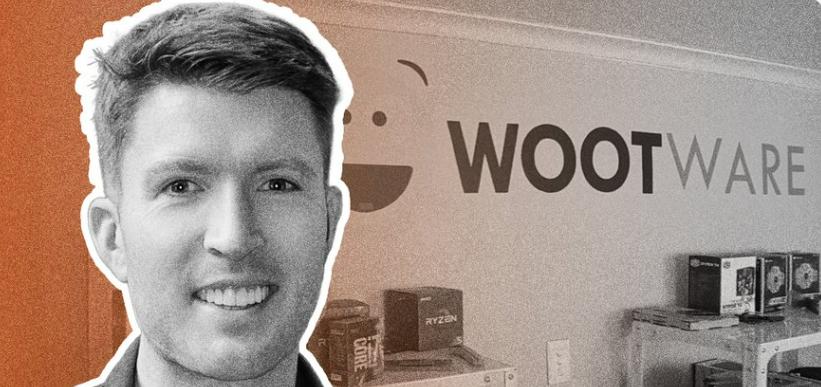
What started on a dressing table in a Cape Town home is now eyeing one of the world’s most competitive markets.
Wootware, one of South Africa’s biggest online hardware retailers, is preparing to expand into China, marking a bold next chapter for a company that has quietly become a powerhouse in the local tech space.
A Global Vision Rooted In Local Beginnings
Founder and CEO Rory Magee is not approaching China as just another import opportunity. His ambition runs deeper.
After spending a year and a half learning Mandarin, Magee says the goal is to build genuine partnerships with manufacturers on their own terms. It is a strategy that reflects a shift in how South African businesses are thinking about global trade, moving from dependency to participation.
For a country like South Africa, where supply chains are often vulnerable to global shocks, this kind of direct engagement could be a game changer.
Wootware’s journey makes that ambition even more striking. Magee launched the business in 2007 with just R50,000 after finishing matric. In the early days, he and a friend handled everything themselves, from assembling PCs to customer support, all from his father’s house.
Today, the company processes billions of rands in orders and serves more than 150,000 customers nationwide.
Why China Matters Now
The timing of this expansion is no coincidence.
Global hardware supply chains have been under pressure, with shortages in CPUs and memory pushing prices higher since 2025. Industry players warn that these increases could continue for years, with some projections stretching as far as 2030.
For South African consumers, this often translates into more expensive tech and limited availability. By building closer ties with manufacturers in Asia, Wootware is positioning itself to better navigate these constraints and secure supply at more stable pricing.
It is a move that could ripple beyond the company itself, especially in a market where gamers, developers, and businesses rely heavily on imported hardware.
Building A Brand Beyond Retail
Wootware is no longer just a reseller. It is increasingly becoming a product creator.
Its in-house monitor brand, WootVision, represents a shift toward deeper involvement in the manufacturing process. Instead of simply rebranding existing products, the company works on component selection and firmware optimisation to deliver competitive performance at more accessible prices.
The latest range includes high-performance QD-LED panels with refresh rates reaching 500Hz, a clear nod to South Africa’s growing enthusiast and gaming community.
This kind of innovation speaks to a broader trend where local companies are stepping up to challenge global brands, rather than just stocking them.
The Rise Of AI Hardware Demand
Another major force shaping Wootware’s strategy is the surge in demand for artificial intelligence hardware.
As more developers and businesses look to run AI models locally, the need for specialised machines is growing fast. Wootware has moved quickly to meet that demand, building and testing systems tailored for AI workloads.
These setups are not cheap. A mid-range AI workstation can cost up to R75,000, reflecting the complexity and performance required.
The company is also integrating generative AI into its own operations, using it to streamline product management, data analysis, and internal workflows. For a relatively lean team, this has become a key advantage in competing with larger players.
Culture As A Competitive Edge
Despite its rapid growth, Magee insists that success still comes down to people.
He points to a strong internal culture as a driver of customer satisfaction, which currently sits at a 94 percent recommendation rate. In a market where service can often be inconsistent, that focus has helped Wootware build a loyal customer base.
It is a reminder that even in a highly technical industry, human experience remains central.
A South African Success Story Going Global
Wootware’s expansion into China is more than just a business move. It reflects the growing confidence of South African tech companies to compete on a global stage.
From a small startup in Cape Town to a company shaping conversations around AI, hardware, and international supply chains, the journey highlights what is possible when local ambition meets global thinking.
And if Magee’s strategy pays off, Wootware may not just be participating in global markets. It could help redefine how South African companies engage with them.