News
Pope Leo XIV’s lung tumour removed; cancer diagnosis confirmed, further tests under way
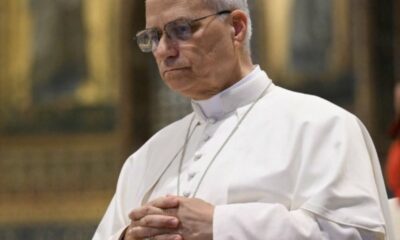
Pope Leo XIV underwent a successful operation to remove a cancerous tumour from his right lung. Further tests will determine whether the cancer has spread.
Surgery and immediate recovery
The Vatican said the operation lasted 90 minutes and that the pope “woke up normally” after the procedure. He was in the operating room for a total of three hours.
To ensure the procedure was radical, the lower lobe of the right lung was removed, and the operation “confirmed the diagnosis of a pulmonary adenocarcinoma, as suspected from the pre-operative tests,” the Vatican statement said. Officials described the surgery as successful and said there were no complications; a Vatican source added that the pope had requested dinner after the procedure.
What doctors will do next
The Vatican said further tests are being carried out to determine whether the cancer has spread. Medical specialists typically use imaging and laboratory tests after surgery to check for remaining disease and to guide treatment decisions; the Vatican has not released specific details of which tests will be done.
Juanita Mora, medical spokesperson for the American Lung Association, told AFP that when a pulmonary adenocarcinoma is “caught in early stages, then it has a very, very good prognosis.” Mora said the outlook depends on the cancer’s stage and whether it has spread. She outlined the range of treatments that may be considered, saying:
“They’ll determine if he needs chemotherapy, radiation therapy, targeted therapy, or immunotherapy for the adenocarcinoma.”
Mora also provided a general survival range in cases where the cancer is surgically removed and caught early and localised, saying five-year survival rates from lung adenocarcinoma were “80 to 98 percent.”
Officials, the faithful and public reaction
The operation is the first hospitalisation of Pope Leo XIV since he became head of the Catholic Church on May 8, 2025. In the days before the operation, the pope had told crowds in St Peter’s Square that doctors had discovered a nodule “at a very early stage” during routine medical checks and that “the doctors believe it would be right to intervene.”
Outside the hospital, candles and flowers were placed and people offered prayers. The source image accompanying reports showed candles, flowers and prayers at the statue of John Paul II outside the Gemelli University Hospital on 13 October 2026.
Some members of the public who spoke outside the hospital expressed concern while also voicing faith in the hospital’s care. Giorgia Fei, 57, said she was worried but added:
“However, the Holy Father is in very good hands here at the hospital because we have some outstanding doctors. I will pray a lot for him.”
Giuseppe Purpura, 72, said he was surprised by the diagnosis but relieved it had been detected early:
“He’s still quite young and I really wasn’t expecting this. I thought he was in better health,”
noting that “thankfully it was caught in time.”
Inside the hospital, the Vicar General for the Diocese of Rome, Cardinal Baldassare Reina, led a rosary prayer for the pope in the chapel; that prayer was broadcast by the Vatican. Cardinal Pietro Parolin, the Vatican secretary of state, told ANSA news agency that Leo had been “very calm” about his condition when they met on Monday.
Scheduling and immediate implications
The Vatican said it expects the pope’s recovery to take about a week. As a result, his public audiences have been cancelled until October 20. The operation has also raised questions about whether the pope will proceed with a planned trip to South America from November 6-17, which was due to include visits to Uruguay, Argentina and Peru.
The pope is staying in a room on the 10th floor of the hospital building, next to a papal suite that includes a private chapel currently under renovation, according to the Vatican statement.
Transparency and context
The Vatican has historically been reserved about the health of popes, but reporting noted it has become more open since the illness of Pope Francis. The decision to publish details about the surgery and the confirmed diagnosis follows that trend.
Medical teams and the Vatican have so far limited public details to the operation and its immediate outcome; further information will depend on the results of the post-operative tests the Vatican says are under way. In general terms, after a cancer diagnosis is confirmed through surgery, clinicians use staging tests to assess spread and then recommend options which can include single or combined modalities such as chemotherapy, radiation, targeted treatments or immunotherapy based on the findings.
What to watch for next
- Announcements from the Vatican about test results and any recommended follow-up treatment.
- Updates to the pope’s public schedule, including the status of his planned November trip to South America.
- Statements from medical teams about recovery progress and any additional procedures.
For now, the Vatican emphasises that the surgery was successful and that further tests will determine the next steps in treatment. Many Catholics and world leaders have offered prayers and support as the pope recovers.
Follow Joburg ETC on Facebook, Twitter, TikTok and Instagram
For more News in Johannesburg, visit joburgetc.com
Source: iol.co.za