News
South Africa breaks world freight rail record as Transnet runs 696-wagon train
Transnet Freight Rail ran a world-record 696-wagon train on the Iron Ore Export Line on 18 October 2026, using RDP tech and a mix of electric and diesel locomotives.
Record run: who, what, where and when
Transnet Freight Rail (TFR) operated a record-breaking freight movement on the Iron Ore Export Line, running a train made up of 696 empty CR13/14 wagons that reached Loop 18 on 18 October 2026. The run established a new world freight rail record and has been presented by Transnet as a demonstration of its heavy-haul capability.
How the train was configured
The record train was arranged using Radio Distributed Power (RDP) technology. In that configuration, locomotives are placed throughout the length of the train so they operate as a synchronised unit, allowing for the managed distribution of traction and braking forces across the entire consist.
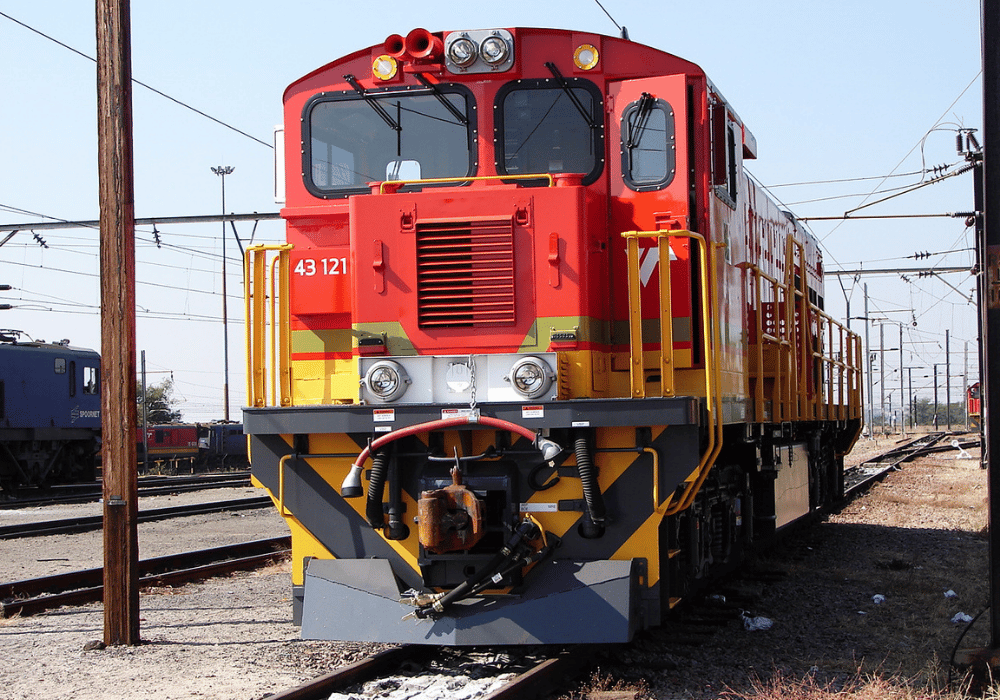
Transnet said the 696 wagons were hauled by a combination of Class 15E electric and Class 43D diesel-electric locomotives. The wagons were described as empty CR13/14 types.
Teams and oversight
The initiative was led by TFR’s Train Design Technology and Operations teams and carried out in collaboration with Transnet Engineering, the Transnet Rail Infrastructure Manager (TRIM) and the Railway Safety Regulator. Specialist personnel accompanied the train for the duration of the run to monitor handling and operational behaviour.
Roles involved
- Train design and modelling led by TFR Train Design Technology specialists
- Operational execution by TFR Operations teams
- Support and engineering from Transnet Engineering
- Infrastructure oversight by TRIM and regulatory involvement from the Railway Safety Regulator
Planning, simulation and verification
Transnet described extensive preparatory work before the run. Planning included detailed modelling and simulation to assess train dynamics, locomotive placement, route readiness, operating strategies, communication protocols and infrastructure requirements. Those assessments were intended to ensure the safe movement of the unusually long consist.
After the exercise, locomotive data gathered during the run will be compared with simulation results to validate performance models and further refine operating capability.
What Transnet says about the achievement
“The successful operation of this train demonstrates the depth of engineering expertise, operational excellence and innovation that exists within TFR,” said TFR Chief Executive Russell Baatjies.
“While setting a world record is a significant achievement, the real value lies in the technical knowledge and operational insights gained through this exercise. These learnings will contribute to the continued advancement of rail operations, support innovation and strengthen our freight rail capability into the future.”
Why this matters
Beyond the headline of a world record, the run functions as a live systems test: validating models, testing communication and control systems, and demonstrating coordinated train-handling across a very long consist. Exercises of this kind can provide practical lessons for operating long heavy-haul trains safely and efficiently.
Transnet framed the exercise as reinforcing the Iron Ore Export Line’s reputation as a major heavy-haul corridor and as evidence of South Africa’s capacity to execute rail operations at a scale matched by only a small number of operators worldwide.
Operational insights and next steps
Transnet indicated that collected data will be analysed against the pre-run simulations to validate and improve models. That next phase analysis and model refinement is a common step after complex test operations and is intended to turn the practical exercise into lasting operational improvements.
What readers should take away
The key facts are straightforward: on 18 October 2026, TFR operated a 696-wagon train on the Iron Ore Export Line using RDP technology and a mix of Class 15E and Class 43D locomotives. The exercise was the product of detailed planning, multi-team collaboration and regulatory oversight, and Transnet says the technical lessons will be used to advance future rail operations.
Additional technical or operational details beyond those provided by Transnet were not included in the company’s account of the exercise.
Follow Joburg ETC on Facebook, Twitter, TikTok and Instagram
For more News in Johannesburg, visit joburgetc.com
Source: citizen.co.za