Culture Craze
Why Nandi Madida’s call for grace for Black men hit a national nerve
A conversation that struck a nerve
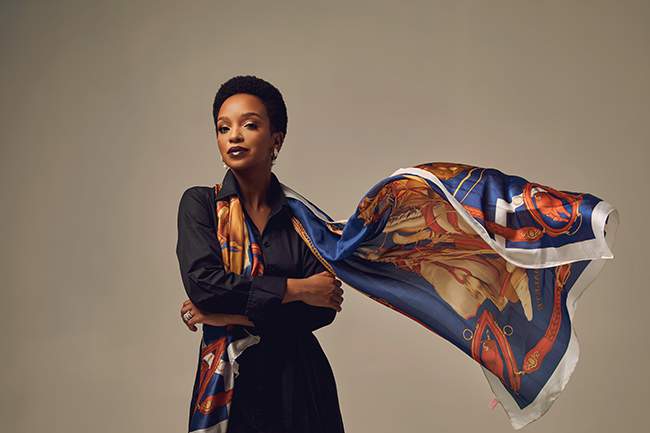
When Nandi Madida appeared on episode 41 of the L-Tido Podcast, she stepped away from red carpets and soft life aesthetics to talk about something far heavier. Her message was simple but loaded. South Africa, she said, needs to extend more grace to Black men.
She spoke about a society that has grown transactional and unforgiving. In her view, Black men are often reduced to what they earn or provide, with little room for vulnerability, emotional struggle, or failure. The constant judgement, she suggested, leaves little space for healing.
It was meant as a call for empathy. Instead, it lit a fire online.
Why her words caused such a storm
On X, the reaction was swift and deeply divided. Many women pushed back hard, arguing that these conversations always seem to land on Black women’s shoulders. Several posts questioned why women are repeatedly asked to accommodate, lower standards, or absorb emotional labour, while men are rarely challenged to do better.
Others raised a sharper point. Privilege. Critics highlighted Madida’s background, noting that she comes from a well-off family and is married to one of Africa’s most successful musicians. From that perspective, some felt her plea for grace ignored the harsher realities faced by women and men living without financial safety nets.
The underlying question was uncomfortable but familiar in South Africa. Who gets grace, and who is expected to survive without it?
The voices that agreed with her
Still, not everyone dismissed her comments. Several users supported Madida, saying her words spoke to a deeper crisis around men’s mental health. They pointed to unrealistic expectations, a comparison culture driven by social media, and the quiet pressure to perform strength at all times.
For these supporters, her comments were not about excusing bad behaviour but about acknowledging systemic strain and emotional neglect. In a country where men are often discouraged from expressing vulnerability, even starting the conversation felt necessary.
View this post on Instagram
Context that often gets missed
What made the debate so intense is that it touched on overlapping truths. South African men do face enormous social and economic pressure. South African women face layered inequality, safety concerns, and emotional burdens that rarely receive the same public grace. Both realities exist at once, even if social media struggles to hold nuance.
Madida herself did not frame her comments as an attack on women. She framed them as a shift in perspective, away from constant criticism and towards support. But online spaces rarely reward subtlety.
The problem with these conversations is that they are always speaking to the black women. She must have grace. She must accommodate his inefficiencies. She must lower her standards to make it easier for him. The conversation is never encouraging black men to rise and do better. https://t.co/ddbvktC7v8 pic.twitter.com/2Oygz44tXD
Extremely Uppity African (@premium_xh) January 30, 2026
I’m sorry but this is such a disingenuous take. also, for context, her dad’s a doctor, educated and lives a comfortable life. Her husband is one of the most successful African musicians. It’s okay to acknowledge that such takes are from a place of privilege https://t.co/N9UeY9h7G1
Mwana waRukiya (@___nyasha) January 29, 2026
Grace as a recurring theme in her work
Outside of this controversy, the idea of grace has long shaped Madida’s projects. Her podcast, The Motherhood Network, was recently recognised on Apple’s Best of 2025 list. The platform deliberately moves away from curated perfection, giving mothers space to talk honestly about exhaustion, guilt, and overwhelm.
Her advocacy also extends to neurodiversity. She recently partnered with Mattel for the South African launch of the first autistic Barbie doll, appearing alongside her daughter Nefertiti. For Madida, representation is not symbolic. It is about visibility and belonging from an early age, especially for children who are often excluded from mainstream narratives.
As a country, we firmly stand with Nandi Madida in these difficult times of Western values that are misleading both men and women in Africa. I wish she’d consider hosting some sessions with her gender to speak some sense into them because some of them are really lost! pic.twitter.com/xnOKZpXO4C
ツ Lord Ori (@Lord_Ori_) January 29, 2026
View this post on Instagram
A debate that is not going away
Whether people agreed with her or not, Madida’s comments forced a national pause. They reopened conversations about masculinity, privilege, empathy, and who is allowed softness in a country shaped by inequality.
The backlash shows how raw these issues remain. It also shows how desperately South Africa needs spaces where complexity is allowed, even when the answers are uncomfortable.
Also read: A week of celebrity drama, fashion wins, and viral moments
Follow Joburg ETC on Facebook, Twitter, TikT
For more News in Johannesburg, visit joburgetc.com
Source: IOL
Featured Image: News24