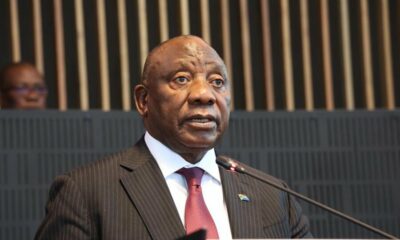
Ramaphosa doubles down on B-BBEE as ANC charts its renewal path
At a time when South Africa is grappling with economic pressure, political tension, and growing public frustration, President Cyril Ramaphosa has made one thing crystal clear: B-BBEE is not going anywhere.
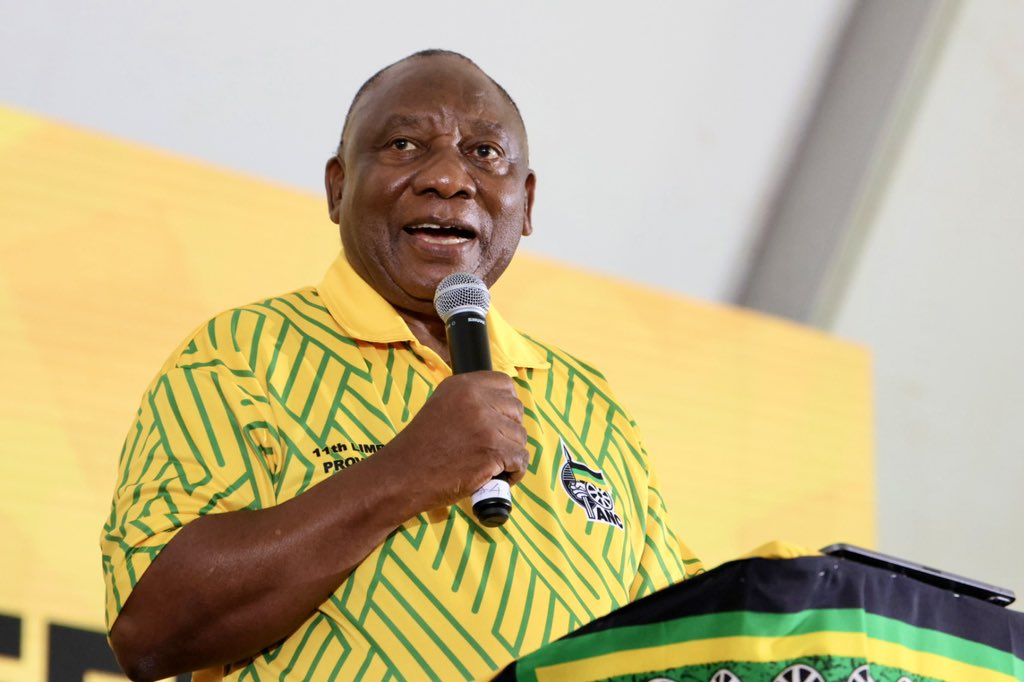
Speaking at the ANC’s Limpopo elective conference this past weekend, Ramaphosa reaffirmed the party’s long-standing commitment to Broad-Based Black Economic Empowerment, even as critics, including some partners in the Government of National Unity, continue to question its effectiveness.
A firm stance in a shifting political landscape
The remarks came as the ANC wrapped up its 11th provincial conference in Limpopo, where Phophi Ramathuba was elected unopposed as provincial chairperson. The gathering itself was not without drama unfolding alongside legal challenges in both Limpopo and the Eastern Cape, reflecting broader tensions within the party.
But it was Ramaphosa’s closing address that grabbed attention.
“Those who say B-BBEE and affirmative action must stop are just dreaming,” he said bluntly. “We will not abandon policies that are meant to give our people a fair chance to advance.”
In a political climate where coalition dynamics are still settling, that statement signals a clear line in the sand.
What “renewal” really means for the ANC
Beyond B-BBEE, Ramaphosa framed the party’s future around a broader idea: renewal.
According to him, renewal isn’t just about internal party politics it’s about fixing how municipalities function, restoring trust in leadership, and rebuilding an economy that works for more people.
He pointed to the need for reindustrialisation as a key pillar, with the goal of creating jobs at scale. Rural development also featured strongly, with calls to ensure that smaller communities are not left behind as the country tries to regain economic momentum.
It’s a familiar message but one that lands differently now, after years of slow growth and rising public dissatisfaction.
The bigger picture: inequality, unemployment, and pressure
Ramaphosa did not shy away from acknowledging the reality many South Africans face daily.
Over the past 15 years, unemployment has climbed, inequality has deepened, and economic growth has struggled to gain traction. For many households, the idea of economic transformation still feels distant something discussed in policy documents rather than experienced in real life.
This is where B-BBEE becomes both a promise and a pressure point.
Supporters argue it remains essential to correcting historical inequalities. Critics, however, say it has not gone far enough to uplift ordinary citizens and has instead benefited a narrow elite.
On social media, reactions to Ramaphosa’s comments were mixed. Some users welcomed the firm stance, saying transformation cannot be abandoned halfway. Others questioned whether the policy, in its current form, is delivering meaningful change on the ground.
A policy rooted in history and still evolving
To understand why this debate refuses to fade, it helps to look at the history.
B-BBEE was introduced as a tool to address the economic imbalances created by apartheid, aiming to open doors in ownership, employment, and enterprise development. Over time, it has become a cornerstone of South Africa’s economic policy framework.
But nearly three decades into democracy, the question has shifted from whether transformation is needed to how effectively it is being implemented.
Ramaphosa’s message suggests the ANC believes the answer is not to abandon B-BBEE but to refine and strengthen it as part of a broader economic strategy.
Between policy and reality
There’s a growing sense among South Africans that policy alone isn’t enough. Whether it’s load shedding, rising living costs, or job scarcity, the everyday experience often feels disconnected from political promises.
Ramaphosa’s emphasis on renewal from governance to economic reform appears to acknowledge this gap. But the real test will be whether these commitments translate into visible, measurable change.
Ramaphosa’s stance leaves little room for ambiguity: B-BBEE remains central to the ANC’s vision for South Africa.
What’s less certain is how that vision will evolve and whether it can deliver the kind of inclusive growth many South Africans are still waiting for.
In a country where inequality remains one of the defining challenges, the debate around B-BBEE is far from over. If anything, it’s entering a new phase, one where results, not just policy, will define its future.