News
Ferrochrome Electricity Tariff Relief: Ramokgopa Unveils Plan to Revive SA Smelters
Power price relief could reignite South Africa’s ferrochrome furnaces
In towns like eMalahleni and Rustenburg, the glow from a smelter used to light up the night sky, a sign that shifts were running, wages were being earned and exports were moving. Lately, many of those furnaces have gone dark.
Now, government says that could change.
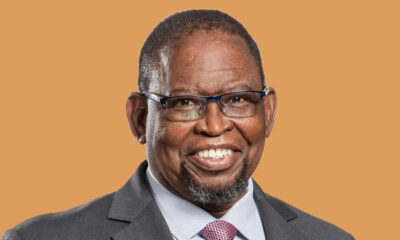
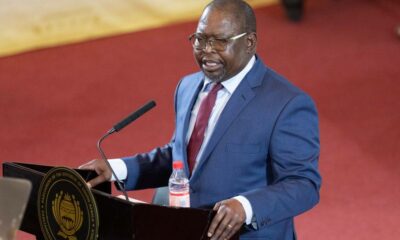
Electricity and Energy Minister Kgosientsho Ramokgopa has unveiled a new electricity tariff framework designed to breathe life back into South Africa’s battered ferrochrome industry. His message was simple: cheaper power could mean working smelters again.
And with only 11 of the country’s 66 smelters currently operating, the stakes are high.
Why smelters went quiet
South Africa holds the world’s largest chrome reserves. For decades, the country didn’t just dig the mineral out of the ground, it processed it locally into ferrochrome, a key ingredient in stainless steel.
But as electricity prices surged and load shedding took hold, that advantage slipped away.
Producers who once paid around R1.35 per kilowatt-hour saw costs spiral. Even after an interim tariff of 87.74 cents per kilowatt-hour was approved by National Energy Regulator of South Africa in January 2026, many operations remained uncompetitive globally.
Companies like Samancor Chrome and the Glencore-Merafe venture began retrenchment processes, citing electricity costs as the main pressure point.
In mining communities, that translated into something more personal: job losses, shrinking local businesses and uncertainty at kitchen tables.
The new number that changes everything
Ramokgopa’s proposal introduces electricity tariffs of about 62 cents per kilowatt-hour for large ferrochrome smelters a dramatic reduction and closer to what global competitors, including China, are paying.
That number matters.
It could be the difference between mothballed plants and roaring furnaces.
“This is something I couldn’t have announced 18 months ago,” Ramokgopa said, crediting reforms and improved performance at Eskom for making the framework possible.
Crucially, he stressed that the relief will not require new funding or push costs onto residential consumers. The measures sit within existing fiscal arrangements, including government’s debt relief programme for Eskom.
On social media, reaction has been mixed but hopeful. Some users called it “industrial common sense.” Others questioned whether the lower tariffs could be sustained long term. In Mpumalanga mining forums, however, the mood has been more pragmatic: “If the furnaces come back on, we’re back at work,” one commenter wrote.
Jobs, exports and dignity
The numbers behind the intervention are ambitious.
Government expects:
-
Around 45 smelters operational by December 2026
-
Up to 49 by December 2027
-
Support for roughly 11,480 direct jobs
-
As many as 121,392 total jobs across the broader value chain
The economic ripple effect could be significant:
R20 billion in additional spending on raw minerals for local beneficiation, R5.5 billion in extra tax revenue, R76 billion in export earnings and nearly R18 billion in extra electricity revenue from round-the-clock smelter operations.
For President Cyril Ramaphosa, the plan aligns with a broader push to move away from simply exporting raw minerals a pattern often criticised as a legacy of colonial extraction, toward processing resources locally.
Electricity, Ramokgopa argued, is the “first mover” in that shift.
Not a subsidy, a competitiveness play
Government is careful about the language here. Officials insist this is not a bailout or subsidy but a competitiveness intervention.
That distinction matters politically.
South Africans have endured years of load shedding and steep tariff hikes. Any suggestion that households might subsidise heavy industry would likely spark backlash. Ramokgopa has been firm: there will be no cost-shifting to residential consumers.
Eskom board chair Mteto Nyati described the moment as a milestone, proof that the utility can balance commercial discipline with developmental goals.
Eskom’s dual mandate, he said, is clear: remain financially viable while enabling economic growth.
A turning point after the pain?
There’s a deeper narrative here.
South Africa has “paid the pain,” as Ramokgopa put it, years of blackouts, restructuring and public frustration. The promise now is a return on that sacrifice.
If successful, the tariff shift could reposition the country as a serious ferrochrome player again, rather than watching raw chrome ore shipped abroad for others to beneficiate.
But it’s not just about global markets. It’s about towns where smelters anchor the local economy. It’s about restoring wages and stability. It’s about keeping skills in the country.
The furnaces haven’t roared back to life yet. But for the first time in years, there’s a credible path for them to do so.
And in South Africa’s industrial heartland, that possibility alone is enough to spark cautious optimism.
{Source: The Citizen}
Follow Joburg ETC on Facebook, Twitter , TikTok and Instagram
For more News in Johannesburg, visit joburgetc.com