News
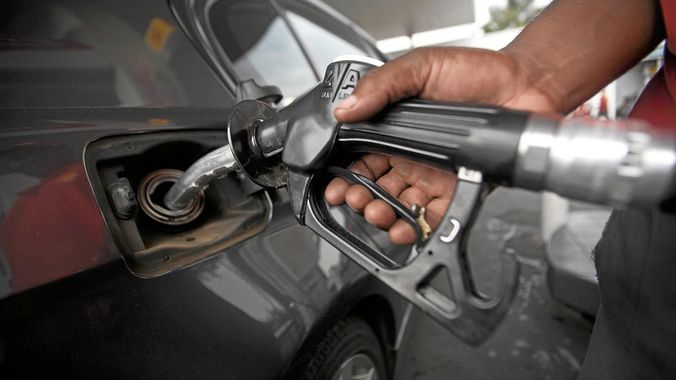
Brace for impact at the pumps as fuel prices edge higher from March 4
Brace for impact at the pumps as fuel prices edge higher from March 4
For weeks now, South African motorists have been quietly enjoying a rare break. Filling up hasn’t felt quite as painful as it did a year ago. But if you’ve been watching the numbers, you’ll know that relief may be short-lived.
From Wednesday, March 4, fuel price hikes are expected to kick in and while the increases aren’t massive, they’re enough to make drivers wince at the pump.
The numbers: What you’re likely to pay
According to month-end data from the Central Energy Fund, petrol is set to rise by:
-
21 cents per litre for 95 Unleaded
-
18 cents per litre for 93 Unleaded
Diesel drivers are in for a steeper climb:
-
62 cents per litre for 500ppm
-
65 cents per litre for 50ppm
If these projections hold, 95 Unleaded will sit at around R19.48 per litre at the coast and roughly R20.31 in Gauteng. Inland motorists using 93 Unleaded can expect to pay about R20.17.
Diesel’s wholesale price for 50ppm is likely to land near R17.84 at the coast and R19.17 inland.
These figures are based on unaudited data, with final adjustments still to be confirmed by the Department of Mineral and Petroleum Resources. But historically, late-month projections from the CEF tend to be close to the mark.
Why prices are climbing again
The simple answer? Global fuel markets.
International refined fuel prices climbed during February, pushing up the cost of imported petrol and diesel. A slightly stronger rand softened what could have been even sharper hikes without it, petrol might have jumped by around 35 cents and diesel by nearly 80 cents per litre.
So yes, it could have been worse.
Still, for households already juggling school fees, electricity increases and grocery bills, even a small bump at the pump ripples through the monthly budget.
On local social media, the reaction has been predictable. “Just when we catch a break,” one Gauteng commuter posted on X. Another joked that March has become “the month where everything goes up except salaries.”
April could sting even more
If March feels uncomfortable, April may bring a sharper sting and this time it won’t just be global oil prices to blame.
In his 2026 Budget Speech, Finance Minister Enoch Godongwana confirmed adjustments to fuel-related taxes.
Here’s what’s coming from April 1:
-
General Fuel Levy (GFL) up by 9 cents per litre for petrol and 8 cents for diesel
-
Carbon fuel levy rising by 5 cents for petrol and 6 cents for diesel
-
Road Accident Fund (RAF) levy increasing by 7 cents
Altogether, motorists are looking at an additional 21 cents per litre in tax alone.
That means drivers will soon contribute R2.25 per litre to the RAF, while the GFL portion on petrol climbs to R4.10 per litre.
In other words, even if international oil prices stabilise, tax changes will still push pump prices higher.
The bigger debate: Relief or reform?
The Automobile Association has raised concerns about the cumulative impact of these increases.
Bobby Ramagwede, CEO of the Automobile Association, warned that inflation-linked tax hikes add pressure to households already stretched thin.
He argued that while raising levies may make fiscal sense on paper, simply injecting more money into the Road Accident Fund does little to fix its longstanding inefficiencies.
That sentiment resonates with many motorists who feel fuel taxes have become a silent burden one that funds critical programmes but rarely feels transparent or accountable.
A familiar cycle for South Africans
There’s a rhythm to fuel pricing in South Africa. Relief, then recovery. A few cheaper months, followed by creeping increases.
What makes this cycle different is the global uncertainty layered on top, ongoing conflict in the Middle East, volatile oil markets and a fragile local economy. When oil spikes internationally, South Africa feels it almost immediately.
For small businesses that rely on transport, taxi operators navigating tight margins, and families commuting long distances, every cent matters.
What drivers can do now
While motorists can’t control global oil prices or tax policy, small adjustments still help:
-
Fill up before March 4 if you can.
-
Consider carpooling or combining errands.
-
Keep tyres properly inflated to improve fuel efficiency.
They’re modest steps, but in a year where every rand counts, they add up.
For now, South Africans should prepare for slightly higher totals when the petrol attendant hands back the card machine next week. And with April looming, this may just be the beginning of another uphill stretch at the pumps.
{Source: IOL}
Follow Joburg ETC on Facebook, Twitter , TikTok and Instagram
For more News in Johannesburg, visit joburgetc.com