South Africa braces for historic fuel price surge as April looms
If you’ve filled up your tank recently and winced at the total, brace yourself, that number is about to climb sharply.
From 1 April, South Africans could face one of the steepest fuel price increases in the country’s history, with early projections suggesting hikes so large they’re almost hard to believe.
And yet, for many households and businesses, the reality is already sinking in.
A price jump unlike anything before
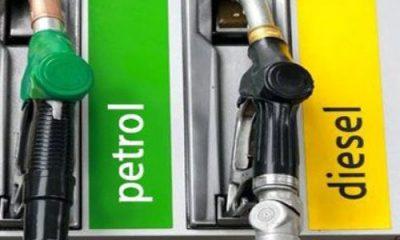
Latest figures from the Central Energy Fund paint a stark picture: petrol could rise by more than R5 per litre, while diesel the backbone of transport, logistics, and agriculture could jump by close to R10 per litre.
If those numbers hold, it would mark the first time diesel increases of that magnitude hit the country.
Here’s what motorists could be looking at:
- Petrol 93: up by about R5.24 per litre
- Petrol 95: up by roughly R5.76 per litre
- Diesel (both grades): climbing between R9.86 and R10.00 per litre
- Illuminating paraffin: up by around R11.46 per litre
On top of that, a 21-cent-per-litre tax increase will also kick in adding further pressure at the pump.
For context, that could push petrol prices well above R25 per litre and diesel close to R29 per litre in some areas.
What’s driving the surge?
At the heart of it all is the global oil market.
The ongoing conflict involving the United States, Israel, and Iran has sent oil prices soaring, with Brent crude pushing toward and even beyond the $100 mark in recent weeks.
For a country like South Africa, which relies heavily on imported fuel, those global shifts hit fast and hard.
Add a weaker rand into the mix, and the result is a perfect storm for price hikes.
Early warning signs already showing
In parts of the Western Cape, particularly along the Garden Route and into the Klein Karoo, the strain is already visible.
Reports have surfaced of service stations limiting diesel sales in some cases capping customers at 50 litres per visit. For farmers and transport operators, especially during key harvesting periods, that’s more than an inconvenience it’s a threat to operations.
Images of restriction notices at fuel pumps have been circulating widely on social media, fuelling concern that supply issues may follow the price shock.
Government urges calm amid rising tension
Despite the anxiety, government officials are urging South Africans not to panic.
Gwede Mantashe has reassured the public that fuel shipments to the country are continuing without disruption, even as global tensions escalate.
In particular, he pointed to the continued flow of cargo through the Strait of Hormuz a critical artery for global oil supply as a sign that South Africa’s immediate fuel availability remains stable.
The message is clear: prices may be rising, but supply is not collapsing.
The real impact: everyday life
Still, for ordinary South Africans, the concern isn’t just about availability it’s about affordability.
Fuel is the thread that runs through almost every part of the economy. When it spikes:
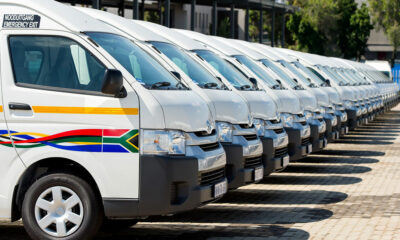
- Taxi fares often increase
- Food prices follow
- Delivery and logistics costs climb
- Small businesses feel the squeeze
In a country already grappling with a high cost of living, this kind of jump doesn’t just hurt it reshapes monthly budgets overnight.
Social media reaction: shock and frustration
Online, the reaction has been immediate.
Many South Africans have expressed disbelief at the scale of the increases, with some calling it “unsustainable” and others joking darkly about walking to work or dusting off bicycles.
But beneath the humour is a real concern: how much more can households absorb?
A bigger question: can South Africa shield itself?
One of the key takeaways from this moment is just how exposed South Africa remains to global oil shocks.
While there are discussions about developing local petroleum resources and strengthening refining capacity, those are long-term solutions not quick fixes.
For now, the country remains tied to international markets, meaning global conflict can quickly become a local crisis.
The takeaway
This isn’t just another monthly fuel adjustment it’s a potential turning point.
The combination of global instability, rising oil prices, and local economic pressure has created a situation where fuel costs could reach levels never seen before in South Africa.
And while officials are right to discourage panic buying, one thing is clear: even without shortages, the financial impact of what’s coming next week will be felt by almost everyone.
For many, April isn’t just bringing a new month it’s bringing a whole new cost of living reality.