News
Iran says no negotiations with US amid rising tensions and strikes
Iran refuses to negotiate as Middle East conflict escalates
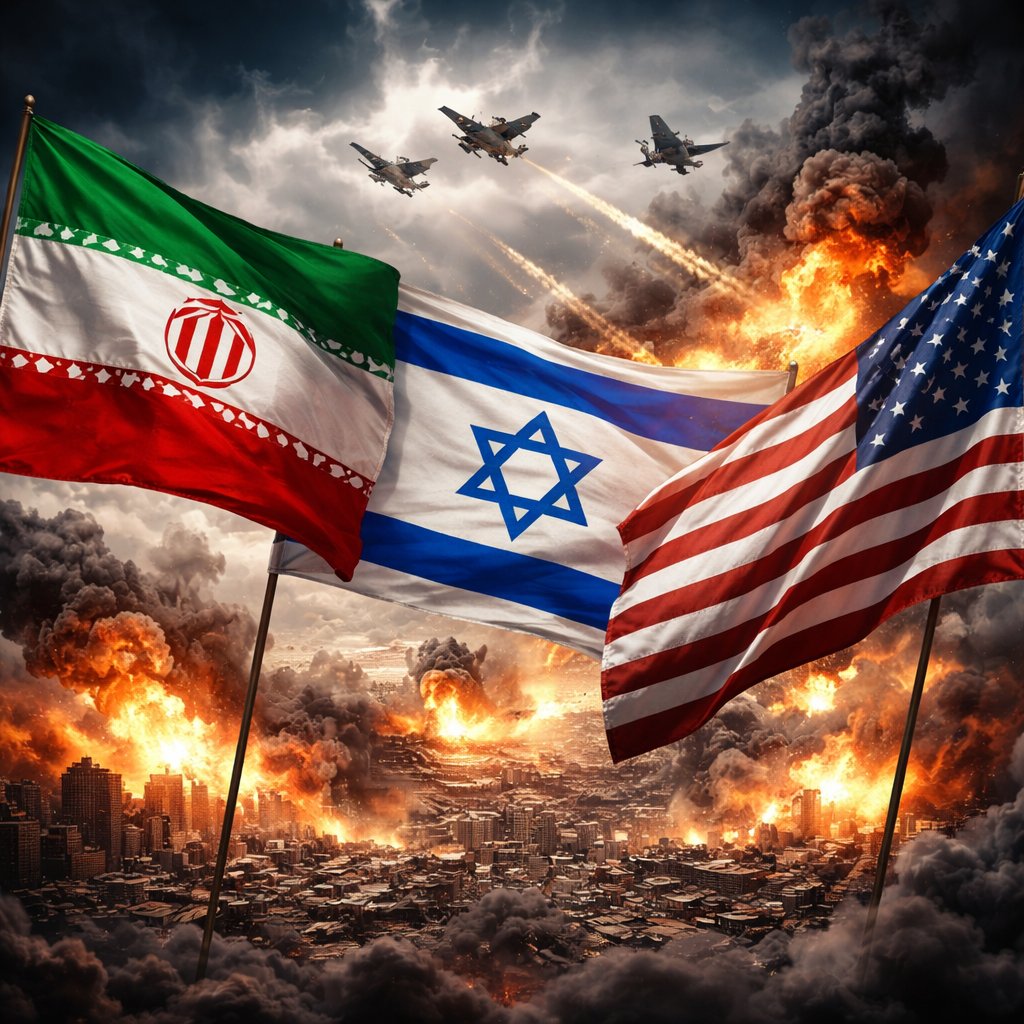
Tensions across the Middle East have spiraled into a new and volatile chapter, with Iran firmly rejecting any talks with the United States, even as US and Israeli forces continue targeted strikes across the region.
The message was delivered unequivocally by Ali Larijani, the head of Tehran’s Supreme National Security Council, who in a post on X (formerly Twitter) described reports of attempted negotiations as false, dismissing them as “delusional fantasies” that have plunged the region into chaos.
Missile exchanges and mounting violence
The weekend saw a flurry of military activity. Israel reported strikes on Hezbollah targets across Lebanon after rockets and drones were launched toward Israeli territory. Civilians in roughly 50 Lebanese towns were warned to evacuate as Israel targeted the militant group’s positions.
At the same time, Iranian forces launched attacks on Gulf states hosting US troops. The United States and its regional allies condemned these strikes as “reckless and destabilizing,” highlighting the dangers of targeting civilians or countries not formally engaged in the conflict.
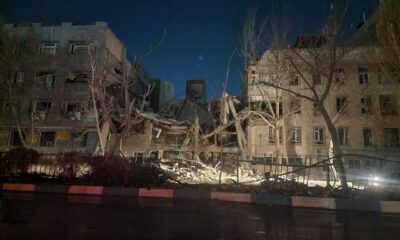
In Israel, missile salvos injured seven people in Jerusalem, while strikes in Tehran reportedly hit a police station and Gandhi Hospital, causing casualties and trapping civilians under debris. The Iranian news agencies Tasnim and ISNA provided harrowing footage of damage inside the hospital.
Trump and Israel signal continued military pressure
President Donald Trump has vowed to avenge the deaths of US service members killed in recent operations, warning that casualties are likely to rise. In interviews, he projected that the campaign could last around four weeks, aiming to dismantle Iran’s military infrastructure.
The US military announced that the headquarters of the Islamic Revolutionary Guard Corps (IRGC) has been destroyed, while Israel confirmed strikes on dozens of Iranian military command centers, including intelligence facilities and IRGC air force bases.
Trump also suggested he had “three very good choices” to lead Iran after the conflict, though he did not disclose names, indicating that regime change is a primary objective.
Global reactions and security concerns
The European Union has expressed alarm over the potential costs of a protracted conflict, reinforcing its naval mission in the Red Sea to protect shipping lanes. The EU stressed the importance of avoiding indiscriminate attacks that could destabilize Europe and the wider region.
Shipping companies are already adjusting. Maersk announced a suspension of passage through the Suez Canal and the Strait of Hormuz for safety reasons, following threats from Iran’s Revolutionary Guards. Gulf Cooperation Council countries, meanwhile, vowed to defend themselves and coordinate responses to any Iranian aggression.
Across social media, the conflict has sparked heated debates in South Africa, the Middle East, and beyond. Some users share stories of stranded passengers due to flight disruptions in Gulf hubs, while others question the long-term impact of escalating violence on civilian populations.
US officials prepare to brief Congress
On Monday, Pentagon chief Pete Hegseth and Chairman of the Joint Chiefs of Staff Dan Caine are expected to provide an official briefing on the military operations. On Tuesday, Secretary of State Marco Rubio, Hegseth, CIA Director John Ratcliffe, and Caine will make the case for US actions before Congress.
Meanwhile, the UK is dealing with the fallout of a suspected drone strike on its RAF Akrotiri base in Cyprus, with no casualties reported. The incident coincides with Britain’s approval for US forces to use UK bases for defensive strikes against Iranian missile systems.
Rising stakes and uncertainty
With multiple fronts now active, Gulf states, Israel, Lebanon, and Iran itself, the situation remains highly fluid. The conflict has not only military implications but also economic ones, with shipping routes disrupted, international diplomacy strained, and ordinary citizens facing uncertainty and danger.
For the moment, Iran has drawn a firm line: no negotiations, no compromise. And as missiles continue to fly, the world watches a region on edge, where each move could reshape the Middle East in unpredictable ways.
{Source: IOL}
Follow Joburg ETC on Facebook, Twitter , TikTok and Instagram
For more News in Johannesburg, visit joburgetc.com