Joburg’s R10 billion wage deal: who really pays the price?
A deal signed and a city holding its breath
In Johannesburg, big decisions rarely stay confined to council chambers. They spill into everyday life into flickering lights, dry taps and missed rubbish collections.
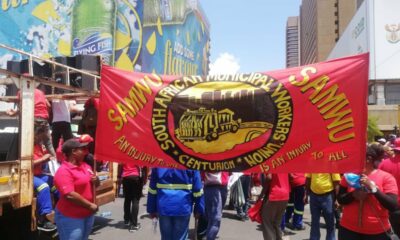
That’s why the city’s R10.3 billion wage agreement with South African Municipal Workers’ Union has sparked such intense debate.
On paper, it’s about paying workers what they’re owed. On the ground, many fear it could come at a steep cost to residents already dealing with failing services.
The fight to stop it and why it failed
The Democratic Alliance tried to block the deal in court, arguing it was unaffordable and would cripple service delivery.
But the attempt was dismissed for lack of urgency, meaning the agreement is now moving ahead at least for now while legal challenges continue through normal channels.
That hasn’t eased concerns. If anything, it’s intensified them.
Where the money might come from
The biggest question is simple: where will the money come from?
Critics believe the answer is already visible, in shrinking budgets for essential services like electricity, water and waste management.
Entities like City Power, Joburg Water and Pikitup have already been under strain, with residents reporting more frequent outages, leaks and missed collections over the past year.
Now, there are fears those services could deteriorate even further.
“You’ll feel it at home”
According to community voices like Julia Fish from Joburg CAN, the impact is already creeping in.
She argues that funds are being redirected away from maintenance and daily operations the very things that keep the city running.
That could mean:
- Slower response to water leaks
- Reduced overtime for refuse collection
- Delays in fixing power outages
In a city where infrastructure is already stretched, even small cuts can have big consequences.
A city already under pressure
Spend a day driving through Johannesburg and you’ll see the cracks quite literally.
Potholes, broken traffic lights, water leaks and inconsistent waste collection have become part of daily life in many areas.
Analysts warn that shifting billions away from maintenance budgets could push the system closer to breaking point.
Political analyst Andre Duvenhage has gone as far as saying service delivery will almost certainly take a hit a view echoed by opposition leaders.
“Short-term pain,” says the mayor
Johannesburg mayor Dada Morero is taking a different view.
He acknowledges the financial strain but argues the deal is necessary both to honour long-standing commitments to workers and to stabilise the city in the long run.
His message: yes, it will hurt now, but it could pay off in the next three to four years as the city balances its books.
It’s a gamble, one that depends heavily on improved financial management and cooperation from municipal staff.
Politics enters the picture
Unsurprisingly, the issue has taken on a political edge.
The union has urged workers to reject the DA at the polls, framing the party as anti-worker. Meanwhile, opposition figures argue their stance is about protecting the city’s future and preventing financial collapse.
Critics, including analysts, suggest the wage deal could also be a strategic move to secure political support ahead of elections.
If that’s the case, residents may be caught in the middle of a much bigger game.
The deeper problem: a city that can’t collect enough
Beyond the politics lies a more uncomfortable truth.
Johannesburg is struggling to collect enough revenue to cover its growing expenses. That includes payments to bulk electricity and water suppliers and the mounting cost of maintaining ageing infrastructure.
Adding a multi-billion rand wage bill into that equation only increases the pressure.
Public reaction: divided but worried
On social media and community forums, opinions are split.
Some residents support better pay for municipal workers, arguing that fair wages could improve morale and service delivery.
Others are more sceptical, questioning how the city can afford such a deal when basic services are already faltering.
What most people agree on, however, is this: something has to give.
So who really pays?
In the end, the cost of this deal may not show up as a line item on a bill.
It could appear in more subtle ways:
- Longer outages
- Slower repairs
- Declining infrastructure
For many residents, that’s the real concern not the agreement itself, but what it might quietly take away.
A turning point for Joburg?
This wage deal could become a defining moment for Johannesburg.
Handled well, it might stabilise labour relations and set the city on a more sustainable path.
Handled poorly, it could deepen an already fragile service delivery crisis.
For now, residents are watching closely because whatever happens next won’t stay in council chambers.
It will show up, sooner or later, right outside their front doors.