Middle East turmoil grounds flights and costs South Africa millions
By mid-morning on Sunday, the departure boards at OR Tambo International Airport told a story no traveller wants to see: cancelled, cancelled, cancelled.
Families sat on luggage. Business travellers paced while refreshing airline apps. Tour groups whispered anxiously about missed connections in Dubai and Doha.
The escalating conflict involving Iran, Israel and the United States may be unfolding thousands of kilometres away but its ripple effects are being felt sharply on South African soil.
Gulf airspace closures trigger local chaos
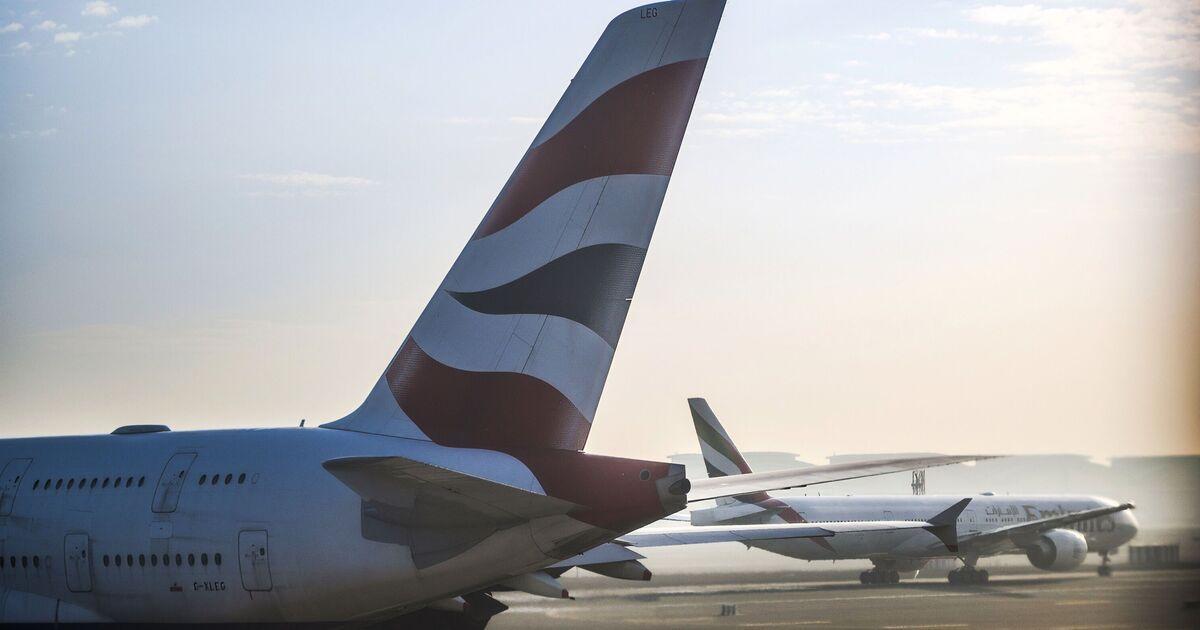
As large sections of Middle Eastern airspace temporarily shut down, airlines were forced to suspend or reroute flights. The result? Immediate disruption to long-haul services linking South Africa to key global transit hubs.
Airports Company South Africa (Acsa) confirmed that Gulf carriers were directly affected.
At OR Tambo, eight flights were cancelled seven outbound and one inbound. Cape Town International Airport recorded four outbound cancellations, while King Shaka International Airport in Durban reported two outbound flights grounded.
On paper, most of the cancellations appear outbound. In reality, the inbound disruption may be even more damaging.
South Africa relies heavily on Gulf hubs such as Dubai, Doha and Abu Dhabi to funnel international travellers into the country. Airlines including Emirates, Qatar Airways and Etihad Airways serve as critical connectors.
Israeli carrier El Al has cancelled all international services until Tuesday.
That’s not just a few flights, it’s a break in a carefully timed global chain.
Stranded travellers and broken connections
For passengers already en route, the experience has been frustrating and emotional.
Many arriving in South Africa via the Middle East were meant to connect onward to Kruger, Victoria Falls, Windhoek or Durban. When inbound flights don’t land, those domestic and regional connections unravel instantly.
Katherine Whelan, head of commercial at Airlink, explained that the knock-on effect stretches far beyond international carriers.
“If inbound flights are cancelled, those passengers can’t connect locally,” she said. “And passengers trying to leave southern Africa to catch international departures are stuck unless they can reroute.”
Social media has been filled with travellers scrambling for alternatives. One Cape Town couple posted that their anniversary trip to Europe was “on pause indefinitely.” A Johannesburg businessman described sleeping in the airport lounge after missing a critical connection through Doha.
Tourism feels the immediate pinch
The disruption isn’t limited to airports.
Tour operators, car rental companies, lodges and hotels are all bracing for losses.
Sean Bradley of Travelwings said airlines are constantly adjusting schedules in line with real-time directives from aviation authorities. His team is proactively contacting affected customers and updating advisories, but uncertainty remains.
Grenville Salmon of Pace Car Rental described the short-term impact as unavoidable. Gulf hubs are key transit points for international visitors, and when they close, bookings vanish overnight.
“For car rentals, it means fewer airport collections and cancelled advance reservations,” he noted, though he expects recovery once schedules stabilise.
In a country where tourism supports hundreds of thousands of livelihoods, even a few days of stalled arrivals matter.
The financial toll adds up quickly
An aviation expert suggested that while the operational chaos may seem temporary, the financial damage could run into several million rand per day when lost flights, accommodation, car hire and tourism spending are factored in.
And compensation is not straightforward.
Aviation analyst Guy Leitch pointed out that under the Montreal Convention, airlines are not automatically required to issue cash refunds for cancellations of this nature. They can be held liable for proven damages but passengers must show evidence of actual losses.
That means claims may be complex and slow-moving, adding another layer of stress for already stranded travellers.
A reminder of global vulnerability
South Africans are no strangers to flight disruptions, from pandemic shutdowns to local operational hiccups. But this episode underscores just how interconnected global aviation has become.
A flare-up in the Middle East can freeze departure boards in Johannesburg within hours.
It’s a stark reminder that while conflict may feel distant, its economic consequences travel fast. For now, airports remain open, and airlines are adjusting routes where possible. But until Middle Eastern airspace fully reopens, uncertainty will linger.
For thousands of travellers this weekend, the world suddenly feels both smaller and more fragile.
And for South Africa’s tourism sector, every grounded flight is more than just a delay, it’s revenue that may never quite be recovered.