News
The R133 billion question: what South Africans really paid to keep SAA alive
The R133 billion question: what South Africans really paid to keep SAA alive
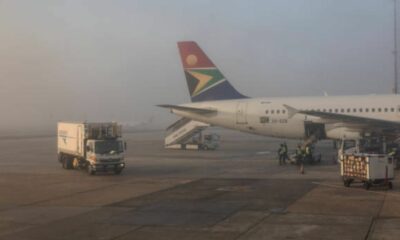
If you had to put a price on loyalty, South Africans might have a complicated answer, especially when it comes to South African Airways.
For more than two decades, the national carrier has been kept in the air with steady financial support from the state. But now, the full scale of that support is coming into sharper focus and the numbers are staggering.
A bill that keeps climbing
Since 2000, South Africa’s state-owned airlines have collectively cost taxpayers around R145.3 billion.
And SAA? It accounts for the lion’s share, more than R133 billion, or over 90% of that total.
Put differently, the airline has effectively absorbed about R5.1 billion every year for the past 26 years.
Smaller state carriers barely register in comparison:
- SA Express: around R7 billion
- Mango: roughly R5 billion
The imbalance tells its own story one airline, carrying the bulk of the burden.
Bailouts before and after collapse
Long before SAA entered business rescue in 2019, the warning signs were already there.
The airline had received approximately R68 billion in bailouts and that doesn’t even include government guarantees that allowed it to keep borrowing.
Then came business rescue, which added another massive layer of cost:
- R29.4 billion in post-commencement funding and support
- R7.4 billion through creditor compromises
- R28.3 billion tied to aircraft leasing arrangements
Much of that money? Gone for good never recovered.
What could R145 billion have done instead?
This is where the story hits home.
To make sense of the scale, economists often translate these figures into everyday realities:
- At around R14 a loaf of bread, that money could have bought over 10 billion loaves
- At R2,500 per SASSA grant, it could have funded 58 million grants
- Enough to support nearly 5 million people for a year
- Or sustain 1 million people for almost five years
Housing? At roughly R150,000 per RDP home, it could have built close to a million houses.
Jobs? The same amount could have paid:
- Over 400,000 workers earning R30,000 a month
- Or 100,000 people for more than four years
In a country battling unemployment and inequality, those comparisons are hard to ignore.
Why SAA became such a financial drain
To understand how it got here, you have to look back.
For years, SAA operated in a highly competitive global industry while dealing with governance issues, leadership changes, and mounting debt. By the time it entered business rescue, the airline was already on the edge.
The hope was that restructuring would reset the business.
But even after that process, questions remain about whether SAA can truly sustain itself without ongoing support.
Public reaction: fatigue and frustration
Online, the reaction to these figures has been predictably sharp.
Many South Africans have expressed frustration, asking why so much public money continues to flow into a single entity, especially when basic services remain under pressure.
Others, however, argue that SAA still plays an important strategic role, connecting the country to key international routes and supporting tourism.
It’s a debate that reflects a deeper national tension: pride versus practicality.
A bigger question about priorities
Beyond SAA itself, this story taps into something larger, how South Africa allocates scarce resources.
State-owned enterprises were once seen as engines of development. But over time, several have struggled financially, raising concerns about governance and long-term sustainability.
SAA has become one of the most visible examples of that challenge.
So, what now?
The airline is still flying. It’s reported profits. There are signs of operational improvement.
But the question isn’t just whether SAA can survive it’s whether it can do so without leaning on taxpayers again.
Because after R133 billion, patience is wearing thin.
SAA’s story is no longer just about aviation. It’s about accountability, priorities, and the real cost of keeping a national symbol alive.
For South Africans, the numbers are no longer abstract they represent missed opportunities, tough trade-offs, and a lingering question:
Was it worth it?
{Source: The Citizen}
Follow Joburg ETC on Facebook, Twitter , TikTok and Instagram
For more News in Johannesburg, visit joburgetc.com