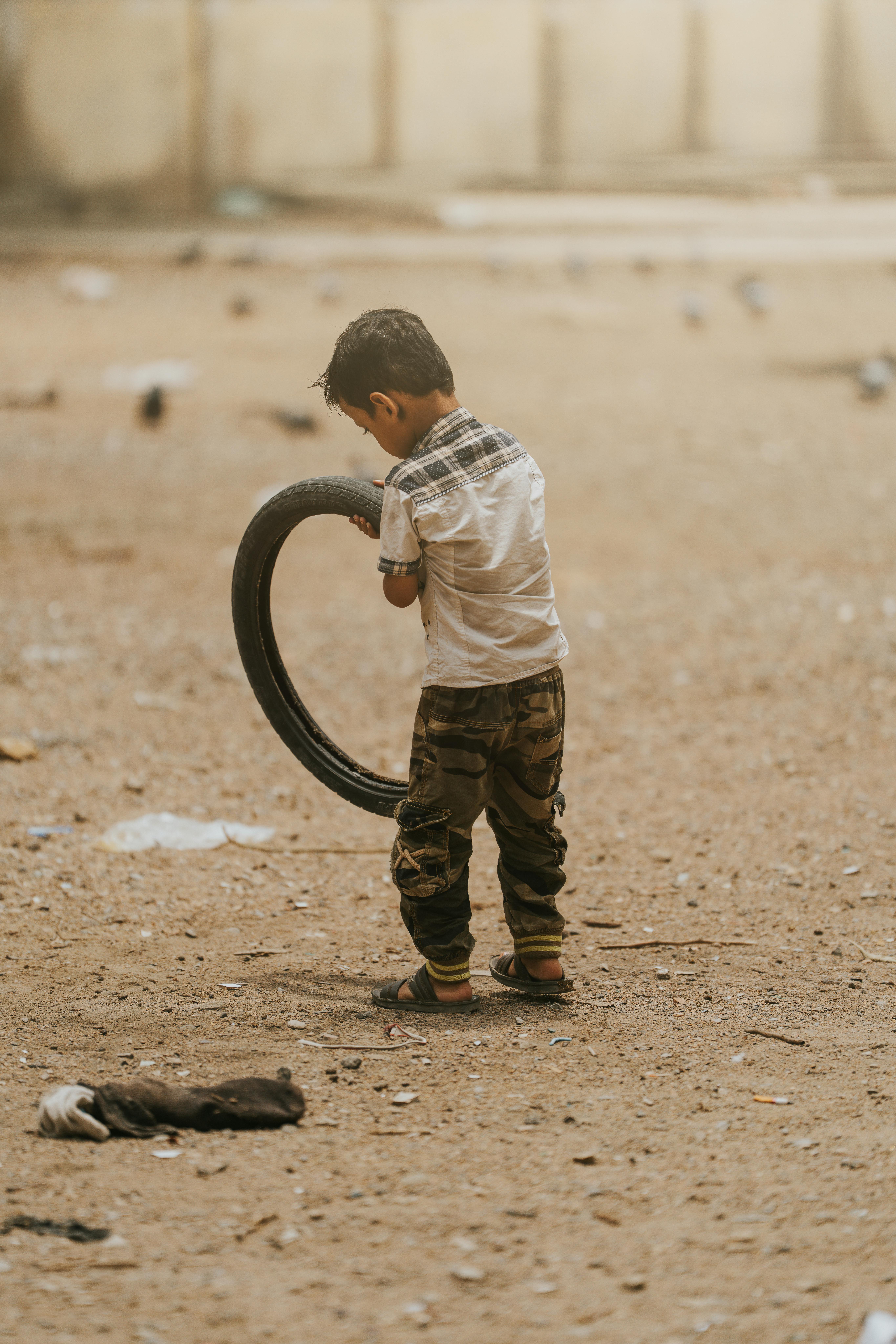
South Africa has made limited headway in reducing child poverty, with the majority of the country’s youngest citizens continuing to face overlapping hardships that income alone cannot capture.
According to Statistics South Africa (Stats SA) , the proportion of children aged 0 to 17 who were multidimensionally poor declined from 60.8% in 2015 to 57.3% in 2023 a reduction of just over three percentage points across eight years.
“Although this represents an improvement, it indicates that more than half of children continued to face multiple deprivations,” Stats SA noted in its report, *Child Poverty in South Africa: Assessing Changes in Multidimensional Poverty Using the MODA Approach (2015-2023)* , released on Tuesday.
The analysis was produced in collaboration with UNICEF South Africa and the Social Policy Research Institute (SPRI) .
The Methodology
The report measures deprivation using seven dimensions of well-being:
A child is classified as multidimensionally poor if they are deprived in at least three dimensions simultaneously.
Age Matters
Younger children aged 0 to 4 recorded the steepest decline, falling from 58.1% to 51.5%a 6.6-percentage-point improvement.
Children aged 13 to 17 saw only marginal progress, declining from 61.2% to 59.8%.
Primary school-aged children remained the most deprived group throughout the period. Their poverty rate fell by just 3.2 percentage points, from 62.5% to 59.3%.
Geography and Income
Children in non-urban areas were more than four times more likely to face multiple deprivations than those in urban settlements.
Children in households classified as monetarily poor were nearly twice as likely to be multidimensionally deprived. In 2023, 78.2% of children in poor households were multidimensionally deprived, compared with 37.1% in non-poor households.
Strikingly, the share of children who were multidimensionally poor but not income poor rose from 14.6% in 2015 to 18.9% in 2023.
“Improvements in income did not consistently translate into better access to essential services and living conditions,” Stats SA warned.
Provincial Disparities
At the metropolitan level, eThekwini, Mangaung, and Nelson Mandela Bay saw increases in child poverty between 2015 and 2023.
Race and Education
More than 62% of Black African children were multidimensionally deprived in 2023, compared with 38.1% of coloured children and roughly 9% of white children.
Children in households headed by someone with no formal education faced deprivation rates above 80% , while those in households with a university-educated head recorded rates below 16%.
The Covid-19 Impact
The pandemic compounded these inequalities, particularly for vulnerable children. Lockdowns worsened access to nutrition, healthcare, and protection, and increased children’s exposure to abuse and exploitation.
Nutrition and Safety Worsening
While housing and access to information improved, deprivation in nutrition and protection worsened across all age groups.
For toddlers aged 0 to 4:
The Bottom Line
“While income poverty showed substantial improvement, multidimensional deprivation remains widespread and continues to affect a significant proportion of children.”
More than half of South Africa’s children are still deprived in multiple ways. And for the youngest, nutrition and safety are getting worse.