News
Climate Policy Will Not Constrain GrowthIt Will Define SA’s Next Era of Industrialisation
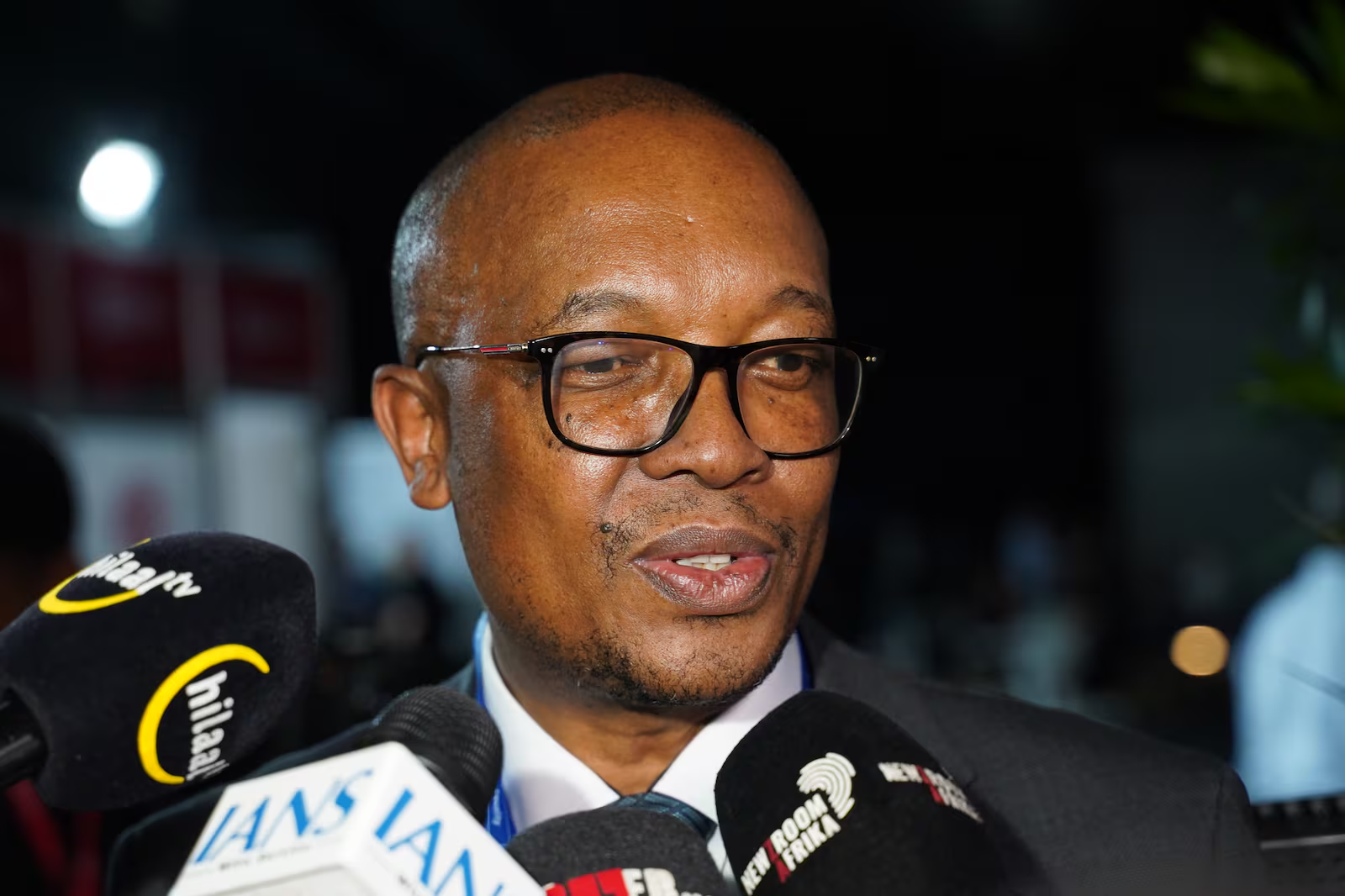
The Presidential Climate Commission (PCC) has concluded its first strategic planning session for the new cohort of Commissioners, consolidating its five-year priorities and programme of work as an independent statutory advisory body in terms of the Climate Change Act.
With overwhelming consensus, the Commission agreed that the next five years will be characterised by a shift towards more delivery-oriented advisory work.
The Shift
This means advancing a set of high-impact programme pipelines, including:
-
The Komati Power Station redevelopment
-
Grid-related interventions
-
Targeted climate awareness initiatives
-
The Just Transition Financing Mechanism and other funding instruments
From Obligation to Opportunity
South Africa has made important progress in building a credible climate policy architecture, particularly through the Climate Change Act.
“Climate policy is an economic engine, and our response must now be reframed as industrial strategy, not just an environmental obligation.”
However, the Commission warns that we are at risk of anchoring our national response too narrowly around compliance, reporting, and carbon budgets.
“The real question before us is: How do we turn climate action into a driver of growth, competitiveness, and sovereignty?”
South Africa’s Structural Advantages
-
An energy transition platform through the Just Energy Transition Partnership
-
An adaptation and resilience platform (JAR IP) expected to emerge by end of 2026
Globally, capital is flowing toward green industries at unprecedented scale.
“If we position correctly, South Africa can become a green manufacturing hub , a clean energy exporter , and a critical minerals processing leader.”
“If we do not, we risk deindustrialisation and self-isolation in the doldrums of low-value production in global value chains.”
The Path Forward
The Commission outlined several priorities:
Move beyond carbon budgets towards enabling sector transformation. Carbon budgets should not just constrain; they must signal and enable investment pathways.
Build demand for green products through regulation. Green public procurement (steel, cement, vehicles) and standards for green hydrogen and sustainable fuels can create domestic demand signals.
Unlock climate finance at scale. Current flows remain fragmented and slow. The operationalisation of a Climate Response Fund would send clear signals to private investors.
Crack the silos. There is strong investor appetite, but pipeline development and coordination gaps persist. Stronger cross-ministerial strategic alignment is needed, particularly with the Ministry of Finance.
A Whole-of-Government Approach
The current Just Energy Transition Inter-Ministerial Committee could be mandated to become a broader Climate Response IMC , with a mandate that spans the full climate–economy interface, including industrialisation, finance, and implementation coordination.
The Window of Opportunity
“South Africa has a narrow window to position itself as a green industrialisation superpower in the Global South.”
“If we get this right, climate policy will not constrain our growth, it will define the next era of South Africa’s industrialisation.”
The Bottom Line
The Commission is ready to bridge government, business, labour, and civil society. It is ready to provide independent, evidence-based advice and support social compacting around difficult trade-offs.
The move is from frameworks to execution. From compliance to competitiveness. From risk mitigation to economic transformation.
The window is open. The question is whether South Africa will walk through it.
{Source: IOL}
Follow Joburg ETC on Facebook, Twitter , TikTok and Instagram
For more News in Johannesburg, visit joburgetc.com