News
Policy Uncertainty Surges as Middle East Crisis Jolts SA’s Economic Outlook
South Africa’s policy uncertainty has risen sharply in early 2026, reflecting growing global and domestic economic pressures linked to the escalating Middle East energy crisis.
The Policy Uncertainty Index , compiled by the North West University (NWU) Business School, climbed to 77.8 in the first quarter of 2026, up significantly from 64.9 in the fourth quarter of 2025.
The increase signals a reversal of the previous quarter’s modest improvement and highlights a renewed deterioration in business sentiment.
The Global Context
According to NWU Business School economist Raymond Parsons , the rise was largely anticipated given the intensifying global economic fallout from geopolitical tensions in the Middle East.
The economic outlook for both inflation and growth is increasingly being shaped by the consequences of the conflict involving the United States, Israel, and Iran.
“The most exposed economies are not just those that need imported oil, but those that cannot easily absorb a big jump in oil, freight, food, and financing costs simultaneously,” Parsons said.
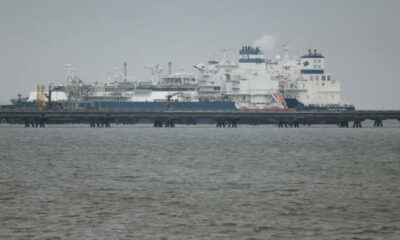
A key pressure point remains the Strait of Hormuz , where blockages continue to constrain shipping flows in the Gulf. This has heightened vulnerability for energy-importing regions, particularly in Asia and Europe.
Central Banks Hold Steady
In response, major central banks have adopted a cautious stance. The US Federal Reserve, Bank of England, and European Central Bank have all opted to keep interest rates unchanged, signalling a “wait-and-see” approach.
The South African Reserve Bank followed suit. Its Monetary Policy Committee, at its 26 March meeting , also left rates unchanged, suggesting borrowing costs are likely to remain elevated for longer.
Parsons warned that this could interrupt the country’s fragile economic recovery in 2026.
South Africa’s Exposure
As a net importer of crude oil, South Africa is particularly exposed to rising global energy prices. The impact is expected to be felt acutely from 1 April , when a surge in fuel costs coincides with:
-
Higher electricity tariffs from Eskom
-
Increased fuel levies and carbon taxes announced in the national budget
“It is therefore a triple ‘whammy’ for business and consumers,” Parsons said.
Possible Interventions
Parsons noted that several countries have already introduced policy measures to cushion the blow. Options such as temporary fuel relief or deferrals may help ease the burden, particularly for vulnerable householdsthough these would need to be balanced against fiscal constraints.
The Need for Coordination
Despite the heightened uncertainty, Parsons cautioned against alarmism. Instead, he called for a measured and coordinated policy response focused on:
-
An objective assessment of the risks and likely scenarios
-
A clear plan or appropriate remedies to mitigate and manage the new risks
-
Minimising uncertainty about the official commitment to the core macroeconomic framework and the pace of structural reforms
Reform Momentum
The need for faster reform was also underscored by recent findings from the Bureau for Economic Research (BER) at the University of Stellenbosch. While initiatives such as Operation Vulindlela have helped accelerate progress, overall reform momentum remains slow.
“Investment spending is only gradually turning the corner. Sustaining the economic recovery will depend on whether improved sentiment and reform momentum translate into stronger fixed investment and measurable progress in economic performance.”
The Bottom Line
Policy uncertainty is up. The Middle East crisis is hitting SA’s economy. Fuel, electricity, and food costs are rising. Central banks are holding rates.
Parsons’ message: assess the risks, communicate the plan, and accelerate reforms. The recovery is fragileand the next few months will decide whether it holds.
{Source: IOL}
Follow Joburg ETC on Facebook, Twitter , TikTok and Instagram
For more News in Johannesburg, visit joburgetc.com