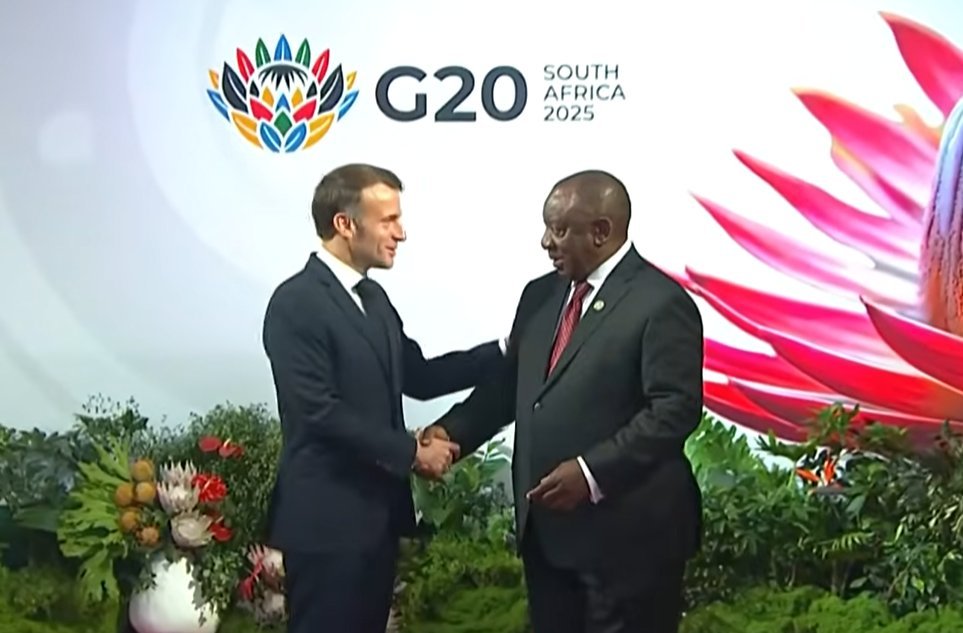
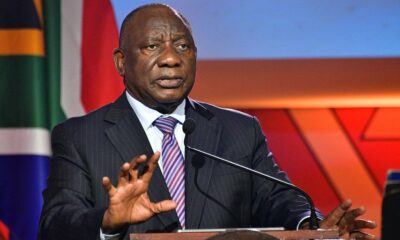
The diplomatic rift between South Africa and the United States has deepened further, with France withdrawing President Cyril Ramaphosa’s invitation to the G7 summit in June. The move, confirmed by the South African presidency on Thursday, came after sustained pressure from Washington.
“We’ve learnt that due to sustained pressure, France has had to withdraw its invitation to South Africa to attend the G7 meeting,” Vincent Magwenya, spokesperson to the president, told AFP.
“We are told that the Americans threatened to boycott the G7 if South Africa was invited,” he said.
The G7 summit, scheduled to take place in the French town of Evian, brings together the leaders of the world’s largest advanced economies: Canada, France, Germany, Italy, Japan, the United Kingdom, and the United States. South Africa, as a leading voice from the Global South, had been invited to participate in outreach sessionsa common practice that allows non-member nations to engage with the group on shared challenges.
That invitation has now been rescinded.
A Pattern of Exclusion
The disinvitation follows a pattern of escalating tensions between Pretoria and Washington. In November last year, US President Donald Trump announced that South Africa would be barred from attending the next G20 summit, scheduled to be hosted in Miami in 2026.
Trump’s remarks at the time were scathing. He accused South Africa of refusing to acknowledge what he called “horrific human rights abuses endured by Afrikaners and other descendants of Dutch, French and German settlers.”
“To put it more bluntly, they are killing white people and randomly allowing their farms to be taken from them,” Trump posted on his Truth Social platform.
The US president also cited South Africa’s refusal to symbolically hand over the G20 presidency to a senior US Embassy representative at the close of this year’s summit in Johannesburg as a trigger for his decision.
“At the conclusion of the G20, South Africa refused to hand off the G20 Presidency to a senior representative from our US Embassy, who attended the closing ceremony. Therefore, at my direction, South Africa will NOT be receiving an invitation to the 2026 G20, which will be hosted in the great city of Miami, Florida next year.”
Trump added that he would halt “all payments and subsidies” to South Africa, stating that the country had demonstrated it was “not worthy of membership anywhere.”
The Diplomatic Fallout
The back-to-back exclusions from the G20 and now the G7 represent a significant diplomatic setback for South Africa. The country has long positioned itself as a bridge between the developed and developing worlds, leveraging its membership in the G20 and its strategic partnerships to amplify African voices on global platforms.
Being excluded from these forums limits South Africa’s ability to engage directly with the world’s most powerful economies on issues ranging from trade and investment to climate change and global health.
The fact that France, a nation with which South Africa has historically enjoyed warm relations, felt compelled to withdraw its invitation underscores the extent of US pressure. The US is a permanent member of the G7 and its attendance is essential for the summit’s legitimacy. A US boycott would have cast a shadow over the entire event.
South Africa’s Response
The South African presidency has so far responded with restraint. Magwenya’s statement confirmed the disinvitation but stopped short of directly criticising France or the United States.
Officials are understood to be weighing their options, including whether to raise the issue through diplomatic channels or to accept the exclusion as a reality of the current geopolitical climate.
The Underlying Tensions
The diplomatic spat is rooted in broader disagreements between the Ramaphosa administration and the Trump White House. The US has been critical of South Africa’s foreign policy, particularly its engagement with countries like Russia and China, as well as its stance on the Israel-Gaza conflict.
South Africa’s case against Israel at the International Court of Justice, accusing the country of genocide against Palestinians, has been a particular point of contention. The US has described the case as “meritless” and has signalled its displeasure with Pretoria’s approach.
Trump’s references to farm killings and land reform tap into a long-standing narrative promoted by some conservative circles in the US that seeks to portray South Africa as a country where white citizens are under threat. The South African government has repeatedly dismissed these claims as misinformation.
What Comes Next
The exclusion from the G7 is unlikely to be the last episode in this escalating diplomatic conflict. The Miami G20 summit in 2026 is still over a year away, and it remains unclear whether South Africa will be able to secure an invitation to other international forums in the interim.
For now, the message from Washington is clear: there are diplomatic consequences for countries whose policies diverge from US interests. For South Africa, navigating this new reality will require careful diplomacy and a reassessment of its global positioning.
The G7 summit will proceed without a South African presence. The diplomatic wound, however, will likely take longer to heal.