News
Has World War III begun? Inside the escalating US-Israel-Iran conflict
Has World War III begun? Inside the escalating US-Israel-Iran conflict
It’s the question flooding timelines, WhatsApp groups and late-night conversations: Has World War III just started?
From missile strikes in Tehran to explosions echoing across Gulf cities, the past 48 hours have shaken the Middle East and rattled the world. While “world war” may feel dramatic, what’s unfolding between the United States, Israel and Iran is undeniably one of the most dangerous escalations in recent history.
Here’s what we know and why it matters far beyond the region.
Why did the US and Israel attack Iran?
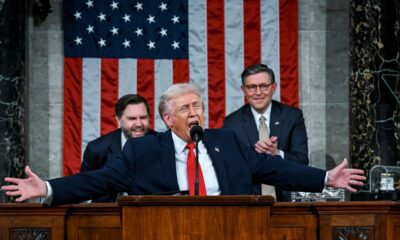
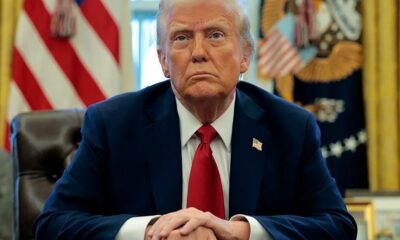
In the early hours of Saturday morning, US President Donald Trump addressed the nation, confirming a large-scale operation aimed at crippling Iran’s military capabilities and preventing it from developing a nuclear weapon.
The operation, referred to as “Epic Fury”, involved coordinated strikes alongside Israel.
Israeli Prime Minister Benjamin Netanyahu has long described Iran as Israel’s most serious threat. Over the past year, Israel severely weakened Iran-aligned groups such as Hamas in Gaza and Hezbollah in Lebanon. Tensions between Israel and Iran have been simmering for decades, often through proxy battles. This time, however, the confrontation is direct.
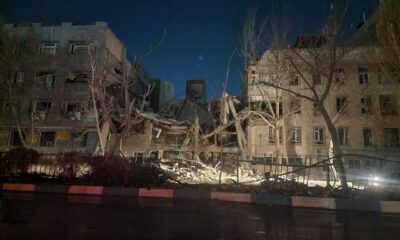
Explosions were reported in Tehran, Isfahan, Karaj and Kermanshah. In the southern city of Minab, a girls’ primary school was struck, with nearly 70 students reportedly killed, a devastating development that has drawn widespread condemnation and grief across social media platforms.
What makes this escalation particularly striking is that it came just days after nuclear talks between Washington and Tehran resumed in Switzerland. Iran’s Foreign Minister had described the negotiations as showing “good progress,” although differences remained.
Diplomacy, it seems, was overtaken by force.
Does Iran actually have nuclear weapons?
This is the heart of the dispute.
Iran does not possess a nuclear weapon. However, according to the International Atomic Energy Agency (IAEA), Iran enriches uranium up to 60% purity, close to weapons-grade levels. Highly enriched uranium is a key ingredient in building a nuclear bomb.
Tehran insists its nuclear programme is peaceful and that accusations from the US and Israel are politically motivated. Washington and Tel Aviv argue that the enrichment levels signal dangerous intent.
It’s a debate that has shaped global diplomacy for more than a decade, from sanctions to the collapse of previous nuclear agreements.
Iran hits back
Iran’s retaliation was swift and wide-ranging.
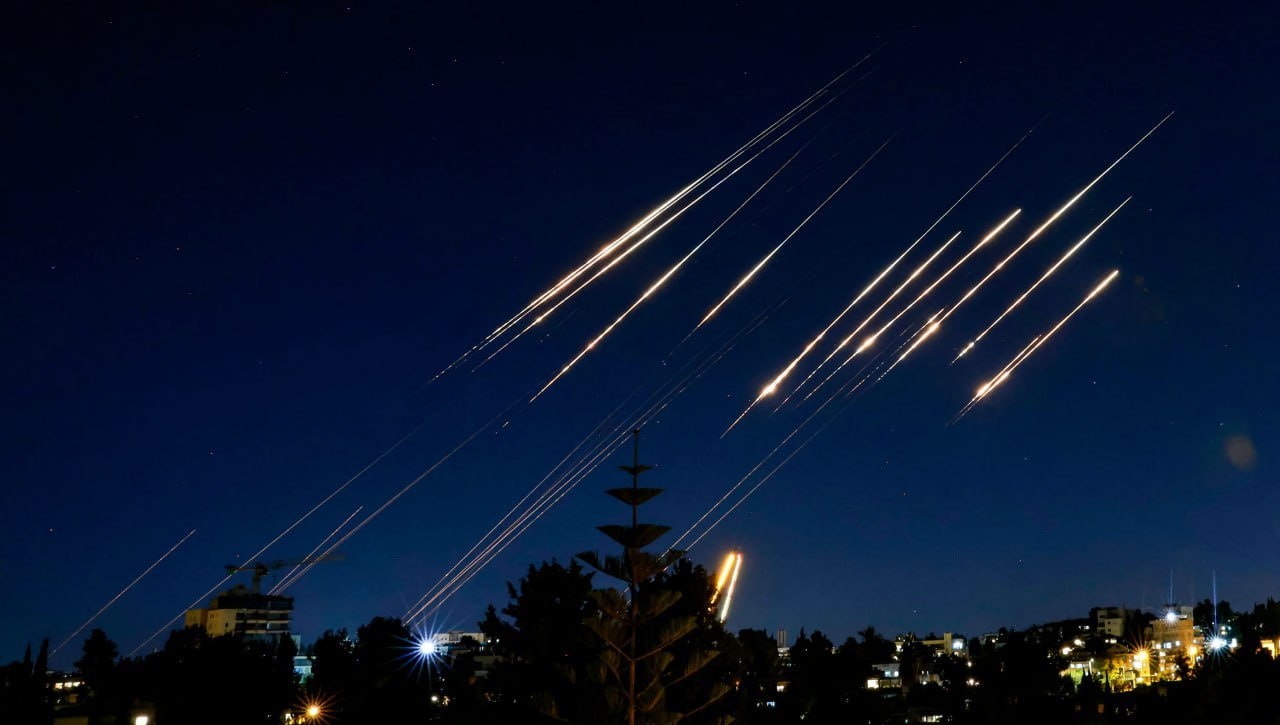
Missile and drone strikes were launched across parts of the Middle East, targeting countries that host US military bases. Reports described blasts from Dubai’s beachfront skyline to central Doha.
While the scale of damage is still emerging, the message from Tehran was unmistakable: any direct attack will be met with force.
In times like this, regional conflict can spiral quickly. When US assets are targeted, the risk of deeper American involvement increases and that’s when global alarm bells start ringing.
Did the US Congress approve this?
Another major point of controversy is how the US strike was authorised.
Under Article 1 of the US Constitution, Congress not the president has the power to declare war. The attack proceeded without formal congressional approval, though senior lawmakers from both parties were reportedly notified shortly beforehand.
This has reignited debate within the United States about executive war powers and constitutional limits, particularly as the scale of the operation suggests something far larger than a limited strike.
What are Russia and BRICS saying?
Russia has strongly condemned the strikes. Foreign Minister Sergey Lavrov labelled the attack “unprovoked” and called for an immediate halt to military action, signalling Moscow’s readiness to raise the matter at the UN Security Council.
The broader implications stretch into the BRICS bloc, which includes Brazil, Russia, India, China, South Africa, Indonesia, Egypt, Ethiopia and the United Arab Emirates.
Last year, BRICS nations criticised US and Israeli actions against Iran, calling them a breach of international law. Now, with both Russia and Iran within the bloc, questions are resurfacing about whether BRICS is merely an economic grouping or an emerging political counterweight to Western alliances.
For South Africans watching from home, this matters. Pretoria’s foreign policy often positions the country within BRICS discussions. If the bloc takes a firm stance, South Africa may be pressured to clarify its position diplomatically.
The Strait of Hormuz: why oil markets are nervous
Beyond missiles and diplomacy lies an even bigger concern, energy.
The Strait of Hormuz, located between Iran and the United Arab Emirates, carries roughly a quarter of the world’s seaborne oil trade. It is one of the most critical choke points in global energy supply.
Reports have emerged that vessels received radio warnings from Iran’s Revolutionary Guards stating that no ships would be allowed to pass through the strait.
If tanker traffic is disrupted, oil prices could surge overnight. For countries like South Africa which already struggles with fuel price volatility, that would mean higher petrol prices, increased transport costs and renewed inflationary pressure.
In other words, even if the war feels geographically distant, its economic shockwaves would be felt at local petrol pumps.
So… is this World War III?
Not yet.
A world war typically involves multiple major global powers formally engaged in sustained, large-scale combat across several continents. While this conflict is extremely serious and involves powerful states, it has not yet escalated to that level.
But the risk lies in miscalculation.
If more nations are drawn in, whether through alliances, retaliatory strikes or economic warfare the scope could widen rapidly.
Right now, the world stands at a tense crossroads.
On social media, hashtags referencing “WW3” are trending globally. Fear spreads quickly in the digital age. Yet history reminds us that even moments that feel apocalyptic can sometimes pull back from the brink through diplomacy.
The coming days will be critical.
For now, what’s clear is this: the balance of power in the Middle East has shifted dramatically. Whether it descends into prolonged war or forces a new, uneasy negotiation, remains uncertain.
But the world is watching. And holding its breath.
{Source: IOL}
Follow Joburg ETC on Facebook, Twitter , TikTok and Instagram
For more News in Johannesburg, visit joburgetc.com