News
Washington talks end without agreement on Greenland’s future
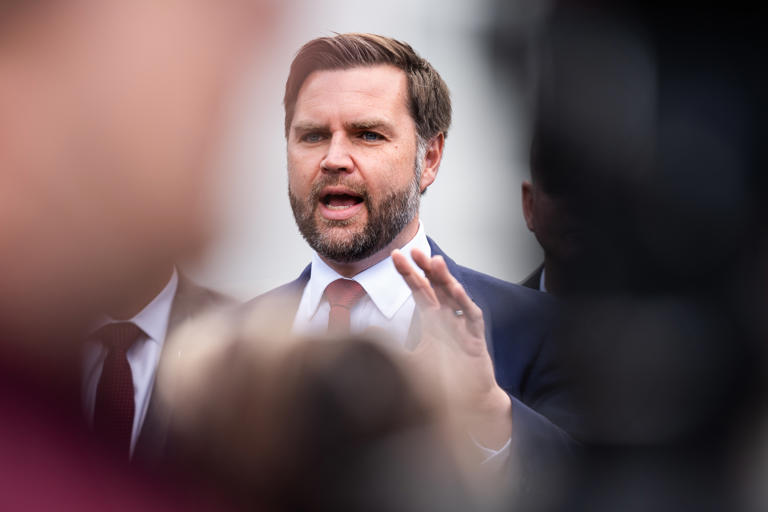
Washington talks hit a familiar wall on Greenland
The latest round of high-level talks in Washington was meant to cool tensions. Instead, it confirmed just how far apart the United States and Denmark remain on the future of Greenland.
After meetings with US Vice President J.D. Vance and Secretary of State Marco Rubio, Danish Foreign Minister Lars Lokke Rasmussen emerged with carefully chosen words. The discussions were frank and constructive, he said. But the substance did not shift. The core disagreement is still firmly in place.
At the centre of it all is President Donald Trump’s renewed insistence that the US should acquire Greenland, a stance Denmark has repeatedly rejected.
Denmark draws a clear line on sovereignty
Speaking to reporters after the meeting, Rasmussen made Denmark’s position unambiguous. The US position did not change, and neither did Denmark’s.
According to Rasmussen, Trump’s desire to take control of Greenland is not in the interest of the Kingdom of Denmark, which includes Greenland as a self-governing territory. He stressed that sovereignty and the right of Greenlanders to decide their own future are non-negotiable.
Greenland’s foreign minister, Vivian Motzfeldt, who also attended the talks, echoed that message. While calling for calmer and more normal relations, she firmly ruled out any change in sovereignty.
A working group, but no breakthrough
Despite the deadlock, both sides agreed to set up a high-level working group that will report back within weeks. The aim is to explore practical ways to address US security concerns in the Arctic without crossing Denmark’s red lines.
Rasmussen described it as an agreement to disagree. It is diplomacy, but with limits clearly drawn.
Copenhagen has signalled that it is willing to cooperate within NATO structures. Danish authorities have already moved an advanced command to Greenland to prepare logistics and infrastructure ahead of an expected increase in Danish and European troop presence.
Trump’s social media post fuels tensions
Any hope of a softer tone was undercut just hours before the meeting, when Trump posted on social media that NATO should lead efforts to bring Greenland under US control for national security reasons. He warned that without US involvement, Russia or China would move in.
Trump also linked Greenland to his proposed Golden Dome missile defence system, arguing that the island is strategically essential.
The comments sparked immediate pushback from Danish officials. Rasmussen noted that the US itself has drastically reduced its military footprint in Greenland over the decades, from tens of thousands of personnel to just a few hundred. He also dismissed claims of an imminent Chinese or Russian naval presence.
Why Greenland matters so much
Greenland has long been a geopolitical prize because of its location in the Arctic and its proximity to emerging shipping routes and military corridors. As climate change reshapes the region, interest from global powers has intensified.
For Denmark and Greenland, however, the issue is not just strategic. It is about history, autonomy, and self-determination. Any discussion that bypasses the will of Greenland’s people is a non-starter.
NATO Secretary General Mark Rutte declined to comment, calling it an internal matter for allies. For now, the alliance appears keen to avoid being pulled into a public rift.
What happens next
The coming weeks will test whether the proposed working group can lower the temperature or whether this dispute will harden further. For now, Washington talks have ended where they began. With a fundamental disagreement still firmly in place, Greenland is once again at the centre of global power politics.
Follow Joburg ETC on Facebook, Twitter, TikT
For more News in Johannesburg, visit joburgetc.com
Source: IOL
Featured Image: MSN