News
Zuma escalates Khampepe recusal fight to Constitutional Court
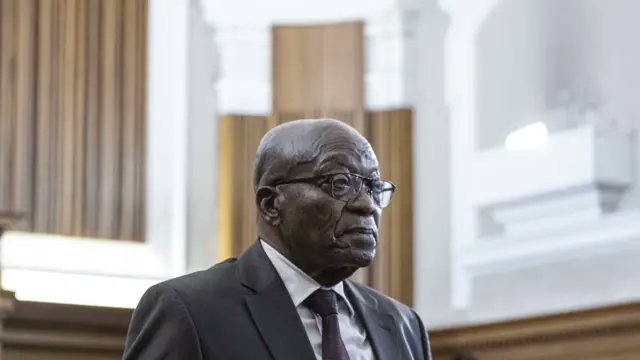
Zuma escalates Khampepe recusal fight to Constitutional Court
South Africa’s long-running legal and political dramas have taken another turn, this time at the highest court in the land.
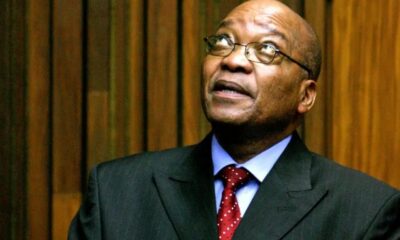
Former president Jacob Zuma has filed an urgent application at the Constitutional Court of South Africa, seeking to overturn a ruling that blocked his attempt to remove Justice Sisi Khampepe from a sensitive inquiry into apartheid-era cases.
It’s the latest chapter in a dispute that touches on history, accountability, and the inner workings of South Africa’s justice system.
The battle over Khampepe’s role
At the centre of the matter is Sisi Khampepe, who is chairing an inquiry into stalled prosecutions linked to findings from the Truth and Reconciliation Commission (TRC).
Zumaalongside former president Thabo Mbekiargues that Khampepe should step aside, citing concerns about her past roles and whether they could affect her impartiality.
But Khampepe previously dismissed those concerns herself, rejecting calls for her recusal earlier this year. That decision set off a legal chain reaction that has now reached the country’s apex court.
High Court setback and new challenge
Last month, the Gauteng High Court dealt a blow to Zuma and Mbeki’s case, dismissing their attempt to force Khampepe’s removal.
The court ruled that the applicants had not followed proper procedurespecifically, failing to obtain permission from the Chief Justice before initiating legal action against a judge, as required under the Superior Courts Act.
But Zuma is not backing down.
In his Constitutional Court filing, he argues that the High Court made several errorsboth procedural and substantive.
A controversial judgment
One of Zuma’s key complaints is not just about the outcome, but how the judgment was delivered.
According to his legal team, the High Court issued a majority ruling without releasing a dissenting judgment at the same timea move they say undermines transparency.
Zuma’s supporters argue that this limits public understanding of the court’s reasoning and raises broader concerns about openness in the judicial process.
Mzwanele Manyi described the ruling as “deeply troubling,” suggesting it could erode confidence in how justice is administered.
The legal arguments at play
Beyond the procedural issues, Zuma is also challenging the interpretation of the law itself.
He contends that the High Court was wrong to apply rules designed for sitting judges to a retired judge acting as head of a commission. In his view, leading an inquiry is not the same as performing a judicial functionmeaning those legal protections should not apply.
He further argues that the court avoided dealing with the substance of the case, instead focusing on technicalitieseffectively pushing the matter up to higher courts without resolving the core dispute.
Why this case matters
At first glance, the case might seem like a narrow legal dispute. But its implications run deeper.
The TRC process, which aimed to deal with crimes committed during apartheid, remains one of South Africa’s most significant historical undertakings. The current inquiry into stalled prosecutions is part of an ongoing effort to address unresolved injustices from that era.
Any questions about the fairness or legitimacy of that process are bound to attract national attention.
Public reaction: familiar divisions
As with many cases involving Zuma, public opinion is sharply divided.
Some South Africans view the application as a legitimate challenge about fairness and judicial accountability. Others see it as yet another legal battle that delays progress and keeps politically sensitive issues tied up in court.
On social media, reactions range from calls for transparency to frustration over what some describe as “never-ending litigation.”
What happens next
The Constitutional Court will now have to decide whether to hear the matterand if so, whether Zuma’s arguments hold weight.
The urgency of the application suggests that time is a key factor, with Zuma’s camp arguing that delays could affect the functioning of the inquiry itself.
A test of process and perception
Beyond the legal technicalities, this case highlights a broader challenge facing South Africa’s institutions: maintaining public trust in complex, high-stakes matters.
Whether the issue is about judicial procedure, political accountability, or historical justice, the outcome will likely shape how the public views the balance between law and politics.
Because in South Africa, the courtroom is rarely just a legal spaceit’s often where the country’s biggest debates play out.
{Source: The Citizen}
Follow Joburg ETC on Facebook, Twitter , TikTok and Instagram
For more News in Johannesburg, visit joburgetc.com