City Updates
Africa’s richest city is battling a deep financial crisis and residents are feeling it
Africa’s richest city is battling a deep financial crisis and residents are feeling it
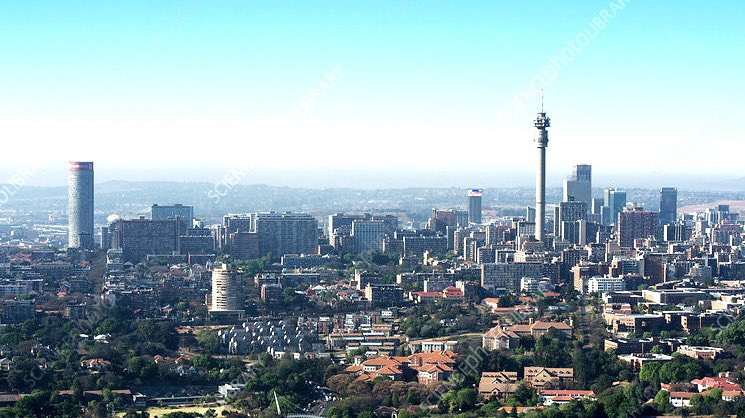
For years, Johannesburg carried the title of Africa’s economic powerhouse, the city of opportunity, big business and endless movement.
Today, many residents say that image feels increasingly disconnected from reality.
Across parts of the city, potholes remain unrepaired, traffic lights stay broken for weeks, power outages continue to frustrate communities and service delivery complaints pile up daily. Now, leaked correspondence from Enoch Godongwana has intensified fears that South Africa’s richest metro may be sinking into a far deeper financial crisis than many realised.
The growing alarm has triggered calls from opposition parties for national intervention in the City of Johannesburg, with some demanding that the metro be placed under financial administration.
Treasury’s concerns shake Joburg politics
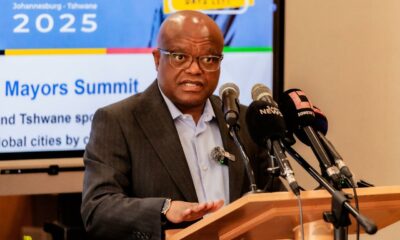
The political storm erupted after reports surfaced that Godongwana had raised serious concerns about the city’s finances in a letter sent to Johannesburg mayor Dada Morero.
Morero later confirmed receiving the letter and said discussions with the finance minister had already begun.
According to the mayor, the engagement forms part of Treasury’s responsibility to monitor municipal financial management. He also attempted to reassure residents that the city remained stable and capable of addressing the concerns raised.
But for many Joburg residents, reassurance alone is no longer enough.
On social media, frustrated locals described the city as “falling apart in slow motion,” with users sharing photos of collapsing infrastructure, water outages and neglected roads. Others questioned how a city that generates such enormous economic activity could still face growing liquidity problems.
The issue has also reignited broader debates around governance in Gauteng metros, where coalition instability and political infighting have repeatedly disrupted long-term planning.
Why Johannesburg’s finances are under pressure
At the centre of the concern is the city’s worsening debt burden and rising financial obligations.
Opposition parties argue that years of weak financial discipline, governance failures and poor revenue collection have pushed the metro into dangerous territory.
Franco de Lange from the Freedom Front Plus said warnings had repeatedly been ignored by the ANC-led administration.
One major flashpoint was the city’s controversial wage agreement with municipal workers last year. The salary increase package, reportedly valued at billions of rand, was introduced partly to avoid labour unrest ahead of the G20 Summit preparations.
Critics argue the city simply could not afford it.
De Lange described the agreement as a turning point that placed even greater pressure on Johannesburg’s already strained finances.
He also pointed to the city’s reported debt of around R70 billion, while highlighting concerns over low municipal payment levels in some areas.
According to De Lange, payment rates in parts of Soweto remain significantly lower than in many suburban areas a long-standing issue that has become politically sensitive for decades.
The politics behind the payment crisis
The issue of non-payment in Johannesburg is deeply tied to South Africa’s history.
In many townships, resistance to paying for municipal services dates back to apartheid-era protest movements, when non-payment became a form of political resistance against the state.
More than 30 years into democracy, that legacy still shapes local government finances in some communities.
Critics argue successive administrations failed to build a sustainable payment culture while also failing to deliver consistent services that would encourage residents to trust the system.
For many residents, the relationship between payment and service delivery has become deeply fractured.
“Why should people pay when taps are dry and roads are broken?” has become a common sentiment online whenever municipal billing debates resurface.
Opposition parties warn of collapse
The concerns are not coming from just one political corner.
ActionSA Gauteng caucus leader Funzi Ngobeni described the contents of Treasury’s warning as alarming.
According to Ngobeni, the issues raised include worsening governance, financial non-compliance, liquidity strain and spending commitments the city may struggle to sustain.
Among the biggest concerns is reportedly Treasury’s instruction for the city to halt implementation of the politically negotiated salary agreement due to affordability concerns.
Meanwhile, the Democratic Alliance has warned that placing Johannesburg fully under administration may not automatically solve the crisis.
Belinda Kayser-Echeozonjoku argued that previous interventions elsewhere in Gauteng did not always improve governance and, in some cases, allegedly created opportunities for further looting and instability.
Her comments referenced past experiences in Tshwane, where administration processes became politically contested and deeply controversial.
A warning sign for South Africa’s metros?
The Johannesburg crisis is increasingly being viewed as part of a bigger national problem.
Across several major South African metros, residents are experiencing declining infrastructure, rising debt levels and ongoing political instability inside coalition governments.
Even in economically important cities, municipalities are struggling to balance wage demands, ageing infrastructure, electricity challenges and declining public trust.
The concern among analysts is that Johannesburg’s situation could become a warning sign for other metros if structural financial problems are not addressed urgently.
For now, Treasury’s engagement with the city continues behind closed doors.
But outside those meetings, ordinary residents are less focused on political statements and more concerned about what they experience every day: unreliable services, deteriorating infrastructure and the growing feeling that Africa’s richest city is slowly losing control of its future.
{Source: The Citizen}
Follow Joburg ETC on Facebook, Twitter , TikTok and Instagram
For more News in Johannesburg, visit joburgetc.com