Business
Street name changes are coming to Johannesburg’s inner city
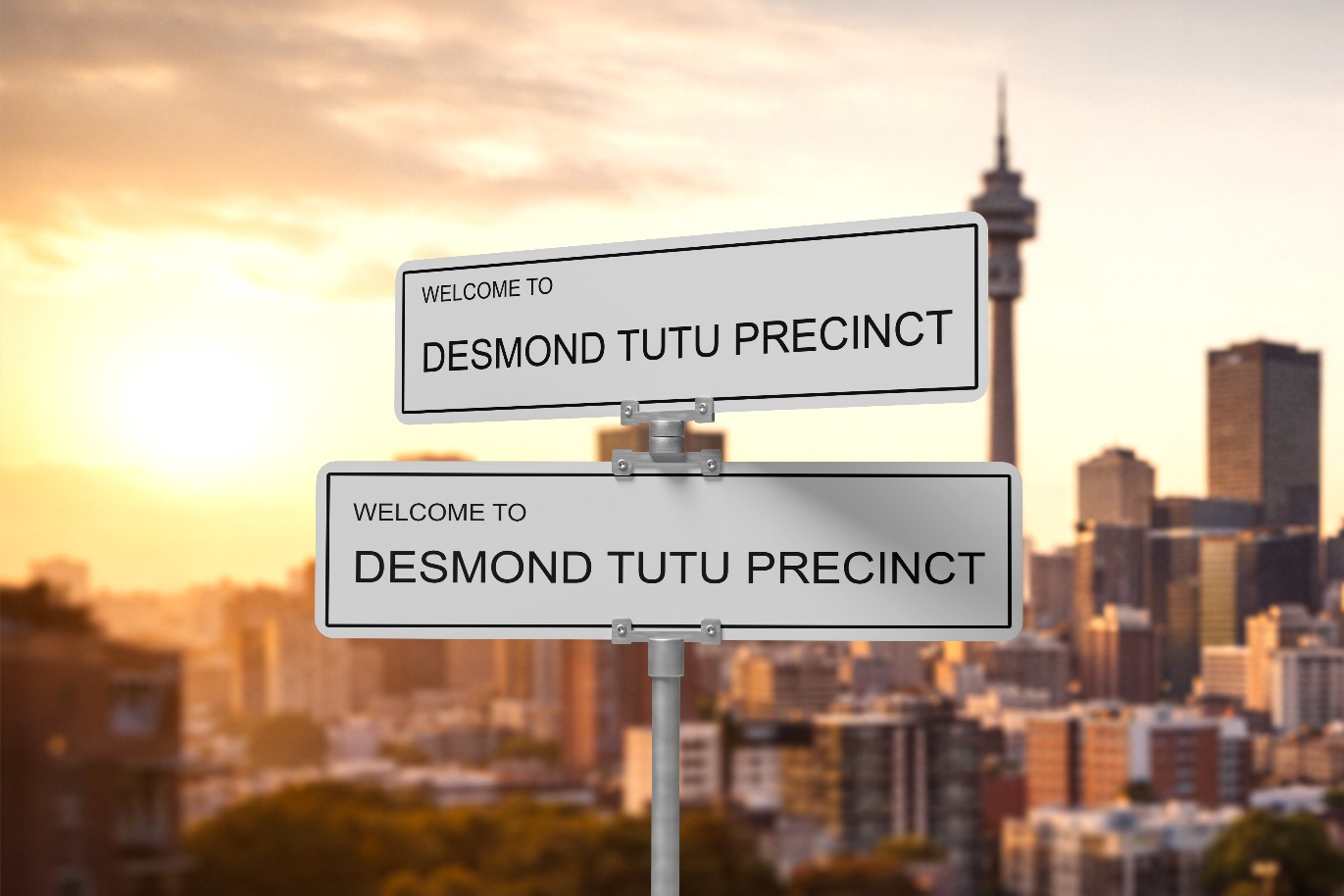
In one of the clearest signs yet that the city wants to reshape the CBD around memory, movement, and heritage, four street name changes have been proposed as part of the Archbishop Desmond Tutu Precinct. The area centres on historic St Mary’s Cathedral, a place long woven into the story of Joburg, and the renaming plan forms part of a wider regeneration push that is now open to the public.
For a city that is always arguing with itself about space, identity, and history, street names are never just street names. They tell people which people are remembered, what matters, and what kind of city Johannesburg wants to be next.
The four names Johannesburg wants to change
The proposal affects the roads surrounding St Mary’s Cathedral in the inner city.
If approved, Plein Street would become Desmond Tutu Street. Wanderers Street would become Simeon Nkoane Street. De Villiers Street would become Trevor Huddleston Street. Hoek Street would become Cathedral Street.
Together, the renaming would redraw the immediate identity of the blocks around the Cathedral, which the city wants to position as the anchor of a new public precinct in the CBD.
Residents and stakeholders can comment on the renaming proposal until 5 May 2026. The City has asked that comments be sent by email to Dominica Masalesa at [email protected].
A bigger plan than just new signs
The street renaming proposal sits alongside the broader Draft Desmond Tutu Precinct Plan, which is open for public comment until 17 April 2026.
This is not just about swapping out road names on a map. The city and the Johannesburg Development Agency are presenting the precinct as part of a wider inner-city regeneration effort aimed at an area that has seen visible decline over the years. The stated goal is to build a precinct that is more walkable, safer, easier to move through, and more dignified, while also honouring Archbishop Desmond Tutu’s legacy.
That makes the symbolism important. Tutu was not only one of South Africa’s best-known moral voices but also a figure deeply tied to justice, equality, and public life. Naming the precinct around him is the city’s way of linking urban renewal to values, not just infrastructure.
Why St Mary’s Cathedral matters here
St Mary’s Cathedral is not a random landmark in this story. It is the heart of the proposed precinct.
The Cathedral sits at the corner of Wanderers Street and De Villiers Street, and the surrounding streets are central to the precinct vision. According to the draft plan, the city wants the space around the Cathedral to feel more public, more accessible, and more visible than it does now.
That includes a proposed Desmond Tutu Square next to the Cathedral. One of the most notable ideas in the plan is that Hoek Street, which would be renamed Cathedral Street, could be closed to motor vehicles and turned into a pedestrian-friendly public space.
There are also plans for large steel gateway structures marking entrances to the square, as well as an illuminated spire on the nearby Darragh House building to make the Cathedral and square more visible in the skyline. In a dense, busy part of the CBD where important buildings can easily disappear into the urban clutter, that detail says a lot about what the city is trying to do. This is as much about visibility and presence as it is about roads and paving.
Where the precinct will sit
The study area is in the Johannesburg inner city and stretches across Wards 59, 60, 123, and 124.
It is bounded by Sophie De Bruyn Street to the north, Claim and Mooi streets to the east, Harrison Street to the west, and Commissioner Street to the south.
That places the project in a part of Joburg many residents know as intense, crowded, and full of movement. It is also exactly the sort of space where questions of safety, transport, walkability, and informal trade are impossible to separate from one another.
The deeper question behind the renaming
The precinct itself was approved by the council in 2022, under the administration led by former mayor Mpho Phalatse, and the current draft frames it as a 12-month initiative within the city’s Inner City Urban Regeneration Programme.
What makes this story interesting is that the renaming and redevelopment are happening together. Johannesburg is not only trying to improve a physical space. It is also trying to shape the meaning of that space.
In a city where heritage is often remembered in fragments, the proposed names reflect a deliberate attempt to centre figures associated with faith, activism, justice, and public conscience. Whether residents fully support every proposed name is exactly what the public participation process is meant to test. But the direction is already clear: the city wants this part of the CBD to function not just as a route through town but as a civic place with memory attached to it.
And in Johannesburg, that is always going to matter.
Follow Joburg ETC on Facebook, Twitter, TikT
For more News in Johannesburg, visit joburgetc.com
Source: Business Tech
Featured Image: City of Johannesburg