News
Ramaphosa faces steep legal challenge in bid to review Phala Phala panel report, experts say
What Ramaphosa has said and what comes next
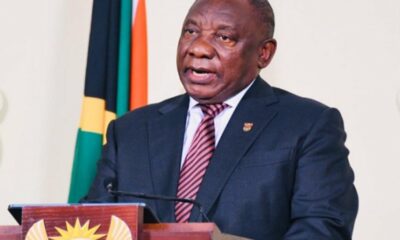
Ramaphosa announced he would take the panel chaired by former chief justice Sandile Ngcobo on judicial review following advice from his legal team. He has denied any wrongdoing related to the Phala Phala matter and said the report was “flawed”. He also said he would not resign.
Constitutional Court ruling reopened impeachment path
Last Friday the Constitutional Court ordered the Section 89 panel report be referred to an impeachment committee, finding that Rule 129I of the National Assembly’s rules was unconstitutional and invalid. The court overturned the National Assembly’s December 2022 decision not to send the panel report to an impeachment committee.
Panel findings
The Section 89 panel found there were questions to answer over the theft of $580,000 hidden in a sofa at Ramaphosa’s Phala Phala farm in Limpopo in February 2020. The Constitutional Court described the panel as a preliminary “sifting mechanism” to determine whether there may be a case for the President to answer.
Experts say courts are cautious about interfering
Dr Shadi Maganoe, a senior lecturer at the Wits School of Law, told IOL the review application would likely be a “difficult” one. She noted that while a sitting President has the right to seek judicial review, a review application does not automatically suspend Parliament’s accountability obligations unless a court orders otherwise.
“When a sitting President approaches the courts to review the panel’s findings, it reflects the President exercising his constitutional right to lawful and fair administrative review… The important point is that a review application does not automatically suspend Parliament’s accountability obligations unless a court specifically orders otherwise, in this instance through an interdict.”
Maganoe said courts are generally cautious about interfering in parliamentary internal processes, particularly at a preliminary stage, and that the President would likely need to show procedural unfairness, irrationality, factual errors or that the panel exceeded its mandate.
Former acting judge outlines legal hurdles
Constitutional law expert and former acting judge Professor Karthy Govender told IOL that Ramaphosa’s claim the report was “flawed” will have to be tested in sworn papers and responses from the committee. He said the question of whether hearsay evidence was wrongly relied on and whether evidence was properly weighed will be central.
“The question is going to be: Did the panel… take hearsay evidence into account and fail to weigh evidence properly?”
Govender suggested an interim interdict might be possible but said the onus on the President to show a material error would be formidable. He also noted that the panel had found prima facie evidence of serious misconduct rather than a final finding of guilt.
Parliamentary steps and political reaction
National Assembly Speaker Thoko Didiza confirmed that Parliament will establish an impeachment committee into the Ngcobo-chaired report. The ANC Youth League, represented by president Collen Malatji, publicly expressed support for Ramaphosa and said the impeachment committee must be stopped to give the President time to review the panel report.
What the Constitutional Court judgment emphasised
Maganoe said the Constitutional Court’s majority judgment held that once credible prima facie evidence exists, Parliament cannot avoid deeper scrutiny of a sitting President. The court was concerned that Rule 129I had allowed Parliament to terminate the impeachment process too early, undermining accountability, transparency and meaningful public scrutiny.
Both Maganoe and Govender emphasised that the Section 89 panel’s findings are not final or binding: the impeachment committee has a broader role to test evidence, hear witnesses and determine whether allegations can be sustained.
Follow Joburg ETC on Facebook, Twitter, TikTok and Instagram
For more News in Johannesburg, visit joburgetc.com
Source: iol.co.za