News
Investigation: US deported more than 25,000 migrants to countries they had no ties with
Investigation finds over 25,000 migrants deported under secret agreements with 35 countries; US earmarked $410m and created an Office of Remigration to manage returns.

The United States has deported more than 25,000 people under secretive agreements with 35 countries, sending many migrants to nations where they have no ties, an investigation has found. The probe, published by Forbidden Stories with a consortium of international journalists and reported by AFP, says the transfers took place after deals began under the administration of U.S. President Donald Trump, who took office in January 2025.
Scale and destinations
Forbidden Stories compiled data showing that at least 25,447 people had been deported to third countries by August 31, 2026. The investigation found that the vast majority around 20,000 people were sent to Mexico, while the remainder were dispersed to 27 other countries across Latin America, Africa and the Pacific. The reporting also says agreements have been finalised with seven more countries.
Money, agencies and a new office
The investigation reports Washington has earmarked $410 million to be paid either directly to receiving governments or to UN agencies to facilitate returns. Internal State Department records cited in the report show $81 million was earmarked for signatory governments, with the rest intended for aid organisations including more than $178 million for the International Organisation for Migration (IOM) and $123 million for the UN Refugee Agency (UNHCR).
Forbidden Stories says most of the negotiations and payments were handled by a little-known State Department division called the Office of Remigration, which was created in May 2025. The office is reported to be headed by Christian Jove Ehrhardt, described in the report as a 41-year-old diplomat who previously worked as a security officer.
Examples of bilateral deals
The report describes a range of agreements with varying terms. It says Cameroon signed a memorandum of understanding with the United States in December on accepting deportees; a week later it signed a five-year health assistance programme worth nearly $400 million. The State Department later said it would provide $30 million to UNHCR in Cameroon to “facilitate the voluntary return of refugees and combat illegal immigration.” The investigation notes the first plane carrying deportees arrived in Cameroon on January 14.
In the Pacific, the report says Palau signed an agreement in December 2025 to accept up to 75 third-country nationals in return for $7.5 million, and that three people have so far been sent under the agreement. In Eswatini, the investigation reports 32 people have arrived since July 2025 out of a possible 160 under an agreement worth more than $5 million, and that Eswatini has accepted deportees with criminal records.
Concerns raised by journalists, lawyers and agencies
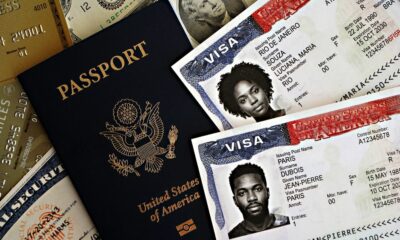
The AFP reporting cited in the investigation found that the United States has used visa bans and restrictions on African countries as leverage to obtain acceptance of deportees. Lawyers quoted in the AFP coverage said deportees were being thrown into a “legal black hole“, held without charge in countries where they have no ties and few, if any, rights.
UNHCR told Forbidden Stories that it was not party to the bilateral agreements and that US funding was being used “in line with its mandate to strengthen asylum systems.”
An IOM spokesperson told Forbidden Stories that the agency’s decisions to accept funding rested “on a single question: whether our engagement will improve the lives of the migrants affected. In these instances, we believe strongly it does.”
How the reporting was compiled
The figures and details were drawn from an investigation by Forbidden Stories in partnership with a consortium of international journalists, which compiled deportation data and reviewed internal State Department records. The reporting was summarised by AFP.
What is known and what is not
The investigation provides specific totals, funding figures, and named examples of bilateral deals and outcomes. It also identifies the State Department unit responsible and its reported head. The reporting does not provide a full list of all receiving countries or the identities of those deported.
This article is based on reporting by Forbidden Stories and AFP, as published on IOL.
Follow Joburg ETC on Facebook, Twitter, TikTok and Instagram
For more News in Johannesburg, visit joburgetc.com
Source: iol.co.za