News
Overloaded detectives: Can justice work when investigators are drowning in cases?
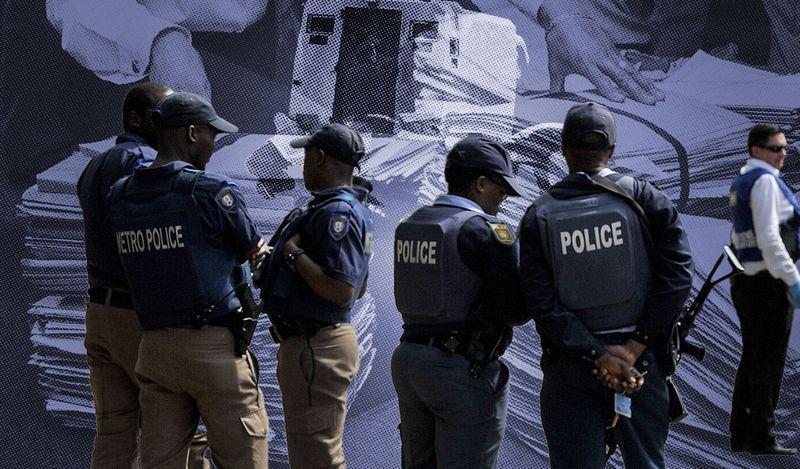
When a detective is responsible for hundreds of criminal cases at the same time, the obvious question is: how much attention can each case realistically receive?
The Auditor-General, Tsakani Maluleke, has highlighted a problem that goes far beyond police statistics. Some detectives are reportedly carrying workloads of between 600 and 800 dockets.
Those numbers should force us to reconsider what we expect from the people responsible for moving criminal cases from a police station to a courtroom.
Because justice does not begin in court.
It begins at the police station.
Justice starts with the first complaint
For an ordinary South African, accessing justice can be a long chain of events.
It starts with reporting a crime and hoping the responding officer takes the complaint seriously, records it correctly and ensures it enters the system.
The case is then assigned to a detective.
That detective is expected to investigate what happened, identify and interview witnesses, collect evidence, follow leads, secure statements and build a docket strong enough to withstand scrutiny from prosecutors.
Eventually, that file needs to make its way to the prosecuting authority with enough evidence to support a case.
That is the machinery behind something as simple as saying: “I want justice.”
But what happens when the person responsible for moving that machinery is already responsible for hundreds of other cases?
A detective cannot investigate 800 cases at once
There is a basic human limitation at the centre of this problem.
A detective cannot be in hundreds of places simultaneously. They cannot interview every witness, follow every lead, examine every piece of evidence and prepare every docket with equal attention when their caseload reaches hundreds of matters.
We expect investigations to be thorough.
We expect evidence to be secured.
We expect witnesses to be followed up.
We expect suspects to be traced.
And we expect dockets to reach prosecutors properly prepared.
Those expectations are entirely reasonable.
But so is asking whether the system is giving detectives the resources and time required to meet them.
Where cases can start falling through the cracks
An overloaded investigator creates more than an administrative headache.
Every delayed statement, missed lead or unfinished docket can potentially push a case further away from prosecution.
For victims, that can mean waiting months or longer for progress. For witnesses, it can mean losing contact or memories becoming less reliable. For investigators, it can mean constantly moving from one urgent matter to another without ever having enough time to properly close the previous one.
And somewhere in that process, public confidence can begin to erode.
People may report a crime and then hear very little afterwards. Cases can appear to disappear into a system that already has more work than it can comfortably handle.
Could criminals exploit the gaps?
There is another uncomfortable question we need to ask.
When a system is stretched this thin, does it create opportunities for criminals to exploit weaknesses?
And could those same vulnerabilities make it easier for dishonest police officials to manipulate or interfere with cases?
The existence of an overloaded system does not automatically mean corruption will occur. But a system with significant pressure points can create opportunities for misconduct that would otherwise be harder to exploit.
That makes detective capacity a policing issue, a justice issue and ultimately a public safety issue.
Justice delayed has real consequences
It is easy to look at detective numbers and docket statistics as administrative problems.
For victims, they are anything but administrative.
Behind every docket is a person who reported a crime, a family waiting for answers, a witness who may have put themselves at risk to cooperate, or a suspect whose case also needs to be dealt with properly.
The justice system depends on each link in the chain doing its job.
If detectives are carrying workloads of 600 to 800 dockets, we have to ask whether the system is asking individuals to achieve something that is simply impossible at that scale.
The question is not whether detectives should be held accountable.
It is whether accountability without adequate capacity can actually deliver justice.
Because when the people tasked with investigating crime are drowning in cases, justice may not only be delayed.
For some victims, it could effectively be denied.
Follow Joburg ETC on Facebook, Twitter, TikTok and Instagram
For more News in Johannesburg, visit joburgetc.com
Source: The Citizen