News
Calls Grow for Ramaphosa to Remove Mchunu as State Costs Reach R6 Million
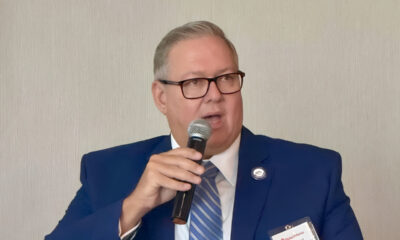
Ian Cameron urges President Ramaphosa to remove Police Minister Mchunu, as legal fees and salary approach R6 million while Mchunu remains on special leave.
State Expenses Mount as Police Minister Remains on Special Leave
Pressure is intensifying on President Cyril Ramaphosa to take decisive action regarding Police Minister Senzo Mchunu, whose protracted special leave has resulted in mounting state expenditure on both his salary and legal fees. With the combined cost approaching R6 million, questions are being raised about the government’s use of taxpayer funds during a period of continued uncertainty around the minister’s future.
Legal Fees and Remuneration Spark Outcry in Parliament
Acting Police Minister Firoz Cachalia revealed to Parliament that R2.7 million has been spent by the Justice Department on legal fees for Mchunu, who has been on special leave since July 2025. These fees, alongside Mchunu’s ongoing remuneration as a Cabinet minister, have become a focal point for concerns regarding fiscal responsibility.
Police Portfolio Committee chairperson Ian Cameron stated that the combined expenditure including salary and legal costs stands at roughly R5.86 million. According to Cameron, “Taxpayers are paying the full package, just over R3 million per annum, for Mchunu and they have also paid, and this is the most shocking part, just over R2.7 million on legal costs.”
Cameron’s Call for Cabinet Removal
Cameron has publicly called on President Ramaphosa to remove Mchunu from Cabinet to halt the ongoing financial drain. He argued that while Mchunu’s parliamentary role could remain, thus maintaining his parliamentary remuneration, the expensive benefits attached to his Cabinet position should be suspended. “This is absolutely reckless and negligent taxpayer spending,” Cameron asserted, criticising the government for allowing the situation to persist while Cachalia continues to manage ministerial duties in an acting capacity.
Allegations and Political Turmoil
The controversy has unfolded in the wake of serious allegations raised by KwaZulu-Natal police commissioner Lieutenant-General Nhlanhla Mkhwanazi, who accused Minister Mchunu of colluding with criminals and leveraging political influence to interfere with government decisions, especially those tied to the justice system. While these allegations have yet to result in formal charges or convictions, they have added fuel to the debate over whether Mchunu should remain in Cabinet.
Significance and Broader Implications
The stand-off reflects wider concerns within government oversight and accountability frameworks. Ministerial special leave is intended as a temporary measure, yet in this case, its duration and cost have come under considerable scrutiny. This situation puts a spotlight on the processes that guide when and how senior officials are suspended, retained, or removed, especially when substantial public funds are at stake.
Parliamentarians and public finance watchdogs generally emphasise that transparent and responsible government spending is essential for trust in public institutions. When cost to the state escalates due to unresolved leadership and legal controversies, it can erode public confidence in the capacity of leadership to safeguard national interests.
What Removal Would Mean
Cameron highlighted that removing Mchunu from Cabinet would not equate to a finding of criminal wrongdoing, but would primarily address the ongoing financial implications. Such a move would allow government to contain costs without prejudging the outcome of any pending or potential investigations.
- The Justice Department’s payment of R2.7 million in legal fees remains a key concern.
- Mchunu’s annual ministerial package amounts to just over R3 million.
- Total costs are nearing R6 million since his special leave began in July 2025.
- Cameron advocates for reduced expenditure while legal and political matters are resolved.
Looking Ahead: Demands for Decisive Action
The growing costs associated with Mchunu’s ongoing special leave underscore persistent challenges around governance, accountability, and stewardship of public funds. Calls for President Ramaphosa to resolve the situation are mounting, with a strong focus on shielding the public purse from further strain. The trajectory of this controversy is likely to have lasting implications for Cabinet protocols and the fiscal management of similar cases in South Africa’s future.
Follow Joburg ETC on Facebook, Twitter, TikTok and Instagram
For more News in Johannesburg, visit joburgetc.com
Source: iol.co.za