News
Ramaphosa receives Iran Navy probe report after ignored presidential order
President Cyril Ramaphosa has received a confidential report into Iran’s Navy participation in Exercise Will of Peace 2026 in South African waters.
The investigation followed concerns that a presidential instruction preventing Iran’s navy from participating in the Chinese-led military exercise had not been followed. The Presidency has, however, indicated that the report will remain confidential because of national security considerations.
Investigation follows disputed naval participation
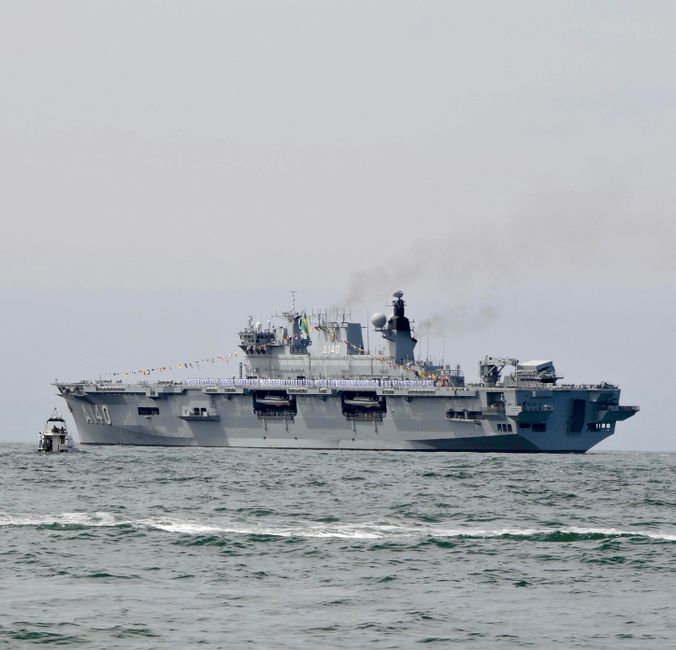
Three Iranian warships arrived off False Bay during the period surrounding the exercise, drawing international attention to South Africa. The presence of the vessels was particularly sensitive because of concerns raised by the United States about the political consequences for South Africa.
The Iranian ships were understood not to have taken part in the naval drills. A decision was made that they would not join South African, Russian, Chinese and Emirati warships when those vessels went out to sea for joint operations connected to the “Will for Peace 2026” exercise.
Despite that decision, questions remained about how the Iranian navy came to be involved in the operation and whether the president’s instruction had been properly implemented. Those concerns led to the establishment of the independent panel in February 2026.
Panel was asked to examine what happened
Presidential spokesperson Vincent Magwenya said the panel was created after circumstances surrounding the exercise pointed to “a failure to heed the president’s instruction that the navy of the Islamic Republic of Iran must no longer participate” in the exercise.
The panel was chaired by Justice Ngoepe. Its other members were Justice M.M. Leeuw and Rear Admiral (Junior Grade) P.T. Duze.
Ramaphosa initially instructed the panel to complete its work and submit its report within one calendar month of its establishment. The panel later requested additional time. The Presidency said it had presented a compelling reason for the extension, allowing the investigation to complete its mandate.
The delivery of the report marks the next stage in a process focused on the chain of decisions surrounding the naval exercise. It does not, by itself, indicate what conclusions the panel reached or what action may follow.
Report will not be made public
The Presidency has made clear that the panel’s work, including its report, will not be released publicly at this stage. The decision means that details about the investigation’s findings, including any conclusions concerning accountability or procedural failures, are unlikely to be disclosed in full.
“The president will be processing the report and carefully consider its recommendations,” Magwenya said.
He added that “due to national security considerations, the work of the Panel, including the report, remains confidential.”
Confidentiality limits the information currently available about the events under investigation. It also means that the public will have to wait for any announcement from the Presidency on whether the recommendations result in further steps.
Ramaphosa to consider recommendations
The report now rests with the president. After considering its contents and recommendations, Ramaphosa will decide what action, if any, should follow.
The Presidency did not announce a deadline for that consideration. It also did not disclose the panel’s findings, the recommendations contained in the report or whether any officials may face consequences.
Ramaphosa thanked Justice Ngoepe and the other panel members for their work. Magwenya said the president had expressed appreciation for their “dedication and diligence” during the investigation.
Why the exercise attracted attention
The week-long “Will for Peace 2026” exercise was presented by the South African National Defence Force as a joint operation involving the BRICS+ forum’s 10 countries. The exercise involved South African, Russian, Chinese and Emirati naval vessels, while the Iranian ships were not included in the joint operations at sea.
The episode placed South Africa’s military and diplomatic relationships under scrutiny. The arrival of the Iranian vessels in False Bay, followed by the decision not to include them in the naval drills, created a distinction between their presence and their participation in the exercise.
That distinction is central to the questions addressed by the panel. The investigation was not simply concerned with the movement of ships, but with the circumstances surrounding an instruction from the president and the subsequent handling of Iran’s proposed involvement.
For now, the Presidency’s position is that the report must be assessed privately. Any explanation of how the instruction was handled, whether procedures were followed and what corrective measures may be needed will depend on Ramaphosa’s consideration of the panel’s recommendations.
The matter therefore remains unresolved publicly. The report has been submitted, but its contents and the president’s eventual response have not been released.
Follow Joburg ETC on Facebook, Twitter, TikTok and Instagram
For more News in Johannesburg, visit joburgetc.com
Source: citizen.co.za