News
City of Tshwane Faces Uncertain Future as Hung Council Spurs Coalition Talks
No outright winner in Tshwane council after 2026 elections. Coalition talks begin as parties seek alliances to form a majority government.
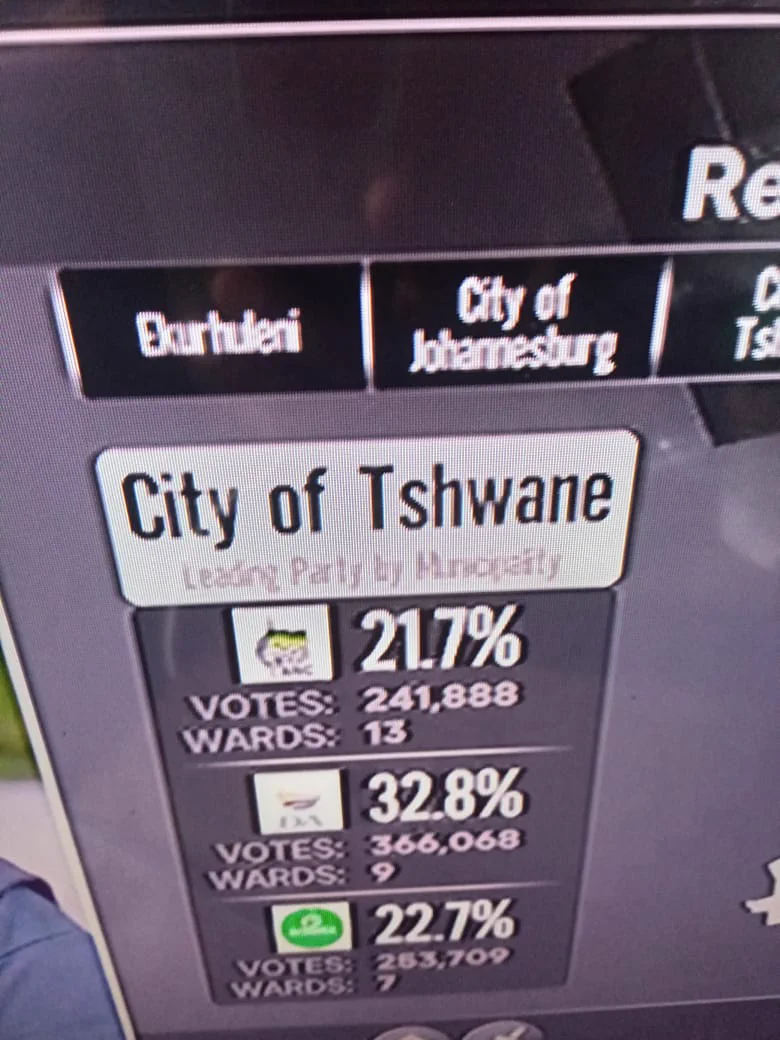
Tshwane Election Results: A Divided Council
The City of Tshwane’s 214-seat council requires 108 seats for a majority. According to official results released by the Electoral Commission of South Africa (IEC), the seat distribution is as follows:
- Democratic Alliance (DA): 74 seats
- ActionSA: 48 seats
- African National Congress (ANC): 44 seats
- VF Plus: 17 seats
- Economic Freedom Fighters (EFF): 13 seats
- uMkhonto WeSizwe Party (MK Party) and the South African Communist Party (SACP): 4 seats
- Patriotic Alliance (PA): 2 seats
- Several smaller parties, including the Rise Mzansi, ACDP, ATM, BOSA, SPPSA, AIC, Afrika Mayibuye Movement, SDP, and UAT, each secured one seat
This fragmented outcome means that coalitions are essential to form a functioning government. The IEC has confirmed the elections were free and fair, giving parties just 14 days to agree on coalition arrangements before a new administration must be established.
Coalition Scenarios and Political Dynamics
Though the DA holds the most seats, their path to leading the city remains uncertain. Recent history underscores the city council’s volatility: in 2021, the ANC led the seat count, but the DA successfully formed a coalition government, illustrating the unpredictable nature of post-election negotiations.
In the years that followed, changes in coalition alliances led to mayoral changes and shifting party influence. Notably, in 2024, ActionSA left the DA-led coalition, siding instead with the ANC and EFF to take control.
Analyst Insights: Prospects for Governance
Political analyst Dr Levy Ndou notes that while a coalition between the DA and ActionSA could deliver a 122-seat majority, ongoing tensions between key figuresnamely Herman Mashaba of ActionSA and the DA’s Helen Zillemake this far from guaranteed. He cautions against assuming any alliance is certain, citing the “bad blood” between the parties’ leadership as a significant barrier.
“The tensions between Herman Mashaba and Helen [Zille] have escalated to a state where there appears to be affecting the establishment of the coalition, but anything is possible,” said Ndou.
Ndou further observes that smaller parties may yet play a decisive role in determining Tshwane’s leadership. Should the VF Plus opt not to join an ActionSA coalition, a partnership between ActionSA, the ANC, EFF, and the MK Party could secure a narrow majority with 109 seats.
With so many possible combinations, the next 14 days are crucial for Tshwane’s political landscape. Ndou’s view is that putting aside personal and political differences is vital for forming a stable government that can deliver vital services to residents.
“What is important at the end of the day is that we need to have a government established, and that will give them an obligation to put their differences aside and find ways and means to work together,” said Ndou.
Coalition Negotiators: Who’s at the Table?
Each major party has appointed representatives to lead their coalition negotiations:
- DA: Federal council chair Ashor Sarupen stated the party would pursue a national strategy, with their federal executive initiating discussions with like-minded parties.
- ActionSA: The party’s National Chairperson, Michael Beaumont, is leading negotiations, emphasising the need for a stable government and written coalition agreements.
- ANC: The party has not yet officially named a negotiator, but Mbalula is expected to lead talks, with support from prominent leaders including Gwede Mantashe and Parks Tau. A formal announcement is anticipated soon.
- FF Plus: While the party has not named an official coalition team, Wouter Wessels has indicated willingness to work with parties sharing similar community-focused values.
- EFF: Secretary General Marshal Dlamini will head negotiations, supported by senior party members. The EFF has underscored that any coalition must advance communities’ interests and adhere to party principles.
The Significance of Stable Governance
The lack of a clear majority amplifies the need for effective coalition-building and compromise. Given Tshwane’s role as the nation’s capital, stable governance is particularly significant for residents and the wider country. The city now faces a crucial two-week window during which political actors must put aside rivalries and seek solutions that prioritise service delivery and municipal stability.
As negotiations continue, Tshwane’s future leadership remains in flux, with the potential for unexpected alliances and last-minute agreements to reshape the city’s political landscape. Residents and observers alike will be watching developments closely as coalition talks unfold and the countdown to forming a new government begins.
Follow Joburg ETC on Facebook, Twitter, TikTok and Instagram
For more News in Johannesburg, visit joburgetc.com
Source: iol.co.za