South Africans in the UAE ask: Where is Pretoria?
When your phone screams with a missile alert at 2am, the first thing you reach for isn’t just your passport. It’s reassurance.
For one South African living in Abu Dhabi, that reassurance didn’t come from home.
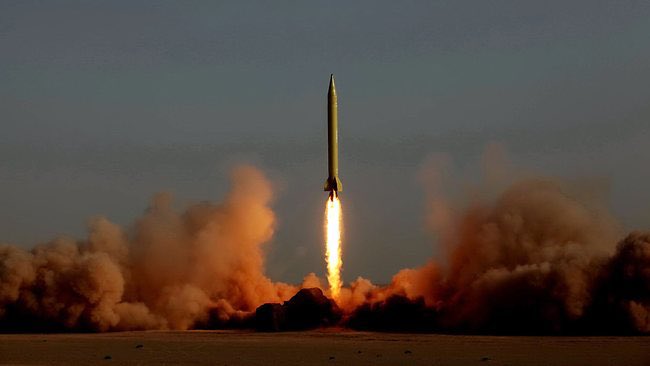
After Iran launched 137 missile and 209 drone strikes on the United Arab Emirates on Saturday, he says foreign embassies quickly contacted their citizens. Pretoria, he claims, did not.
And that silence has left some South Africans abroad feeling exposed.
“Life goes on… in an abnormal situation”
The expat, who asked to remain anonymous for fear of jeopardising his job, has lived and worked in Abu Dhabi for nearly three years. He describes a surreal contrast between the scale of the attack and the calm on the ground.
“Everything seems normal,” he says. “The roads are full, people are walking, we’re working. It’s business as usual in an abnormal situation.”
The UAE’s defence ministry instructed much of the private sector to work from home temporarily, but daily life didn’t grind to a halt. He even went to the mall to buy groceries the day after the strikes.
Yet normality came with tension.
“You hear jets fly over, then three booms. That’s the interception missiles locking onto something. It’s cool and scary at the same time.”
He says Sunday was “moerse scary” when emergency alerts instructed residents to seek immediate shelter, stay away from windows and avoid open areas.
“Just beneath where I live, a missile went past. It is what it is,” he says matter-of-factly.
Praise for the UAE response
What stands out in his account is not panic, but praise.
According to him, those stranded at airports during temporary airspace disruptions were given free accommodation and food. Travellers forced to rebook hotels due to delays were told to keep receipts and submit them for reimbursement from the central government.
“I love Abu Dhabi and its leaders,” he says. “The way they handled it was amazing.”
For many South Africans, especially those who have emigrated for work, this kind of efficiency reinforces why they left in the first place stability, service delivery, swift communication.
Frustration with Dirco
His frustration is directed squarely at Department of International Relations and Cooperation (Dirco).
“All the other countries are contacting their people,” he claims. “We’ve received nothing. Not even on the Dirco Travel Safe app.”
Instead, he says he relies on British, American and local Emirati news for updates.
For South Africans abroad, this touches a nerve. Many still remember chaotic evacuations during past global crises from Covid-19 lockdowns to unrest in parts of Africa when communication from Pretoria was often described as slow or unclear.
Social media has reflected similar concerns. Posts circulating in expat groups over the weekend questioned whether South Africa’s diplomatic missions in the Gulf were issuing any direct advisories.
Pretoria’s official line
On Sunday, Dirco did publish a social media notice but it was directed at South Africans in Jordan and Iraq, not the UAE.
The department urged citizens in those countries to register with embassies and noted that support could be limited in an emergency. It cautioned that face-to-face consular assistance might not be possible and that the government may not be able to assist in certain circumstances.
That language particularly the admission of limited capacity has raised eyebrows.
Dirco spokesperson Clayson Monyela had not publicly commented on the UAE-specific concerns at the time of writing.
A wider question about consular support
There are thousands of South Africans working across the Gulf region from teachers and engineers to hospitality staff and pilots. Remittances sent home support families in Johannesburg, Durban and Cape Town.
When geopolitical tensions flare in the Middle East, those communities look to both their host governments and Pretoria for guidance.
Historically, South Africa has maintained diplomatic relations with a wide range of global players, often walking a careful line in international conflicts. But for ordinary citizens abroad, foreign policy nuance means little if communication feels absent.
The bigger question isn’t just about one weekend of missile alerts. It’s about whether South Africa’s consular systems are equipped digitally and operationally to keep pace in fast-moving crises.
Calm streets, uneasy hearts
Back in Abu Dhabi, life continues. Offices are open. Malls are trading. People sip coffee under clear skies.
But beneath the calm, there’s unease.
“It’s normal,” the expat says again. “But you’re always listening.”
For South Africans in the UAE, that listening now includes waiting for a message from home one that says, simply, we see you, we’re aware, and here’s what you need to know.
In moments of global instability, communication is more than courtesy. It’s connection. And for citizens thousands of kilometres away, that connection matters.