South Africa’s fragile economic recovery has hit another speed bump, and this time the pressure is coming from far beyond its borders.
In March, local business confidence slipped again, with the latest figures showing how quickly global tensions can seep into the country’s economic mood. While things are not collapsing, the shift is enough to raise eyebrows among economists who are watching the data closely.
Business Confidence Slips Again
The South African Chamber of Commerce and Industry’s Business Confidence Index dropped by 3.3 points to 131.3 in March. It is the second decline recorded this year, following a dip in January and a brief rebound in February.
Even with the pullback, there is still a silver lining. Confidence remains higher than it was a year ago, with the index sitting well above March 2025 levels and averaging stronger in the first quarter of 2026 compared to last year.
That tells a familiar South African story. Progress is there, but it is uneven and easily shaken.
Why The Drop Matters Now
The latest decline is not being driven by local issues alone. Instead, it is tied closely to rising geopolitical tensions in the Middle East, which have rattled global markets.
According to Sacci, the fallout has already been felt in several key areas. The rand has been more volatile, share prices on the JSE have softened, precious metal prices have dipped globally, and import volumes have slowed.
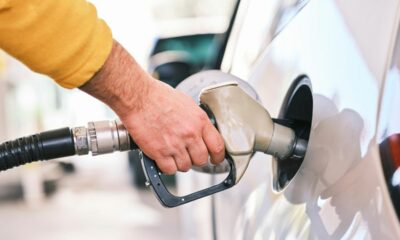
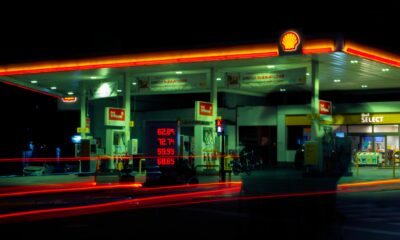
For everyday South Africans, this chain reaction often shows up where it hurts most, at the fuel pump and in grocery aisles. The country’s reliance on imported fuel means any disruption to global oil supply quickly feeds into local costs.
A Few Bright Spots Keep The Mood From Crashing
Despite the pressure, not everything is pointing in the wrong direction.
Stronger vehicle sales, a steady rise in international tourism, and relatively contained inflation helped cushion the blow in March. These pockets of resilience suggest that parts of the economy are still ticking along, even as external risks mount.
Looking at the bigger picture, Sacci notes that confidence has also been supported over the past year by factors like higher precious metal prices, stronger tourism flows, and gains on the JSE.
The Warning Signs Beneath The Surface
Still, the risks are stacking up.
Economists warn that weaker trade volumes, slow retail activity, rising energy costs, and sluggish manufacturing could all weigh on growth in the months ahead. There is also concern about declining building activity, which often signals hesitation from investors.
Sacci has cautioned that while business sentiment appears relatively resilient, it could be masking deeper problems in the real economy.
In simple terms, confidence might look better on paper than what businesses are actually experiencing on the ground.
Global Conflict, Local Consequences
Economists say the latest figures are among the clearest signs yet that global instability is starting to filter into South Africa’s domestic economy.
Professor Raymond Parsons points out that the index is now capturing the early effects of a global energy shock linked to the Middle East conflict. At the same time, he believes the setback may not be permanent, noting that the economy still has some resilience to adapt.
Others are more cautious. Professor Waldo Krugell highlights how the initial impact has already hit the exchange rate, the JSE, and oil prices, warning that the next phase could be more painful as higher import costs and inflation begin to filter through.
Dr Eliphas Ndou adds that business confidence could become increasingly sensitive to oil prices, currency weakness, and inflation pressures. As a leading indicator, the index is already pointing to a potential slowdown in economic growth.
What Happens Next
Much will depend on how long the Middle East conflict drags on and how global energy markets respond. Closer to home, interest rate decisions by the South African Reserve Bank and government efforts to ease the cost of living could play a critical role.
There is also cautious optimism that the strong levels of confidence seen at the end of 2025 and early 2026 could still be converted into real economic activity, if conditions stabilise.
For now, though, the message is clear. South Africa may be thousands of kilometres away from the conflict, but its economy is still deeply connected to the global stage. And when the world shakes, the local outlook feels it too.